
Going Solar in New York State in 2026
Homeowner Tips, Incentives, and Financing Options
By Erica Affronti | Winter 2025 | Clean Power Guide
As of December 2025, homeowners can no longer claim an efficient energy home improvement tax credit, worth up to $3,200. If you didn’t pivot in time to take advantage of this, let’s be clear: the game is still on. The price of solar panels is falling. The economic benefits are built in: you own your own source of power and state tax incentives in New York still help with the purchase price.
To get a real sense of how solar could benefit a typical household, Google’s Project Sunroof is a free online tool that estimates solar costs and savings based on your address and electric bill, estimating: the total cost of installing solar before tax incentives; the amount covered by state tax credits; net cost after those savings; estimated monthly energy savings and break-even time.
For a typical home of 1,340 square feet in the city of Kingston, Sunroof targets a 3.6 kW system costing $12,883 up front. Subtract the 25-percent state tax credit of $2,128 and the net upfront cost is $10,755. This system covers 94 percent of the home’s electricity. If the remaining bill over 20 years is $368.50 a year or $7,370 (adjusted for inflation), then the total 20-year energy cost to power the home with solar is $10,755 plus $7,370 or $17,404, while the cost for the same period without solar is $28,984.
The economics even work for my home, which is large and all-electric. My upfront cost of $44,800 is reduced to $39,864 with the state tax credit (which caps at $5,000), so the system pays for itself in 13 years. You can try yourself at: Sunroof.withgoogle.com.
If you are drawn to the life-cycle savings and sense of control that comes from owning your own power source but don’t have the upfront capital, solar loans allow homeowners to finance the cost of a solar energy system while maintaining full ownership.
These loans are offered by solar companies, banks, and credit unions, including mission-driven institutions like Clean Energy Federal Credit Union, which was founded for this purpose. Loans come with a variety of terms on interest rates, payment schedules, and credit requirements.
Some loans can bundle with other upgrades, such as roof repairs or other energy-efficiency improvements. Solar loans can be secured (using your home or the system as collateral) or unsecured. In most cases, monthly loan payments are designed to be lower than the savings on your electric bill, allowing you to start saving and build equity.
State Tax Incentives
The Solar Energy System Equipment Credit is offered for homeowners who have purchased solar panels, lease them, or have entered into a power purchase agreement (see below) of at least 10 years. The credit is for 25 percent of the equipment expenditures and up to a maximum of $5,000. For homeowners, this means significant upfront savings and a faster return on investment.
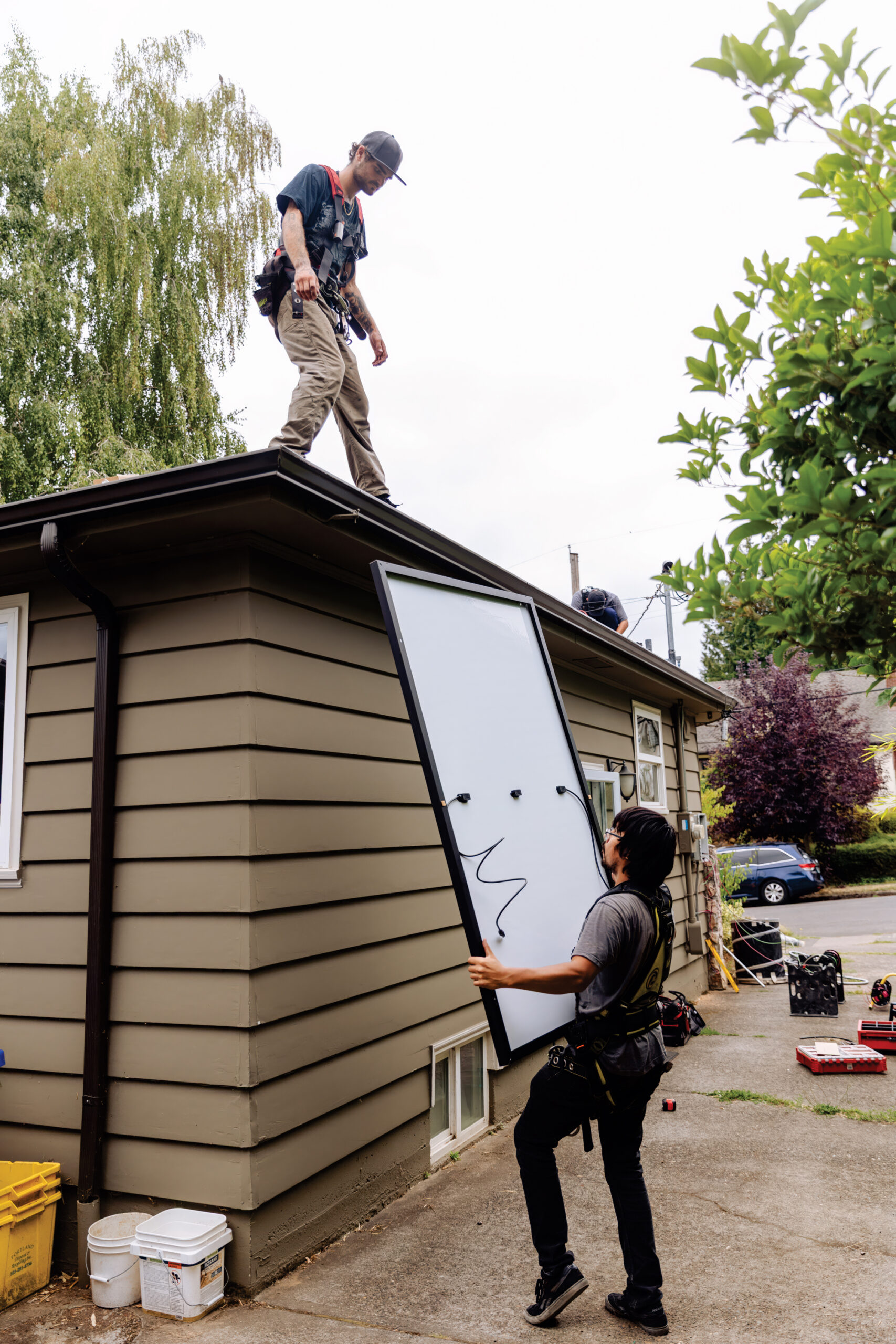
A crew lifts a solar panel into place. For many homeowners, rooftop solar is less about gadgets and more about owning their own energy future.
There is the ingenious approach known as the power purchase agreement (PPA). Under a residential solar PPA, a solar provider installs and maintains a system on the homeowner’s property at no upfront cost. The homeowner pays only for the electricity the system produces, usually at a rate lower than their utility’s. Some PPAs include a buyout or rent-to-own option, allowing the homeowner to purchase the system after a set period, often five to seven years or at the end of the 10 to 25-year contract. Of course, this contract (like any contract), should be reviewed closely.
Community Solar
An easier alternative is to tap into the power of solar without even installing solar panels. Community Solar offers homeowners the opportunity to reduce their carbon footprint while lowering their monthly costs. Community Solar is a great option for people who can’t install rooftop solar such as renters, those with shaded roofs, or homes in historic districts where it isn’t technically impossible but is often a challenge. Since 2018, almost anybody in New York can participate in Community Solar through two state programs and two types of market programs.
NY-Sun is a statewide initiative that promotes solar energy by supporting community solar programs across New York. Participating solar farms, such as Nexamp, Clearway, and Meadow offer an annual 10 percent discount on your energy bill with no upfront cost and no equipment needed. To find one of these projects near you, visit Nyserda.ny.gov, find the NY-Sun program, and enter your zip code and utility provider.
Solar for All is a program that provides lower-income New Yorkers with monthly energy bill credits for accessing a portion of their power from solar, typically saving $5 to $15 per month. Just like NY-Sun, there are no upfront costs and it’s completely free to sign up. Eligible participants include: veterans receiving disability benefits, individuals on a fixed income; minimum wage earners, and others who meet income or assistance program criteria.
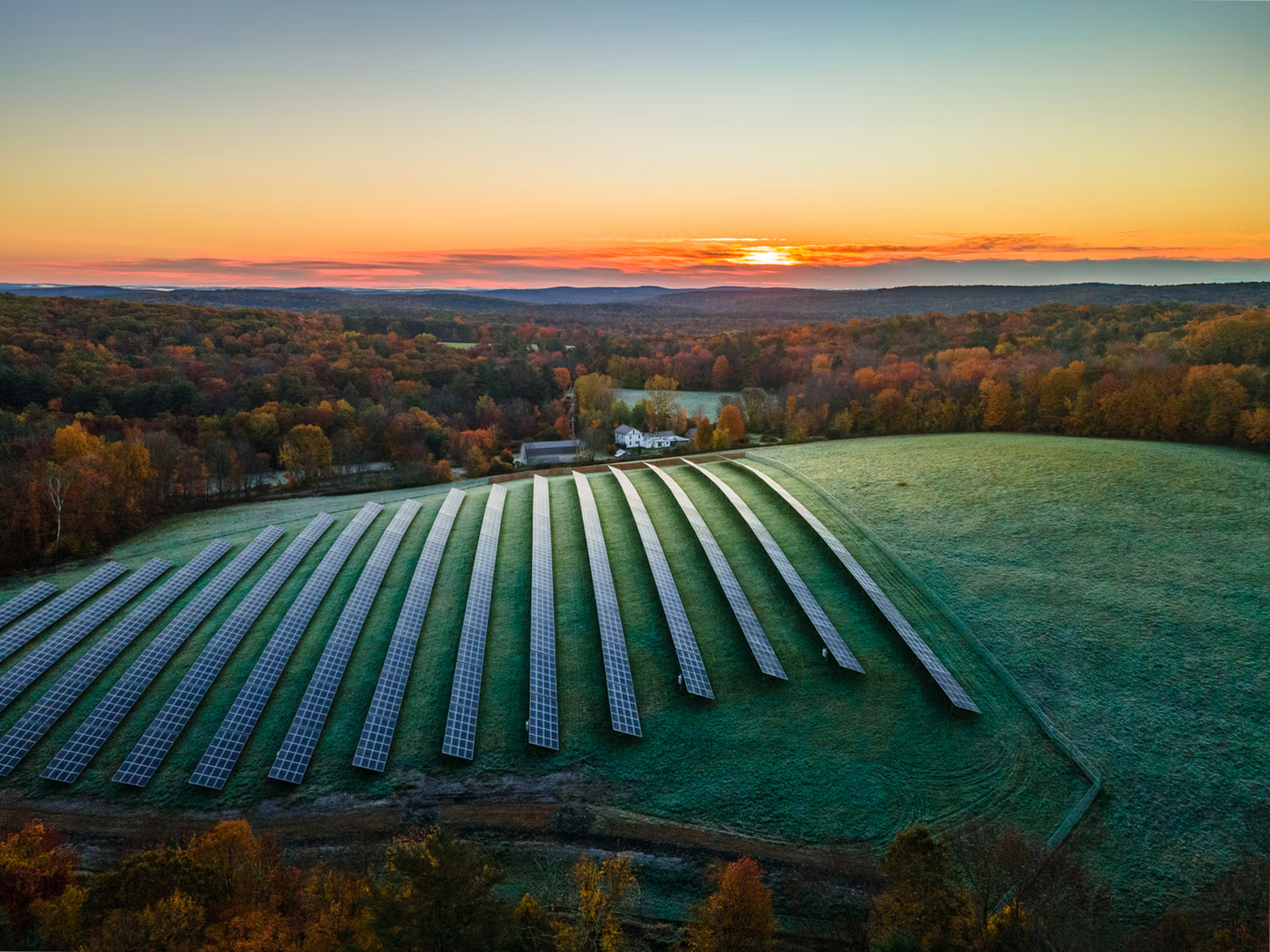
A ground-mounted solar field becomes a neighborhood power plant: Nexamp’s panels fuel community solar, letting households “plug into the sun” remotely for lower bills and lower emissions, without ever mounting a panel to a roof.
There are also two ways to access community solar directly. With purchase models, you buy solar panels within a community solar project. You’ll receive bill credits for every kilowatt-hour your panels generate. After the panels are paid off, you continue paying a small service fee (typically around $15 per month) but otherwise access the power from those panels for the rest of their life (usually 25 years). With subscription model, you pay a monthly fee that is typically less than the cost of that power from the utility, and you are assigned a percentage of the solar project’s output.
Whatever your solar plan, if you want to pay only for the energy you need—without waste—the first step to going solar is to get an energy assessment to identify areas of energy waste, like drafty windows or poor insulation. In New York, low- and moderate-income households may qualify for a free home energy assessment through NYSERDA’s EmPower+ program.
The end of federal tax credits doesn’t mean the end of accessible solar energy. With state-level tax incentives, the range of financing options still available, and the easy option of community solar, homeowners can continue to make cost-saving, climate-conscious choices. More information on the programs referenced in this article can be found at Nyserda.ny.gov.
Erica Affronti is an Digital Media major at SUNY New Paltz.