
Building Better Decks in the Hudson Valley with Williams Lumber & Home Centers
Decks are becoming a beloved addition to Hudson Valley residents backyards.
By Williams Lumber & Home Centers | Summer 2026 | Design Feature | Home Improvement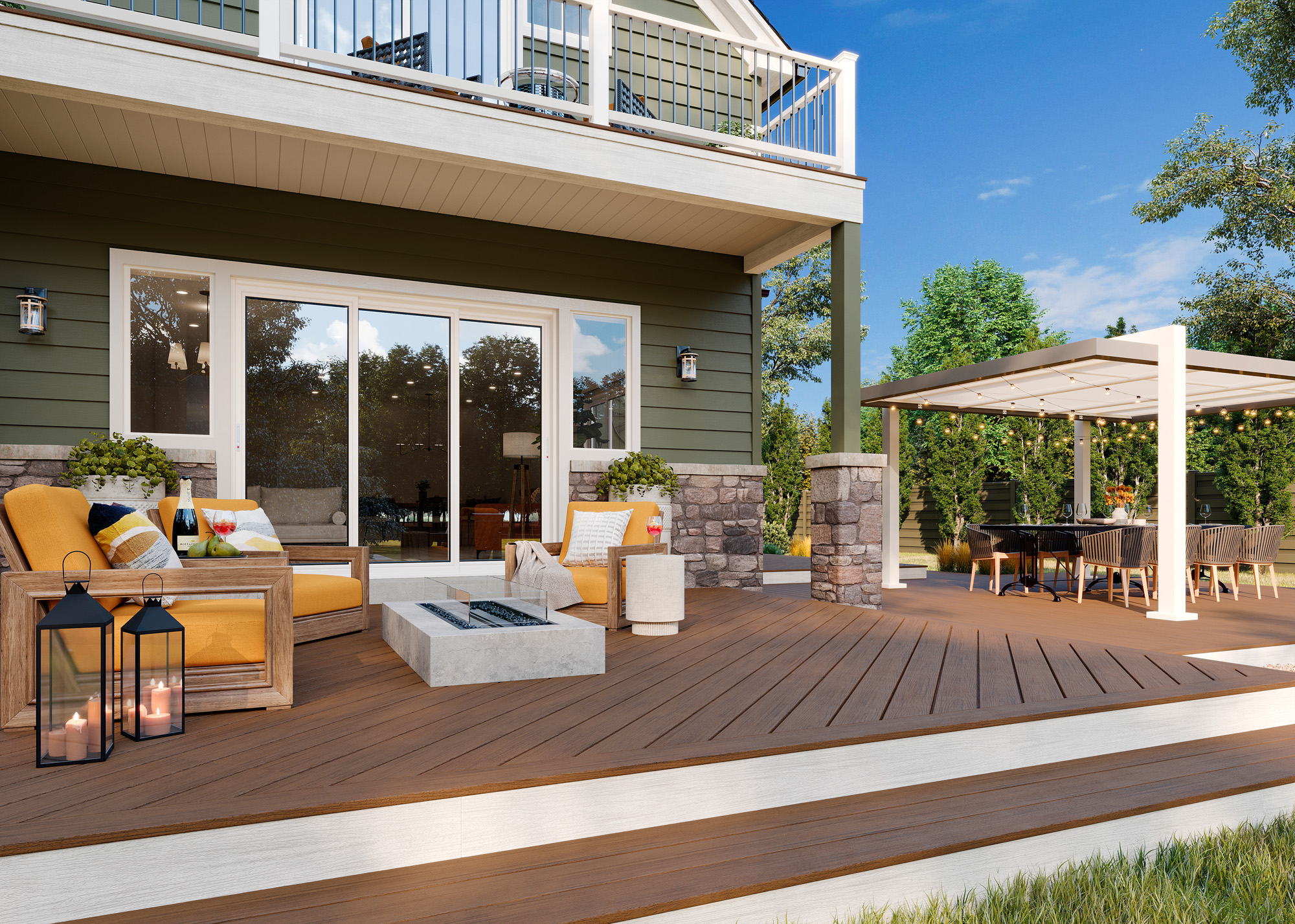
The backyard has become something more than a seasonal escape. Today’s outdoor spaces function as true extensions of the home—places to cook, gather, unwind, and spend long stretches of time. That shift has changed how homeowners approach their projects. It’s no longer about building bigger; it’s about building smarter.
“People are thinking more holistically about how they use their outdoor spaces,” says Kim Williams, Senior VP of Williams Lumber & Home Centers. “The goal isn’t just to add square footage—it’s to create something that works beautifully, holds up over time, and actually gets used.”
With seven locations throughout the Hudson Valley, Williams Lumber has been helping homeowners navigate those decisions since 1946. From material selection to project planning, their team works with customers to think through the details that make the difference between a project that looks good on day one and one that still performs years down the line.
Here are four smart upgrades that can transform any backyard into a more functional, durable, and enjoyable space.
Start with Better Materials
Every great outdoor space begins with a strong foundation. For many homeowners, that means rethinking the deck itself—not just its size or layout, but what it’s made of.
Williams’ go-to recommendation is USA-made Trex composite decking, engineered from 95 percent recycled wood and plastic. Designed to resist fading, staining, scratching, and mold, it’s built to withstand the demands of the Hudson Valley’s changing seasons without the constant upkeep that wood requires.
“Traditional wood decks can be beautiful, but they come with a maintenance cycle that people don’t always anticipate,” Williams says. “With composite decking like Trex, you’re building something that looks great from the start and stays that way with minimal effort.”
Available in a wide range of colors and woodgrain finishes, Trex makes it easy to create a polished look that complements everything from classic farmhouses to more contemporary homes. Whether designing a simple ground-level platform or a more expansive, multi-level structure, the material sets the tone for the entire space.
Build in Function—Not Just a Platform
Once the foundation is in place, the next step is to think beyond a single, open deck and consider how the space will actually be used.
“Designing in zones is just as important outdoors as it is inside the home,” Williams says. “You want areas for dining, relaxing, and gathering that feel connected but distinct.”
Built-in features can go a long way toward achieving that. Integrated seating, planters, and multi-level layouts help define different areas while maximizing usable space. A raised section for dining, a lower lounge area with comfortable seating, or a tucked-away corner for reading can transform a deck into a fully realized outdoor room.
Trex decking is particularly well suited for these kinds of designs, thanks to its consistency and durability. The same boards used for flooring can also be adapted for built-in elements, creating a cohesive look throughout.
“It’s about making the space feel intentional,” Williams says. “When everything works together, people tend to use it more—and enjoy it more.”
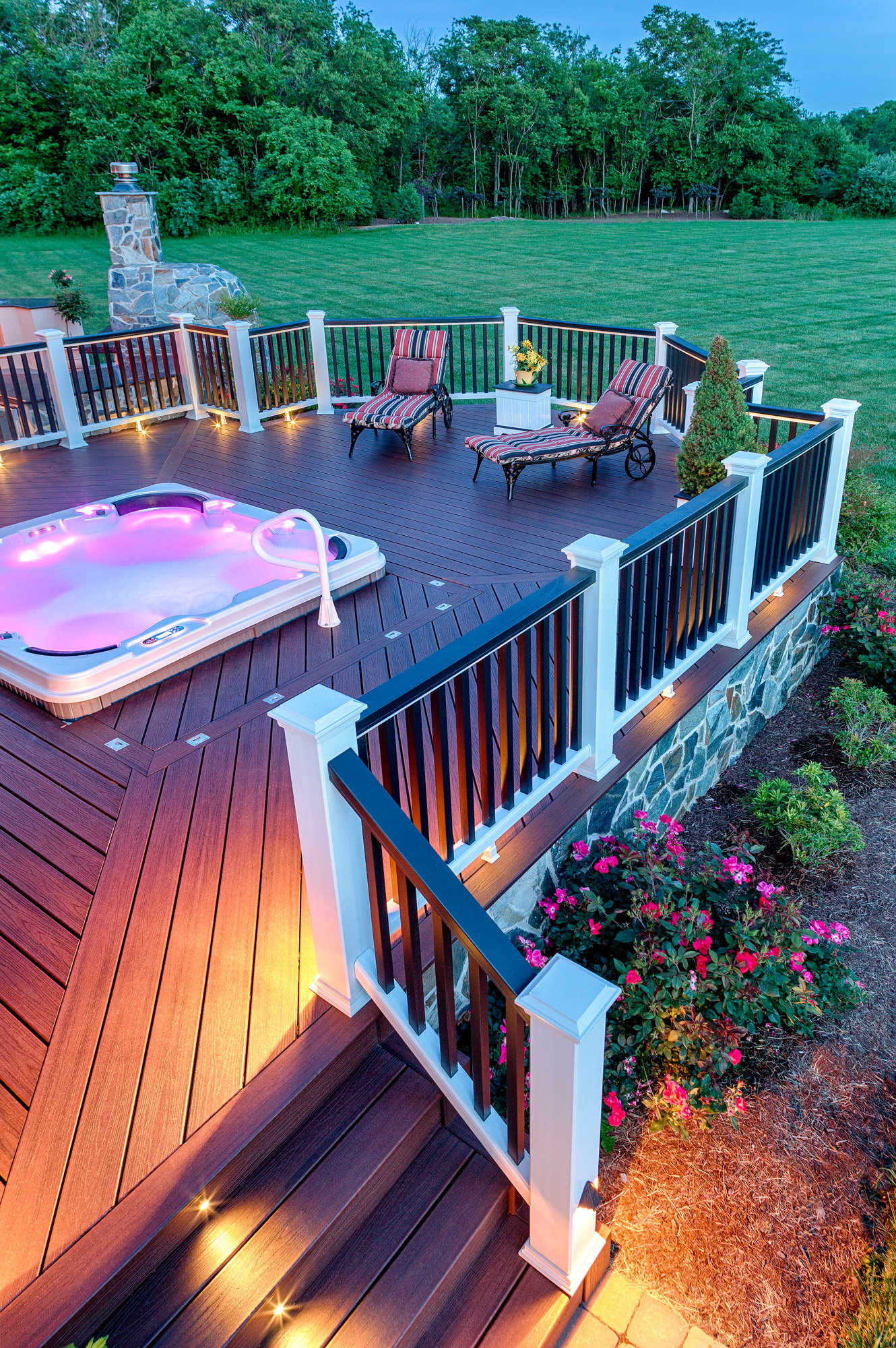
A beautiful deck with dark hardwood floorings, seating and a hot tub with pink lighting.

Kim Williams the Senior VP of Williams Lumber & Home Centers.
Add Shade and Privacy
A well-designed deck should be usable throughout the day, not just in the early morning or late afternoon. Adding shade and privacy elements can dramatically improve comfort and extend the life of the space.
Pergolas, screens, and fencing are some of the most effective ways to achieve that balance. Trex offers a range of pergola and screening options that combine structural performance with clean, modern design.
“A pergola can completely change how a space feels,” Williams says. “It creates definition, provides relief from the sun, and adds an architectural element that ties everything together.”
For homeowners in denser neighborhoods—or those simply looking for a more secluded retreat—privacy screens and composite fencing offer a durable, low-maintenance solution. Unlike traditional wood options, they won’t warp, crack, or require repainting, making them a practical choice for long-term use.
“These elements aren’t just decorative,” Williams says. “They make the space more comfortable and more functional, which is what people are really after.”
Design for the Long Term
Perhaps the most important upgrade isn’t visible at first glance: planning for how the space will perform over time.
The Hudson Valley’s climate—marked by freeze-thaw cycles, humidity, and strong sun—can take a toll on outdoor materials. Choosing products designed to handle those conditions can save homeowners time, money, and frustration in the years ahead.
“With any project, it’s worth thinking about what it’s going to look like five, ten, even twenty years down the road,” Williams says. “Materials that require less maintenance and hold up to the elements are almost always the better investment.”
Trex’s composite decking is backed by long-term warranties and designed to maintain its color and integrity with minimal upkeep. There’s no need for sanding, staining, or sealing—just a simple clean to keep it looking its best.
For homeowners, that translates into more time enjoying the space and less time working on it.
Plan with Confidence at Williams
No matter the scope of a project, the team at Williams Lumber & Home Centers is ready to help bring it to life. Customers can visit any of the company’s seven locations to explore Trex displays, compare materials, and get expert advice tailored to their specific goals.
“Every project is a little different,” Williams says. “We’re here to help people think it through, choose the right materials, and make decisions they’ll feel good about for years to come.”
Because in the end, building smarter isn’t just about what you add—it’s about how well it works, season after season.