
Using Building Science to Save on Costs and Prevent Housing Emergencies
Presented by Energy Conservation Services Inc. | Spring 2025 | Home Improvement
Buying or building a home is a major milestone, but it comes with plenty of uncertainties. Unexpected challenges can leave homeowners unsure of what to expect. That’s where building science comes in—it’s the study of how homes function, helping homeowners, architects, and builders make informed decisions that prevent costly problems down the road.
Building science is an integrated approach to how home or building systems work together to provide the most comfortable and efficient living space, maximizing energy efficiency, comfort, durability, health, and safety.
This body of knowledge combines several scientific disciplines, including chemistry, physics, and thermodynamics, to fully understand how a building functions. “We are experts in Applied Building Science, performing diagnostic tests and then recommending targeted upgrades to improve comfort and efficiency before remodeling, renovating, upgrading HVAC, or transitioning off fossil fuels,” explains Melinda McKnight, CEO of Energy Conservation Services, Inc.
Energy Conservation Services, Inc., a family-owned firm based in Port Ewen, helps homeowners detect and resolve myriad issues with the help of its building science team. While their specialty is historic buildings, common concerns among homeowners are moisture, draftiness, rodent infestation, or poor indoor air quality, which can lead to significant health problems.
Doing right by a home and its inhabitants is essential to McKnight. “We stay on top of the latest tech and we’re bound by a code of professional ethics that contractors driven solely by profit don’t begin to understand,” she says. “It’s heartbreaking to discover mistakes after the fact when all we can recommend is contacting the company that performed the work or pursue action through other means.”
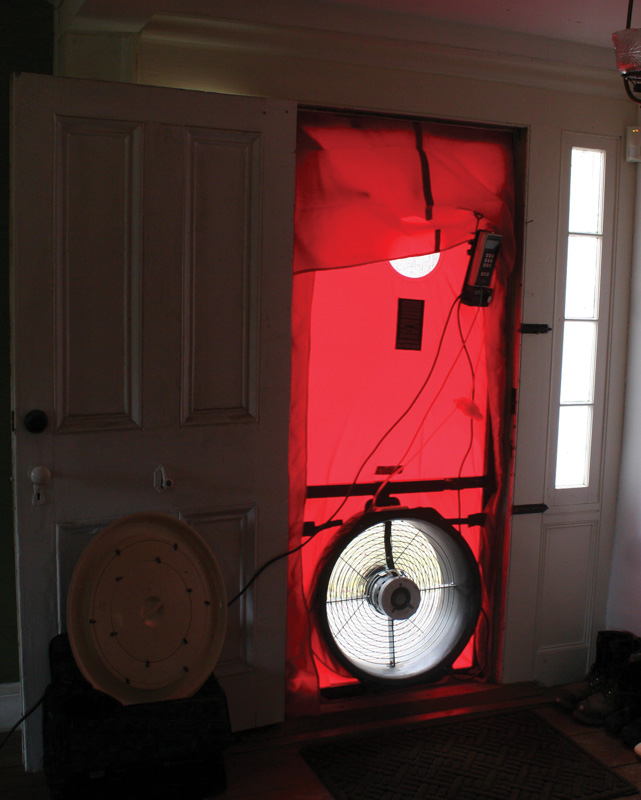
A blower door set up to measure air leakage.
Building science helps prevent problems before they occur. While mold is often the primary concern, McKnight points out that it’s not the only issue to watch for. Certified building scientists are trained in a variety of diagnostic tests that apply to all housing emergencies.
One client of McKnight’s noticed he had an air quality issue, and purchased an air filter, which failed to resolve it. He felt poorly inside his home but symptoms would be alleviated when he was outdoors. McKnight’s team uncovered fiberglass insulation, installed incorrectly, with the vapor barrier facing away from conditioned living space, then backed by chicken wire underneath the living room floor. “The house had originally been a seasonal bungalow, and it was trapping moisture against the floorboards and rotting them underneath,” McKnight says.
Though rotting wood might seem fairly innocuous, under certain conditions it can sometimes emit chemicals. The client’s doctor tested and confirmed acetone poisoning, which ECS staff had suspected. Although acetone poisoning can be destructive to humans and homes alike, the prescription was easy. The client needed to wear a respirator while removing the fiberglass and chicken wire—an inexpensive, completely DIY fix.
Building scientists are versed in the latest insulation and air-sealing techniques, which are critical to a well-functioning home. “We can help you optimize your comfort and safety and spend less on heating and cooling, especially if we get the call before a job is done,” she says. “The average air infiltration reduction we achieve for our customers is about 42 percent, which results in energy utility savings. Air sealing is the most important aspect of every project,” McKnight says.
Like any good scientist, building scientists understand how systems work together, enabling a precise diagnosis and fix. “We can solve your problems, but it’s even better when we can prevent them before they happen,” McKnight says.
Ecsbetterhome.com
Produced by the Chronogram Media Branded Content Studio.