
Rise to the Occasion: How One Homeowner Built a DIY Container Garden
By Brian K. Mahoney | Summer 2025 | Farm & Garden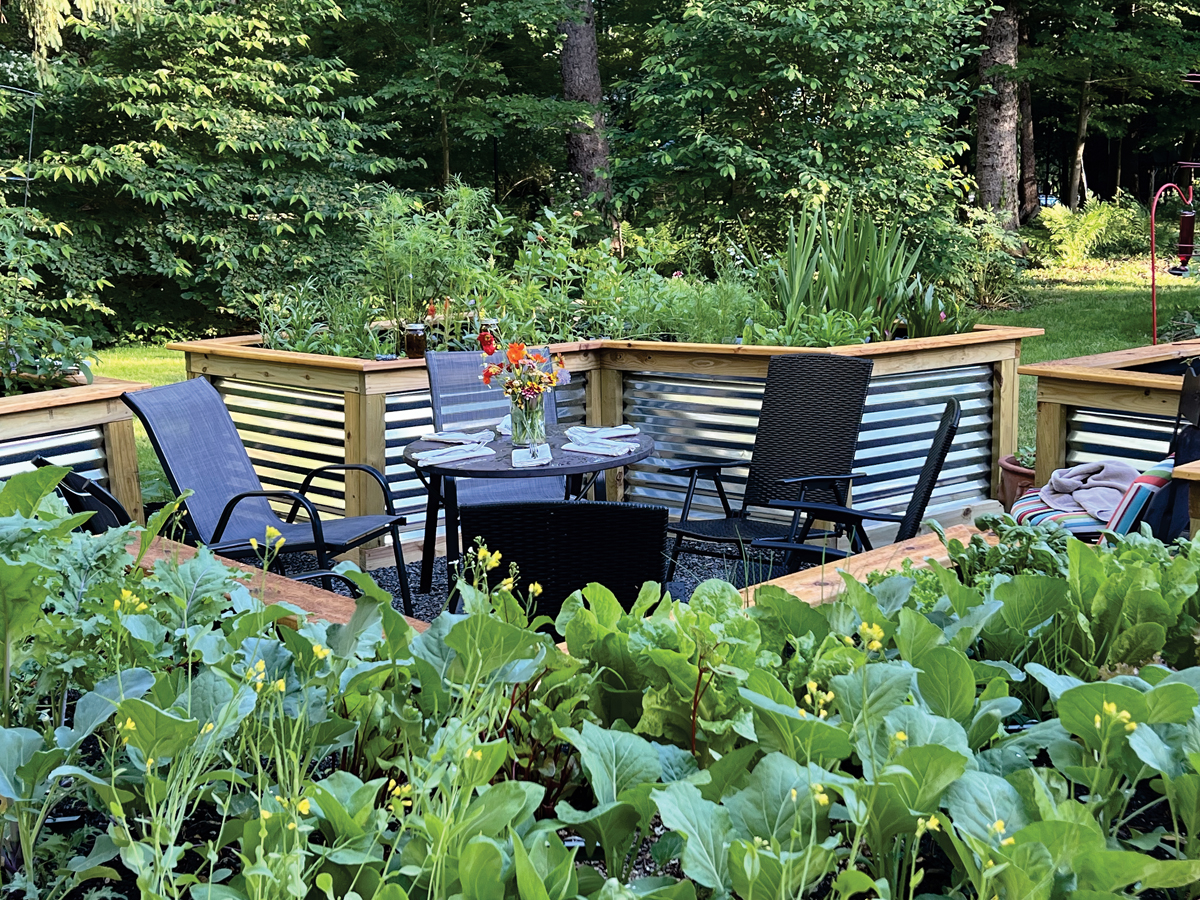
Standing in his backyard on a crisp spring morning, Tim Ayers surveys the fruits of last year’s labor: four raised garden beds framed in wood and corrugated steel, arranged atop a crushed stone patio. The planter boxes are not just handsome—they’re a lifeline. Built tall enough to eliminate stooping and close enough together to form a social space, they’ve brought gardening back into Ayers’s and his partner Steven Bock’s lives after a progressive mobility disorder made traditional in-ground planting a challenge for Bock.
“Gardening was something we always loved, and I didn’t want that to end,” says Ayers. So he set out to create something functional, beautiful, and deeply personal: An outdoor living room that just happens to be bursting with tomatoes, lettuces, squash, and flowers.
A Garden Born of Necessity—and Love
The project began with a simple but urgent goal: Make gardening accessible again. Though Ayers had a long history of DIY home improvements (he jokes that he bought the “crappiest house on the block” 20 years ago and has been fixing it ever since), this was his first true ground-up build. It would also be his most ambitious.
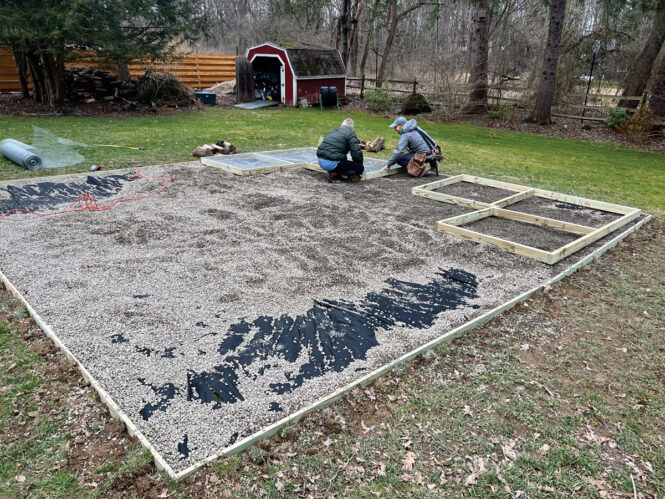
Steven Bock and Tim Rich assemble one of the raised beds using pre-cut lumber. Careful planning and teamwork helped speed up construction, even on a pair of rainy build days.
Determined to marry form and function, Ayers spent weeks researching designs that would complement his modernized farmhouse-style home in Stone Ridge. He found inspiration online in raised beds clad with corrugated steel and wood—and took the idea a step further. Instead of stand-alone boxes, he envisioned a full garden “room,” where he and his partner could sit at a central table, surrounded by the lushness of growing things.
From Graph Paper to Groundbreaking
Not content to wing it, Ayers pulled out graph paper and carefully mapped the layout: four eight-foot-long planter boxes forming a square, with four-foot paths between them for easy access. He drew the design from multiple angles, calculated materials, and factored in critical details like rodent-proofing with wire mesh.
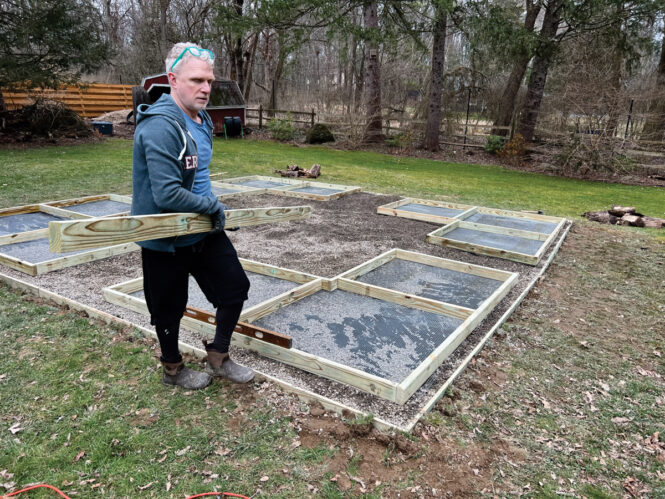
Bock hauls lumber as the first layer of the raised beds takes shape. The boxes were built atop landscape fabric and gravel to promote drainage and deter weeds.
He also chose his materials thoughtfully. Cedar would have been ideal for its rot-resistance—but wildly expensive. Instead, he framed the boxes in pressure-treated wood, added cedar anywhere wood would touch soil, and lined the interiors with food-grade plastic and landscape fabric to ensure no contaminants would leach into the organic soil. Corrugated metal panels added durability and a touch of industrial chic without compromising the organic ethos.
A year later, the total material cost—including lumber, steel, crushed stone, soil, and compost—ran about $1,500, a fraction of what hiring professionals would have cost.
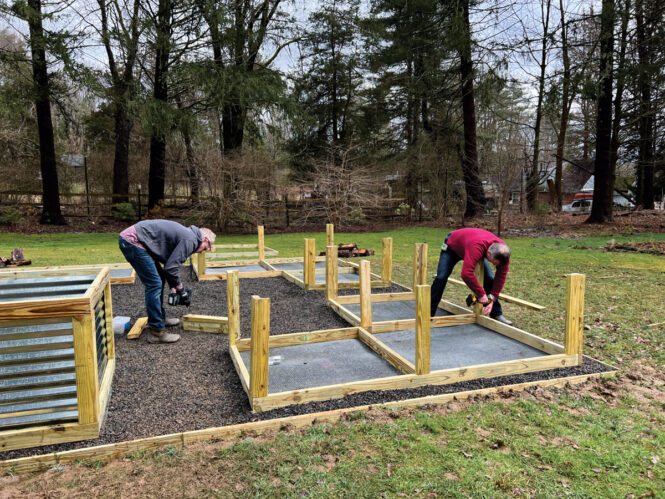
Bock and Ayers assembling the wood frames.
Building the Dream
Construction began with leveling the site, laying down landscape fabric, and building a shallow wooden frame to hold a base of crushed stone. Pre-cut lumber made assembly fast—an essential move considering two of the build days were rainy and miserable.
Ayers credits his angle grinder (for cutting metal and mesh) and his compressor and nail gun (for framing) with saving countless hours of labor. “Doing it all by hand would have taken forever,” he says. “You don’t have that many arms to hold things while you’re banging a hammer.”
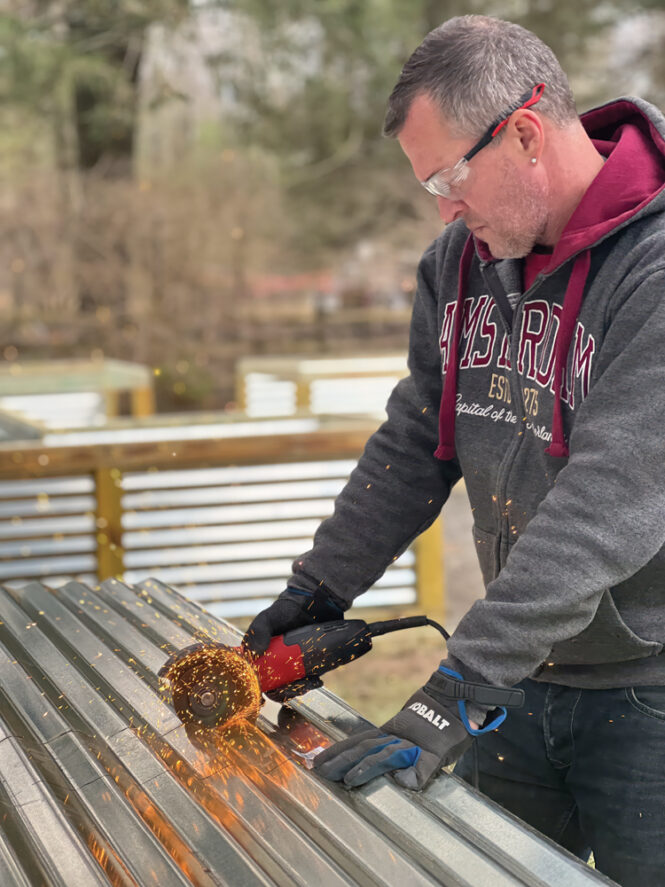
Ayers uses an angle grinder to cut corrugated steel to size for the planter cladding.
Once the frames were assembled and the metal cladding was attached, the real workout began: filling the beds. Instead of trucking in expensive fill, Ayers turned to a resource on hand: piles of fallen trees and branches, which he layered into the bottom two-thirds of the boxes—a method known as hugelkultur. Over time, the organic material will break down, enriching the soil above and sustaining the garden naturally.
Square Foot Gardening, Elevated
Planning didn’t stop with construction. Before the first seedling went in the ground, Ayers mapped the planting layout using square-foot gardening techniques. Each planter box was assigned a theme:
Box 1: Tomatoes, peppers, marigolds, and rosemary
Box 2: Leafy greens—lettuce, spinach, kale, and chard
Box 3: Vining crops—cucumbers, watermelons, squash, and zucchini
Box 4: Cut flowers for home and their adjacent Airbnb rental
He also carefully considered plant compatibility to optimize growth and minimize pests. “I had about five pages of drawings,” he says, laughing. “It made the build and the planting so much smoother.”
Lessons from the Build
Reflecting on the process, Ayers says the key to success was doing the heavy mental lifting upfront. “Draw everything out,” he advises. “Use standard measurements like eight-foot lengths of wood to minimize waste and cost. And research everything—materials, plants, compatibility.”
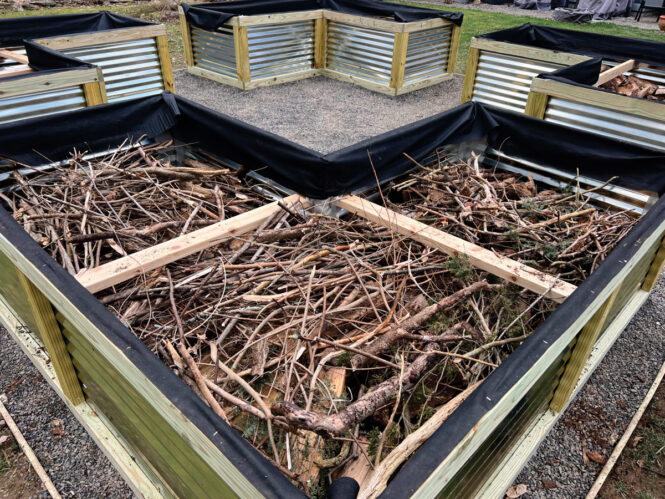
Instead of costly fill, Ayers used a hugelkultur method—layering fallen logs, branches, and organic matter to promote slow composting and long-term soil health.
In terms of physical labor, the hardest part wasn’t the building—it was moving tons of stone, dirt, and logs by hand. “Shoveling stone sucks,” he admits, but quickly adds, “It’s all part of the adventure. I built something we love, and that’s incredibly rewarding.”
If he were to do it again? He’d plumb an underground irrigation system. Last summer, handwatering was peaceful but time-consuming—and metal-clad planters tend to attract wasps looking for cozy nests. This year, he’s preemptively stuffed crevices with steel wool to deter them.
How It’s Holding Up
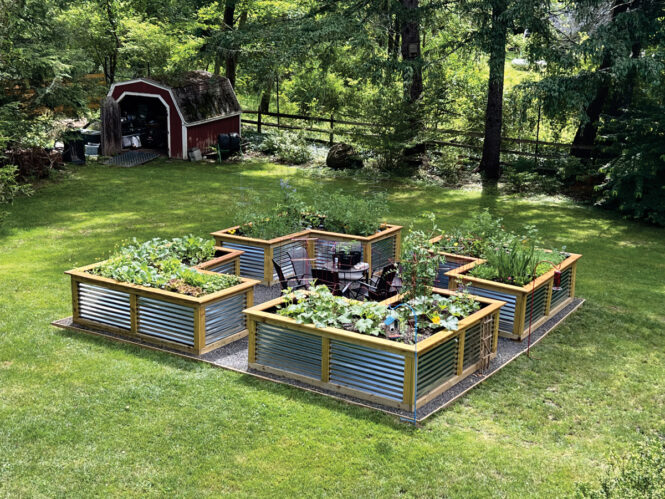
One year later, the raised beds have settled into their role as both a thriving garden and a backyard sanctuary—proof that thoughtful design and hard work can grow more than just vegetables.
One year after completion, the planter boxes are thriving. The soil has settled slightly, as expected, and Ayers plans to top it off with a few more yards of compost. Structurally, the frames remain solid and square, now freshly stained to match the house’s exterior.
The best part? Gardening is joyful again. No more stooping. No more battling rocky soil. Just the satisfaction of working amid vegetables and flowers, with a glass of wine close at hand.
“This project gave us back something we thought we might lose,” Ayers says. “It’s one of the best things I’ve ever built.”