
Redefining the Bookstore Experience at The Common Good
The Bookstore Bar in Ellenville Gets a Fresh Take on the Classic Bookstore Look
By Ryan Keegan | Spring 2025 | Design Feature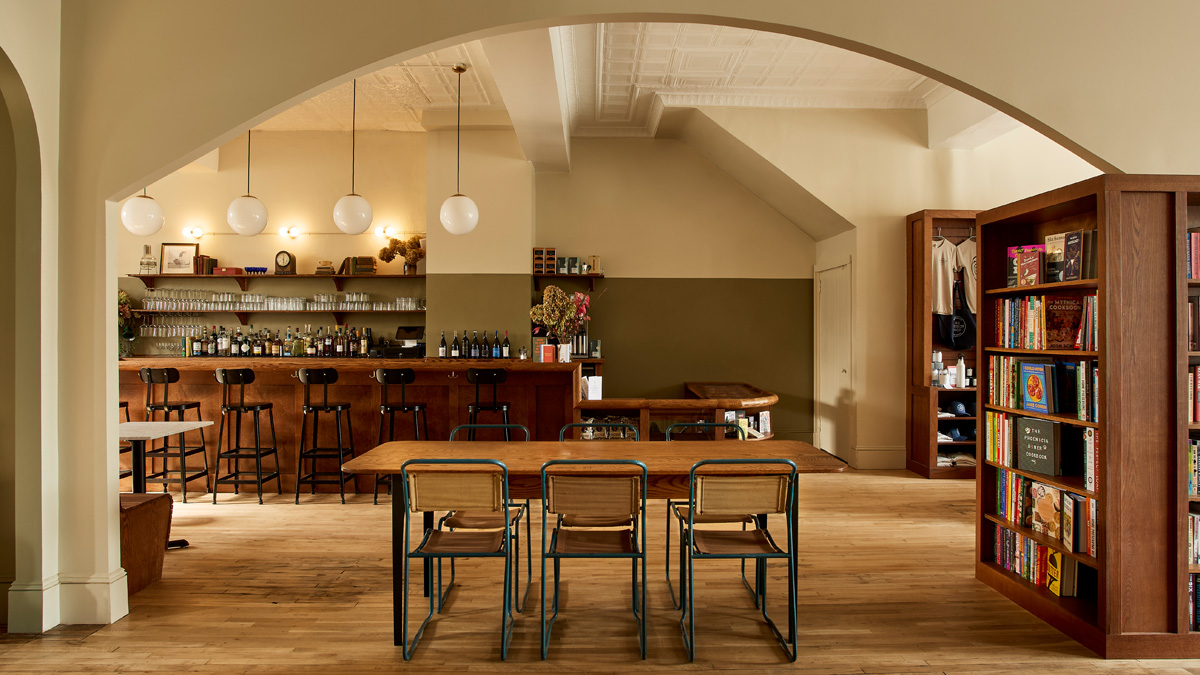
At 119 Canal Street in Ellenville, The Common Good bookstore and bar blends literature and socializing in a newly renovated space. Owner Matthew Goldman envisioned a shop that fosters connection, with distinct sections for fiction, nonfiction, and children’s books, plus a full bar. He brought in interior designer Samantha Leeds of Creatures of Place and custom furniture maker John Glagola of Studio Glagola to bring that vision to life.
Goldman first discovered Leeds and Glagola’s work on Instagram. “They had done a wine store in Hurley, and the shelves and colors jumped out at me—they were so rich and vibrant,” he recalls. A mutual connection introduced them via email, and from there, the collaboration took shape.
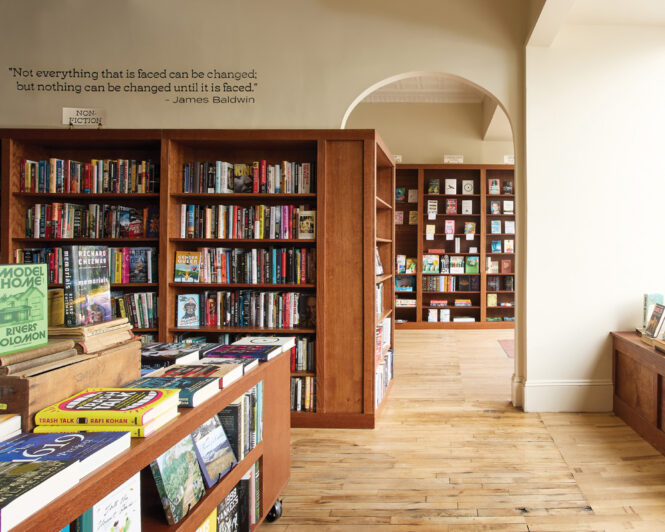
Goldman had a strong vision for the space from the start—shaped by a collection of mood boards and a carefully curated list of functions the venue needed to serve. “The hardest and most important thing Sam and John did was dividing the space in a meaningful way to allow me to do all the things I wanted to do here,” Goldman explains. “I came in with design ideas, and they brought it all to life.”
English Library Vibe
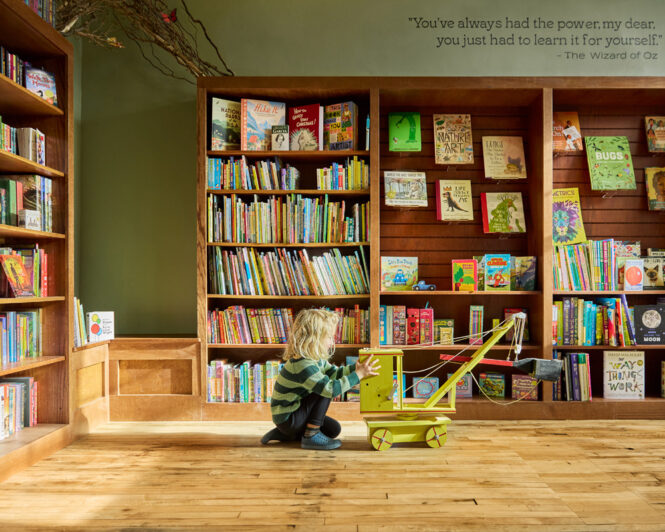
Housed within a three-bay building, The Common Good occupies the middle and far-right bays—two adjoining 900-square-foot storefronts that needed to be transformed into a complete 1,800-square-foot venue. Together, the team set out to transform Goldman’s vision into a space that accommodates a bar, seating areas, a children’s playroom, a stage, and shelves for an ever-expanding collection of books—all within a limited footprint.
For Leeds, the vision for the space was clear right away. “I wanted it to have the vibe of an old English library,” she explains. “Obviously, those would have been built in solid wood, but budgetarily, nobody can afford to do that. We did the best we could to mirror that look.” Glagola’s role was to take that vision and make it a reality. “My approach to design is functionality first, and then having it look good,” he explains. “Where I feel like Sam’s approach to design is that it looks good, and then it has to work. We do a really good job of coming at it from two different sides but meeting halfway in the middle.”
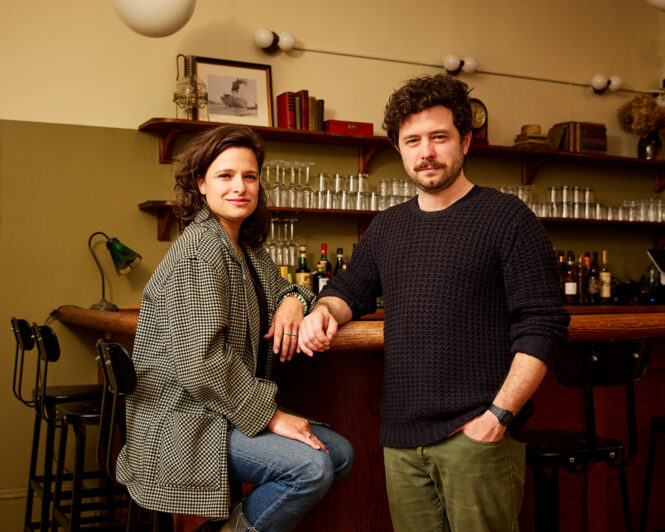
Interior designer Samantha Leeds of Creatures of Place and furniture maker John Glagola of Studio Glagola brought Goldman’s bookstore vision to life.
One of Leeds’ key design moves was shaping how the space unfolds as visitors walk through. The bookstore consists of three distinct sections—the left bay, the right bay, and the back children’s room—but the strategic use of arches helps them feel connected. “When you walk in the front doors, the space feels a little tight at first, even with the glass windows behind you,” Glagola says. “But because of what Sam did with the arches, the further you move in, the more it opens up, drawing you in deeper.”
A Sense of Intimacy
Once construction began—a six-month process—one major challenge was working with the building’s historic features. Beneath tile-covered floors, the team uncovered original hardwood that Leeds was eager to restore. “A lot of my design practice involves restoration,” she says. “If the materials are there, I always want to try and keep them.” Along with the floor, they preserved the building’s original tin ceiling tiles. Leeds sourced matching ones to replace those that were damaged.
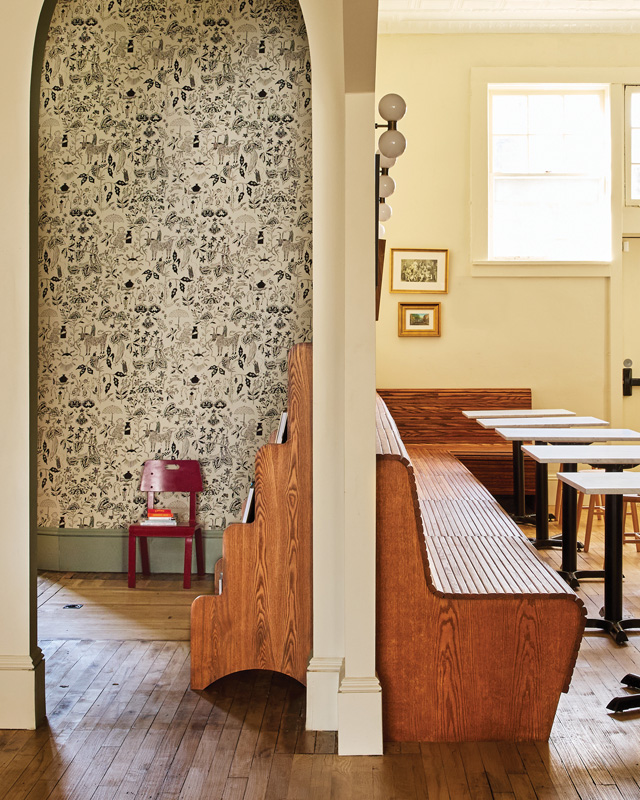
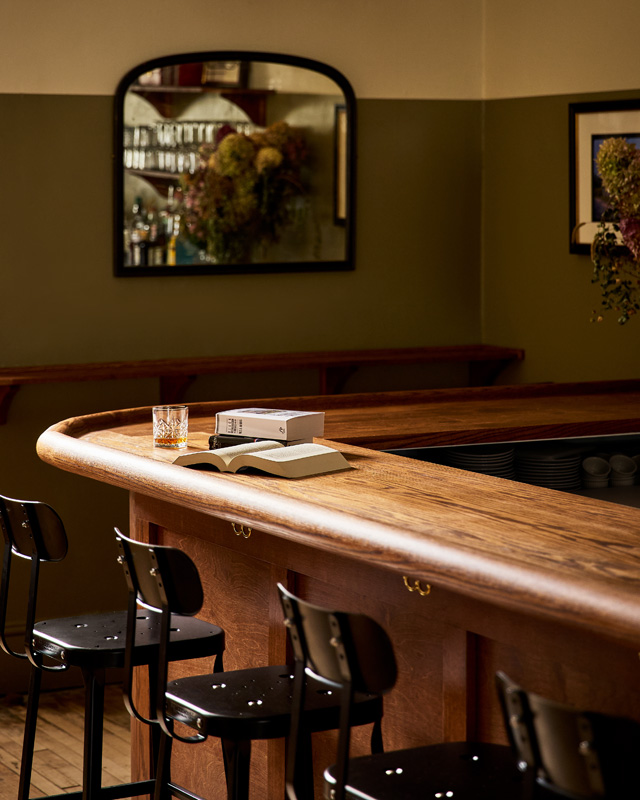
Much of the millwork throughout The Common Good is red oak veneer plywood, while the bar top is crafted from solid red oak. That solid oak bar top became the centerpiece of one of the most complex design elements—the bar itself. Twenty-seven feet long and 10-feet deep, it needed to function as a bar, coffee shop, checkout counter, merchandise display, pastry case, and food prep station—all while meeting ADA requirements. The final design, modeled after a British pub, features a bar that seats 10 to 12 with a bar rail, alongside a full banquette and additional table seating. The entire bookstore can seat 35.
One of the biggest challenges was shaping the bar’s curves to accommodate both internal and external storage. “The curves are really wide because Matthew wanted storage on both the inside and outside of the bar,” Glagola explains. “But conventional bar curves available for purchase don’t exist at the angle he wanted. So, the curves on the left and right sides had to be hand cut on-site to fit properly and provide the necessary structural support—both in front and behind. That way, if people get a little wild, they can even stand on top.”
The need for flexible seating also shaped the design. Originally, the spot where a bench now sits was intended for bookshelves. But as the team refined the layout, they realized more seating was necessary, so they reallocated bookshelf space elsewhere. This led to a set of wraparound bookshelves between the arches, ensuring ample storage while contributing to a cozy, inviting atmosphere.
Throughout the store, the design team also focused on creating a sense of intimacy by carving out different nooks. “I love the idea of having a bookshop where you have multiple seating areas so that people can feel like they’re in their own little world, even in a communal space,” Leeds says. These nooks are scattered throughout the store—from the cozy children’s room, a secluded space where parents and kids can escape, to the quiet corner seating areas.
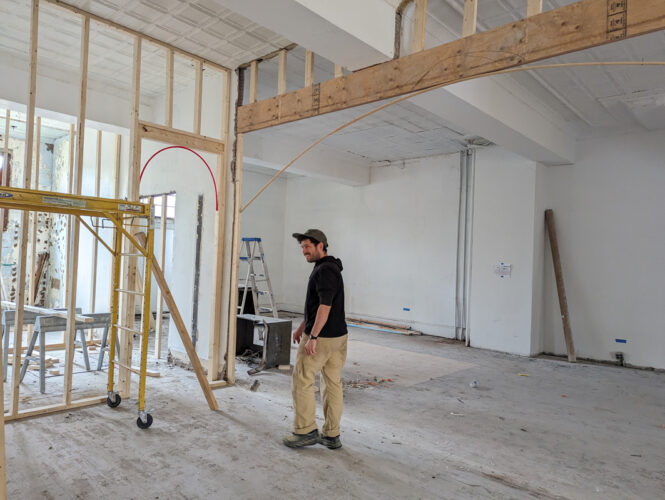
Leeds and Glagola took two adjoining storefronts and combined them into an 1,800-square-foot bookstore with distinct areas within a small footprint.
Now that The Common Good is open, the design team takes pride in how the store has become a gathering place for the community—one they personally enjoy. “Another part we really loved about this project is that we go there and hang out; it was fun to have worked on the bar we drink at,” Glagola says. “We go to trivia there on Wednesdays, and it’s cool to sit on the bench we designed.” Leeds adds on: “It’s really cool because you think it’s a small town, but every time I go in, I meet people I’ve never met before,” she reflects. “I think there’s something beautiful about building a space that becomes a staple in the community. Matthew’s done a really good job of creating that anchor.”