
Loose Parts Design Studio in Catskill
By Ryan Keegan | Fall 2025 | Makers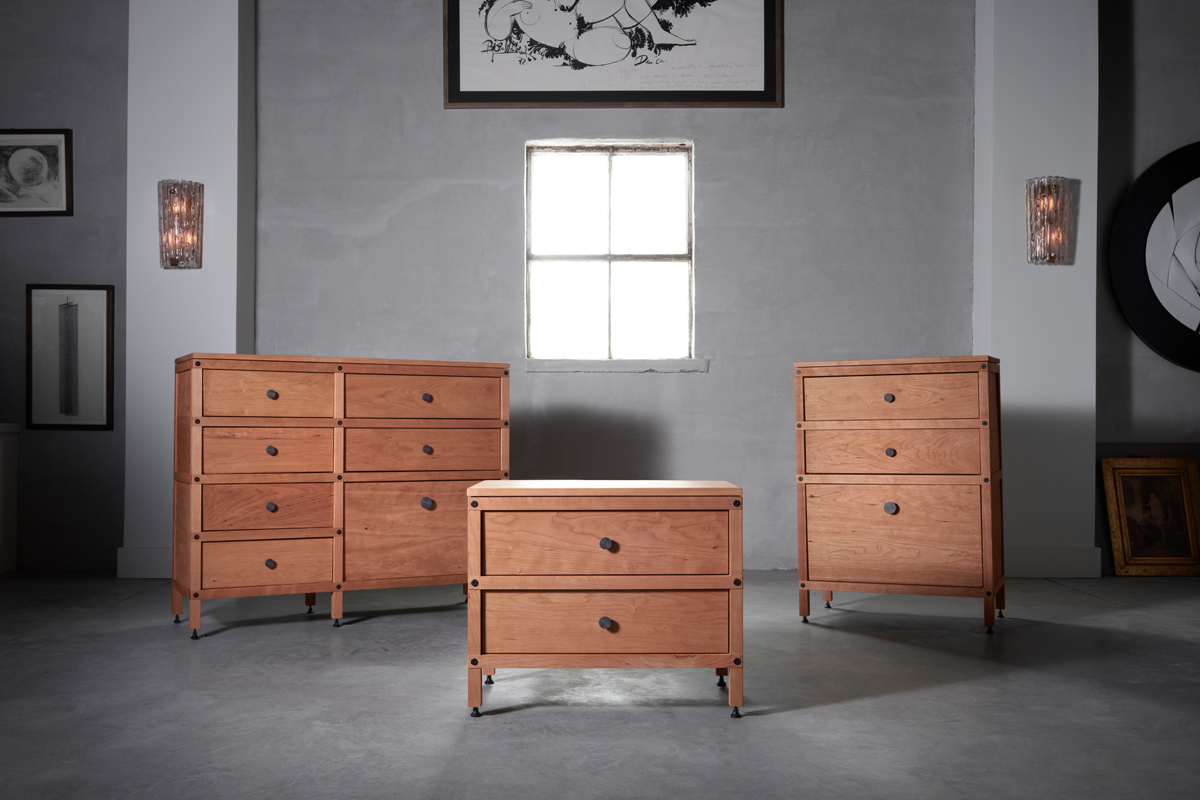
Inside her Catskill studio on Main Street, furniture designer Jennifer June works alone. There, she handcuts, finishes, and assembles every panel, joint, and bolt of her furniture. This hands-on process defines Loose Parts, the design studio June founded in 2019. The studio specializes in handcrafted furniture made from regionally sourced hardwoods and follows circular design principles focused on adaptability and longevity. “I’m exploring how thoughtful craftsmanship and intentional design can foster meaningful relationships between people, objects, and spaces,” she says.
June’s latest work is the Meridian Collection, her first bedroom line. This three-piece suite includes a seven-drawer dresser, a three-drawer dresser, and a nightstand. Each piece is handmade in her Hudson Valley workshop from Pennsylvania black cherry harvested and milled within 300 miles. The furniture is designed to be taken apart for repair, reuse, or recycling.
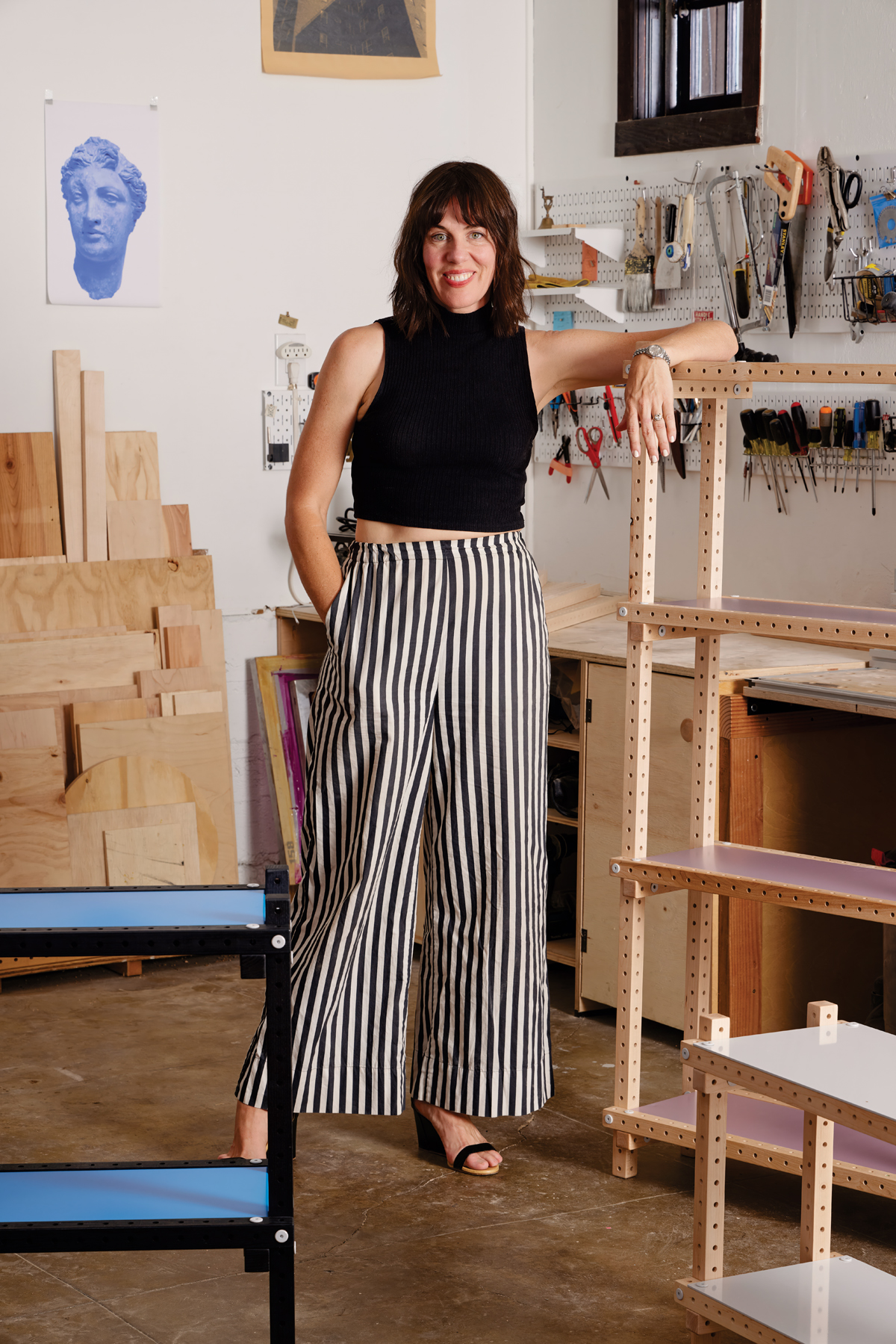
Jennifer June in her Main Street Catskill studio, where every Loose Parts piece is designed, cut, and assembled by hand using sustainable hardwoods and circular design principles.
Photo by Noah Webb
Named for the clean, directional lines across each drawer face, the Meridian Collection blends the visual restraint of Shaker furniture with the material solidity of the Arts and Crafts movement. The pieces follow June’s system-based approach, developed around a 32-millimeter grid that governs panel layouts, hardware placement, and joinery.
“I design furniture around systems, grids and alignments,” says June. “The magic in my process is when all the parts come together and reveal themselves as something new. A coherent form with its own presence and personality.”
Roots of a Maker
June grew up in San Diego and studied printmaking at the Oregon College of Art and Craft, where she also explored ceramics, weaving, and metalwork. After graduating, she opened Hermitage, a wallpaper shop in Portland. Her work with patterns, color, and interior designers sparked a deeper interest in spatial design, leading her to pursue a master’s degree in interior and lighting design at the Parsons School of Design.
At Parsons, June’s thesis examined ad hoc design. “I was looking at chess players in Union Square creating these kinds of room settings in public spaces, just through the arrangement of old milk crates and discarded office furniture, and how those arrangements could create the space,” she says. “All those experiences are how I came to furniture.”
Loose Parts started as a modular furniture system—a literal kit of parts, including wood rails, metal panels, and joints that users could assemble to create their own furniture. After grad school, June thought about how designers could create frameworks, not just finished pieces, so people could customize their own spaces. The pandemic underscored this need for adaptable furniture. “People were using their spaces in multifunctional ways—like the dining room table had to be a classroom, a place to eat, and for children to color,” she says. “That concept of furniture having multiple identities was fitting for that time.”
Material Forward
Loose Parts has grown from focusing mostly on modular pieces to also paying more attention to the natural qualities and history of solid wood. “I’m in this wood basket,” she says about living in the Hudson Valley. “There’s so much timber around, and so much history. I want the material to come forward in the design.”
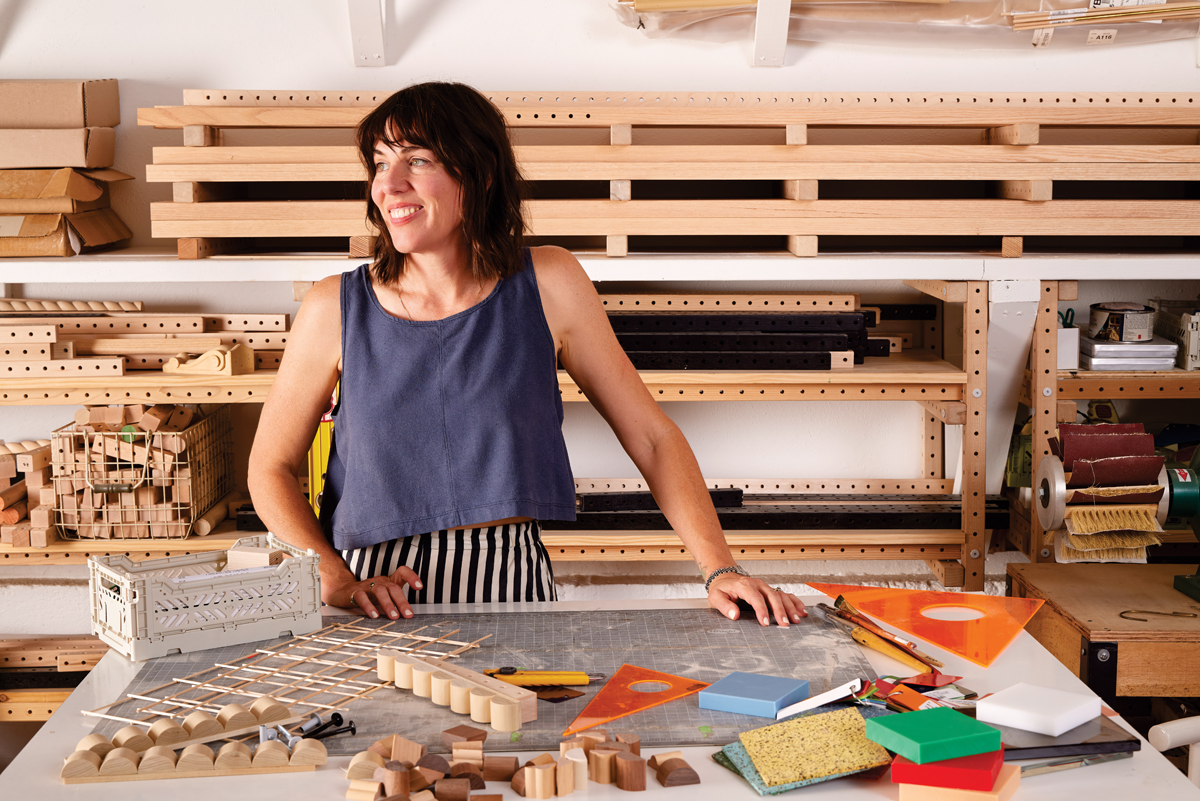
Jennifer June in her Main Street Catskill studio, where every Loose Parts piece is designed, cut, and assembled by hand using sustainable hardwoods and circular design principles. Photo by Noah Webb
June works primarily with regional hardwoods and reclaimed timber sourced from responsibly managed forests or deconstructed buildings. For the Meridian Collection, she chose Pennsylvania black cherry, a wood common in traditional Shaker furniture.
Instead of polyurethane finishes, June applies a natural oil wax blend that lets the wood’s grain and warm tone show through. “Cherry is such a beautiful wood,” June says. “And it ambers as it ages. It really reflects the idea that this is a living material.”
Her construction uses no nails or glue—only black oxide steel bolts and lap joints—so parts can be easily disassembled and repurposed. “If something gets dinged up or needs to be changed, you can just unscrew the bolt and take that piece out. Everything locks together mechanically.”
This construction method reflects her commitment to circular design: Keeping materials in their best form for as long as possible. “Most furniture is glued or nailed,” she says. “If the piece ever gets damaged or thrown out, those materials can’t be separated. They’re just stuck together forever. If you grind down wood, it becomes mulch. But if you keep it whole, it can be reused or repaired.”
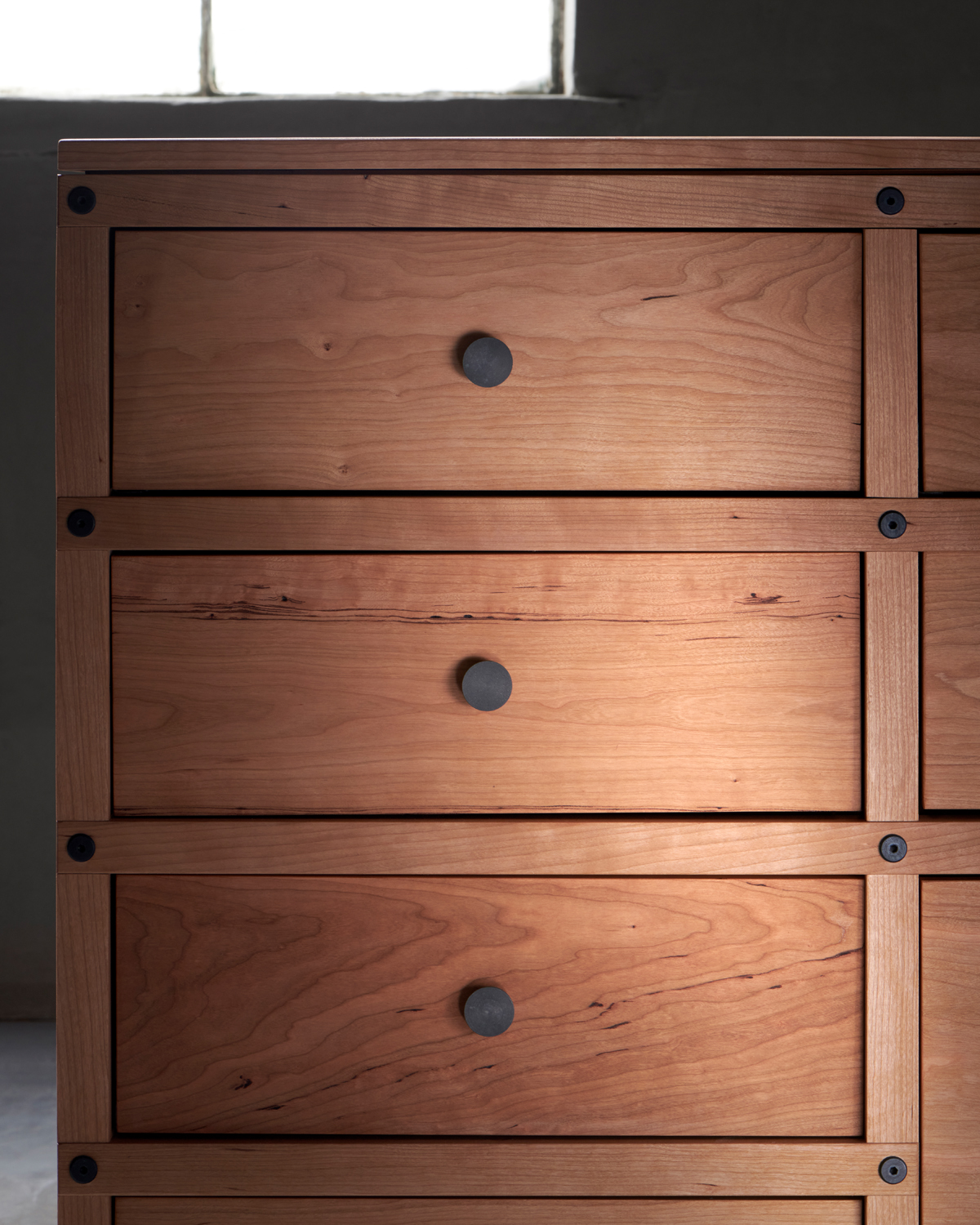
Photo by Black & Steil
The Meridian Collection is designed with disassembly in mind. “At the end of its life, the whole piece can come apart,” she explains. “All those panels and rails can be unscrewed and diverted into their own material flows.”
Meridian’s scale suits both small apartments and larger homes. The dressers feature drawers of varying depths, each lined with linen. Horizontal rails frame the drawer faces, drawing the eye to the wood’s natural grain. Cast iron drawer pulls complement the exposed bolts. “There’s no hiding anything here,” June says. “You see the bolts. You see the wood.”
June also works with a fourth-generation family mill to ensure transparent sourcing. All finishes are plant-based and VOC-free. Upholstered pieces use organic latex and natural fibers.
What Comes Next
Loose Parts’ studio is located at 388 Main Street in Catskill. The Meridian Collection is made to order, with a lead time of 8 to 10 weeks. The Seven-Drawer Dresser is $7,800, the Three-Drawer Dresser is $4,600, and the Nightstand is $3,600. Pieces are available through the website Loose.parts and select New York retailers.
The Meridian Collection serves as the jumping-off point for a Loose Parts kitchen furniture line planning to launch on October 16. Like Meridian, the kitchen pieces will feature solid wood, exposed joinery, no adhesives, and modular, freestanding units designed to be disassembled and moved easily.
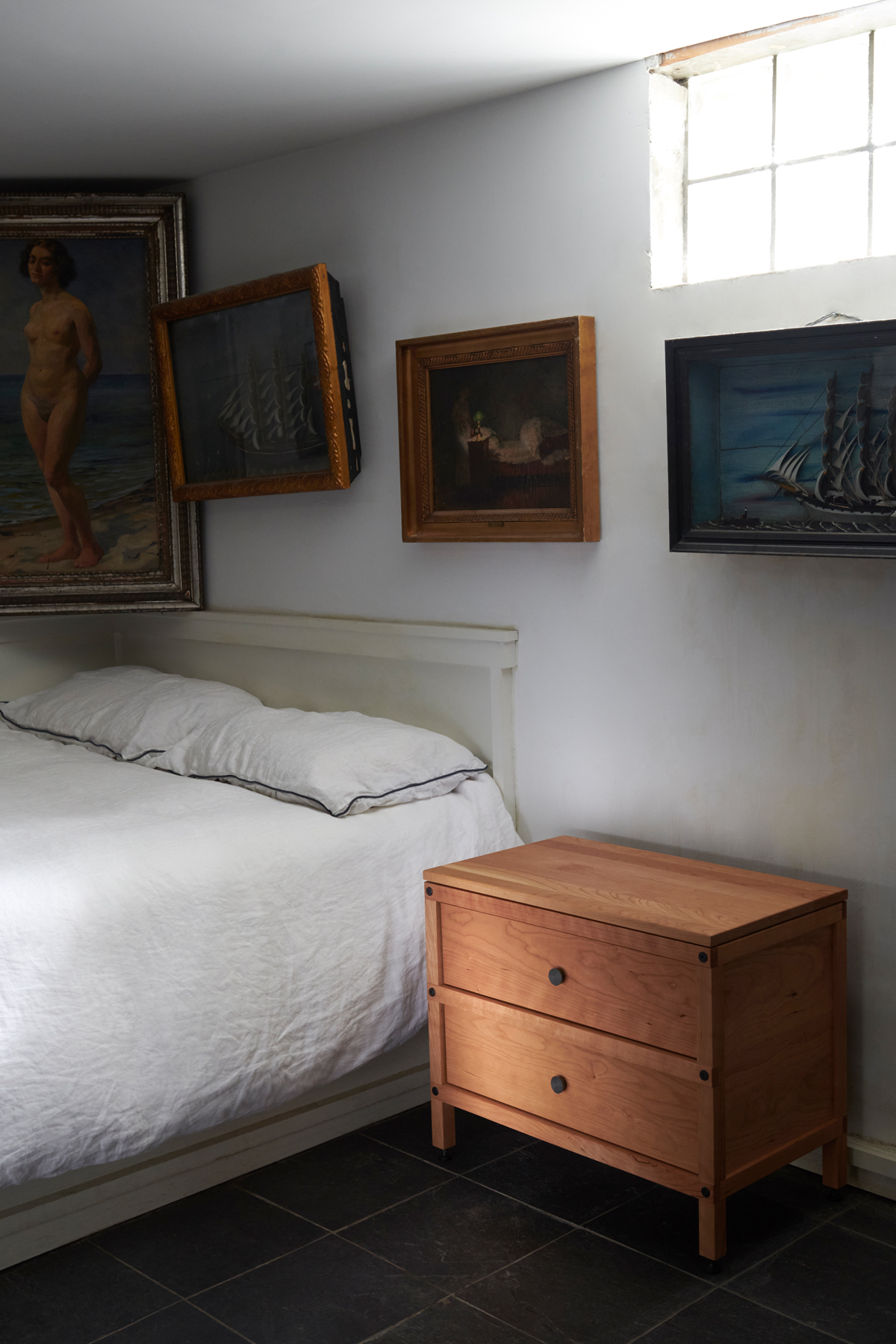
Photo by Black & Steil
“I feel like kitchens sometimes look like they’re not part of the house,” June says. “They have a very built-in look at times. I want to play around with what a kitchen can look like. Can it feel like another room in the house, with the same character as the furniture in the other rooms?”
With her modular kitchen line on the horizon, June continues to explore how furniture can shape—and shift—our experience of home: “The act of making reveals something greater than the original idea itself,” she says.