
Rooted in Savings: Budget-Smart Gardening Strategies
By Joan Vos MacDonald | Spring 2025 | Farm & Garden
According to a Chinese proverb, life begins the day you start a garden. That’s true whether you fill a garden box with zinnias or plan a formal garden with boxwood hedges. But don’t pick up a shovel just yet. Gardening is enriching, but it can also be expensive. The following tips from talented Hudson Valley gardeners can keep your gardening budget from growing out of control.
Tip 1. There’s No Need to Do Everything at Once
If you’re working with a landscaper, take some time to think about what you want, how much you are willing to spend, and always ask questions. Paul Goldbacher, garden designer at Hudson River Valley Gardens, asks clients about their long-term goals before zeroing in on a budget.
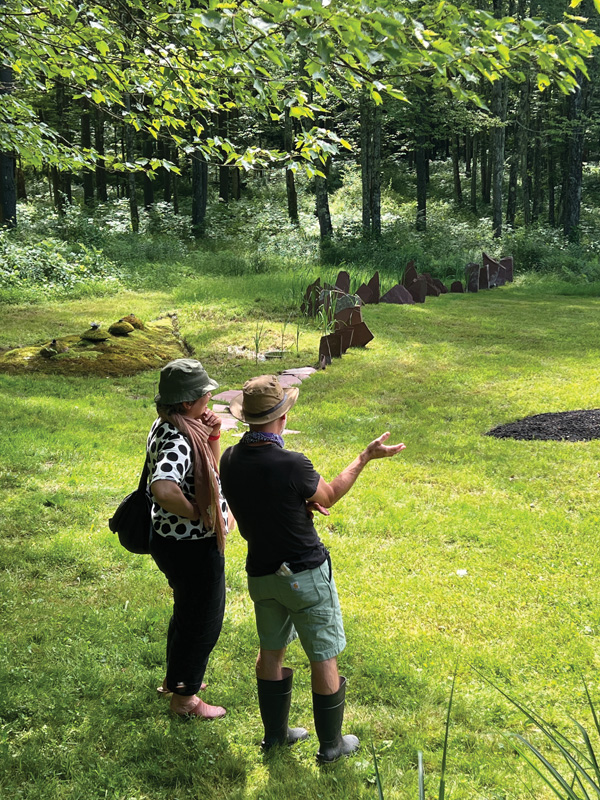
Paul Goldbacher of Hudson River Valley Gardens touring one of his garden creations in Tillson last summer.
“If you can’t do everything at first, perhaps we can do it in phases,” says Goldbacher. “It doesn’t have to happen in one year. Then we can budget your money to do things right, rather than cutting corners.”
Mike Augustine of Augustine Nursery in Kingston agrees. “I think it’s important to compartmentalize,” says Augustine. “It is exciting to dream of a total yard or property makeover, but costs will add up very quickly this way. I try to work with my clients on selecting one or two priority areas to start.”
Tip 2. Think Long Term
When planning your garden, consider how much maintenance is involved. You may want to start small and choose low-maintenance plants. “If you can’t afford to have people come and take care of your garden, which can be expensive, start small,” says Eve Minson, a garden designer and founder of Just One Seed, based in Sullivan County. “You can put in a really cute and manageable small-scale garden and then grow it literally over time (no pun intended).”
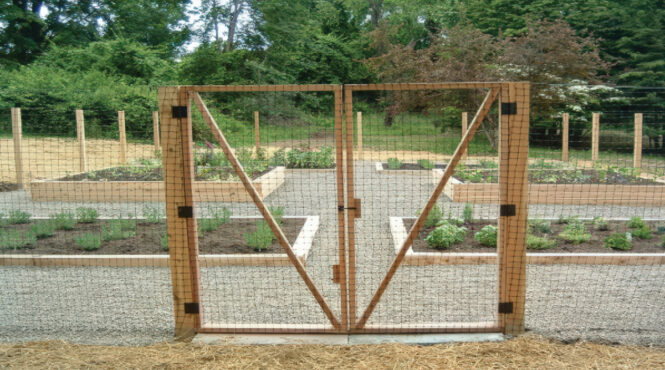
A simple raised-bed, fenced-in garden by Augustine Nursery. “Don’t even consider putting in a garden without doing your fencing,” says Minson. “It’s not going to survive.”
She suggests living with that garden for a year or two. “See how you’re using it, see how you are engaging with it, or maybe it doesn’t work for you,” says Minson. “The most important thing is to think things through. Because if it’s not cared for, you’re going to hate it and you’re not going to engage.”
Grand gardening ideas sometimes lead to impulse buying. “Homeowners just go out and start to buy things because they look pretty,” says Goldbacher. “But they don’t really know what they’re buying. There’s a lot of impulse buying. To avoid impulse buying, try to understand what the long-term goal is.”
Tip 3. Check the Soil and Add Nutrients
Not every plant prefers the same soil composition, so check pH levels. Also, adding nutrients can maximize the outcome. “Soil testing before planting is always a good thing to do,” says Augustine. “Depending on your soil pH, certain plants may thrive or struggle. A lot of plants like soil slightly acidic, but there are some popular varieties like lilacs that prefer the soil slightly alkaline.”
Both Goldbacher and Minson emphasize the importance of enriching soil with natural materials. Minson explains that in nature, plants thrive in habitats specifically suited to their ecological needs. Factors like soil content, water availability, minerals, and the geology of the area play a critical role in creating optimal conditions over time. “When we create a backyard garden, we need to tailor it to the specific needs of the plants we’re growing,” she says.
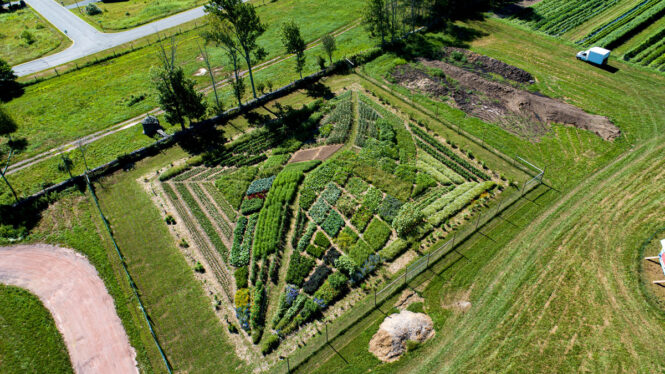
Courtesy of Eve Minson
For example, native plants often require fewer nutrients than vegetable gardens, making them well-suited to local conditions. “Healthy soil teems with life—microbes, fungi, and organic matter—all working together to nourish plants and help them adapt,” Minson notes. Without this balance, she warns, plants struggle to grow, much like humans would without proper nutrition.
By focusing on cultivating nutrient-rich soil, gardeners can establish a thriving ecosystem that supports robust, resilient plants. An organic and biodynamic farmer, Minson enriches her soil with compost manure, algae, stone dust, and kelp. Goldbacher likes to use organic matter. “Typically, if I go into restoring or remediating a garden,” says Goldbacher. “After I choose the plantings and start the digging process, I usually add lots of organic matter. “If you continue to add or work-in your organic matter over time, it makes the ideal formula for a good soil for planting.”
Tip 4. Select Plants Likely to Succeed
A good formula for garden success is to select proven winners. Minson favors herbs, tomatoes, and annual flowers as a good way to start a smaller garden. “So you’re talking tomatoes, basil, chamomile,” says Minson. “Then maybe something like sunflowers and zinnias, or cosmos, which are annuals.”
For landscaping, Augustine recommends a mixture of evergreen shrubs that stay green all year and deciduous shrubs that provide pops of color during the growing season. He likes to use native species whenever possible. Some personal favorite native shrubs include Clethra, Itea, Diervilla, and Ninebark.
“Although Boxwood is not a native variety,” says Augustine. “They are a tried and true, deer-resistant evergreen that should be mixed in at some level in most landscapes.”
Goldbacher’s plant selection also factors in local wildlife. “If there are deer involved or other wildlife—that’s a huge issue in the Hudson Valley and the Catskills—I typically try to work with native plants, meaning there are certain nurseries that I support because they do specialize in plants that are pretty much native to this region.”
Tip 5. Shop Local for Know How
Shopping locally is not just about supporting local businesses. The plant knowledge available at local nurseries can save gardeners money and heartache. “Avoid big box retailers, because they don’t necessarily grow their plants locally,” says Goldbacher. “Support the local nurseries, You get a lot of knowledge from them.”.
“A lot of local nurseries are family-owned by real plant lovers,” says Augustine. “They have years of expertise and advice to share and are happy to do so.”
Tip 6. Protect Your Plants
Plants are an investment, so you may want to discourage wildlife from nibbling on tender leaves. For a gardening box, consider netting. For larger plots, put up a fence. “If you’re in the country, there’s no question,” says Minson. “Absolutely don’t even consider putting in a garden without doing your fencing. It’s not going to survive. And then you’re going to be totally disappointed and say, ‘Oh, what did we spend the money for?’ If you have a little bit of money, put the fence up first and then everything else will be protected.”