
It’s Electric! How and Why to Electrify Your Hudson Valley Home
Smart Upgrades, Heat Pumps, and Efficiency Tips for 2026
By Kiara Carman | Winter 2025 | Clean Power Guide
Electrification is at the heart of our energy transition. Combustion will never be truly clean, but electricity powered by renewables can be. Yet every heat pump and induction stove adds demand to a grid already under strain. To keep the transition affordable—and resilient—we have to pair electrification with serious energy efficiency.
An easy way to increase energy efficiency is through appliance choices. Federal appliance standards are periodically updated—the most recent update was in 2024—and so far, they have withstood political headwinds. You can buy one electric induction burner for primary cooking needs, use minimal energy, and impress your guests.
A bigger opportunity for efficiency lies in the buildings themselves. In New York State, buildings account for 32 percent of all greenhouse gas emissions. In response, lawmakers passed the All-Electric Buildings Law, which requires that most new construction use electric heat and appliances beginning in 2026. The law applies only to new buildings, not existing homes or renovations.
Electrifying a home benefits both people and the planet. Homeowners can save on heating and cooling while gaining more precise control over temperature, humidity, and noise. All-electric homes are also healthier: Without fossil fuel combustion, there are no fumes, indoor pollutants, or risks from gas leaks. Cleaner indoor air reduces respiratory issues, and removing oil and gas systems eliminates the potential for spills and other environmental hazards. By switching to electric, we cut emissions and support a safer, healthier climate future.
New Construction Considerations
Homeowners planning new construction should know that all-electric homes can save up to $1,000 a year on heating costs. They’re also cheaper to build, since one heat-pump system replaces separate heating and cooling equipment. Efficient all-electric homes use far less total energy than buildings that rely on fossil fuels.
Some worry about winter performance, but modern cold-climate heat pumps operate effectively down to -13°F while using roughly one-third the energy of oil or gas systems. And in the event of a power outage, backup generators are still permitted for new homes. Concerns about grid capacity are valid, but New York is already expanding renewable generation and transmission to meet rising electric demand.
Retrofit Considerations
For homeowners planning to convert an existing house to all-electric, the first step is weatherization. Improving insulation, sealing air leaks, and upgrading windows reduces heat loss and lowers energy use, which makes it possible to install smaller, more efficient electric systems. Weatherization cuts energy costs and ensures heat pumps and other electric equipment perform at their best.
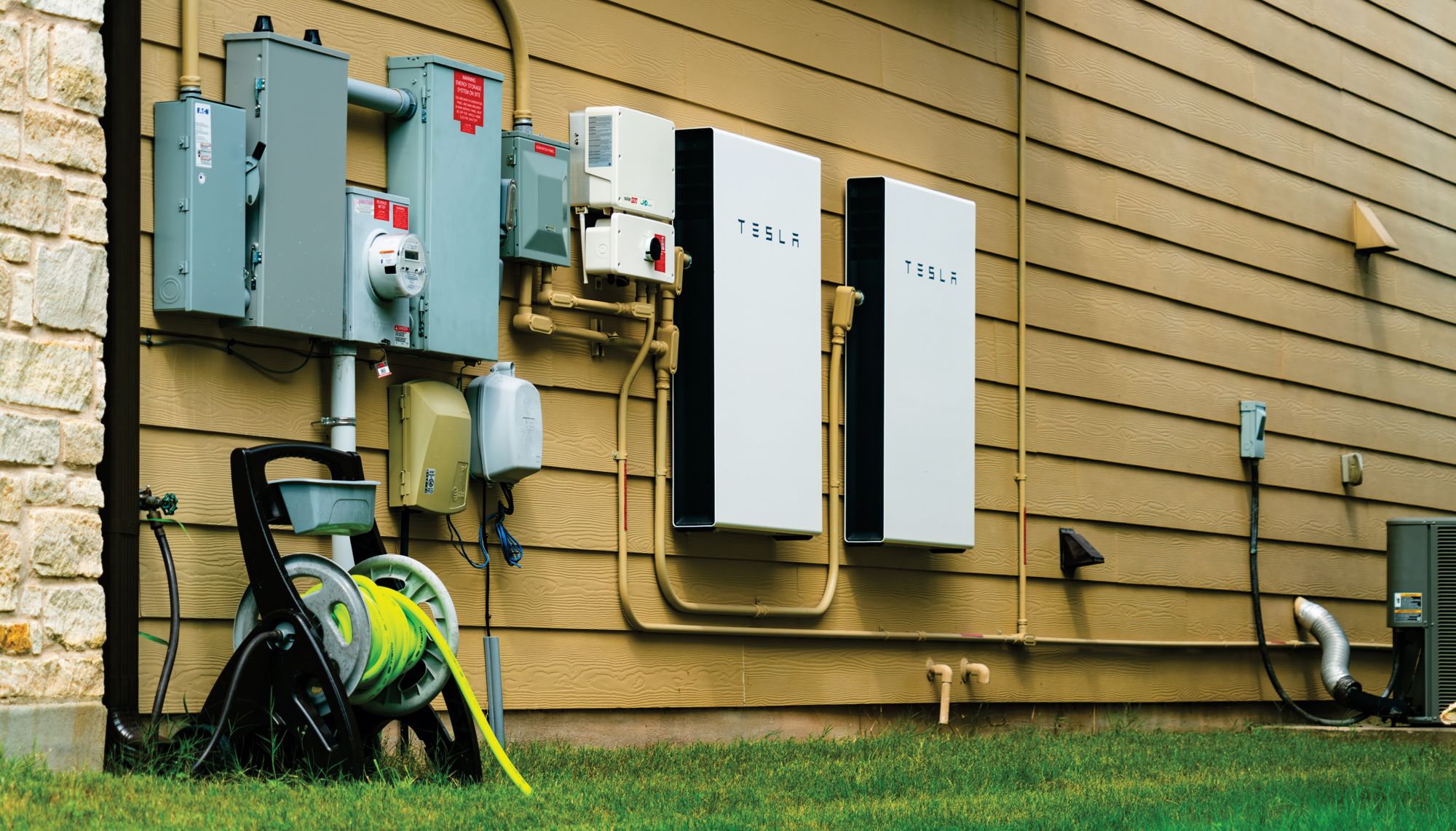
Home battery storage keeps critical loads running during outages and helps manage demand as electrification increases.
After improving the building envelope, homeowners should take advantage of available incentives. New York State offers rebates, tax credits, and low-interest financing for heat pumps, insulation, and other clean-energy upgrades.
If you’re considering solar, electrify first. Because solar systems are often sized based on a home’s current energy use, completing electrification and efficiency upgrades before installation ensures the solar array can meet your long-term energy needs.
Loads and Home System Upgrades
Your home’s electrical load is the amount of power your devices use at any given time, measured in watts or kilowatts. This includes lighting, appliances, HVAC systems, and EV charging. You can estimate your load using the Department of Energy’s online calculators or by reviewing your utility bills.
Every home also has a fixed electrical capacity—the maximum amount of power it can safely handle. Electrification increases demand, so it’s important to assess your electrical panel and wiring before upgrading systems. In some cases, you may need a panel upgrade; in others, your existing service may be sufficient. A licensed electrician can evaluate your system, prevent overloads and safety risks, and recommend the right upgrades.
Once you know your load and capacity, you can plan improvements. Start with simple steps like replacing bulbs with LEDs. Next, consider swapping older appliances for efficient, Energy Star-certified electric models, which reduce energy use and lower bills. The largest upgrades—heat pumps, electric water heaters, and other HVAC systems—typically make the biggest impact. The ideal time to replace these systems is as they near the end of their life, though it’s wise to plan ahead so you’re ready to choose a clean, efficient option when the time comes.
Upgrades can be done all at once or in stages. Prioritize improvements that deliver the greatest savings—often heating systems, especially if you currently use oil. Rebates, tax credits, and financing incentives may also influence timing, since taking advantage of available programs can significantly reduce costs.
Kiara Carman is Sustainable Hudson Valley’s Communications Associate and a graduate student at Bard College.