
Designing Home Ventilation & Passive Cooling Systems
By Ryan Keegan | Summer 2025 | High-Performance House | Home Improvement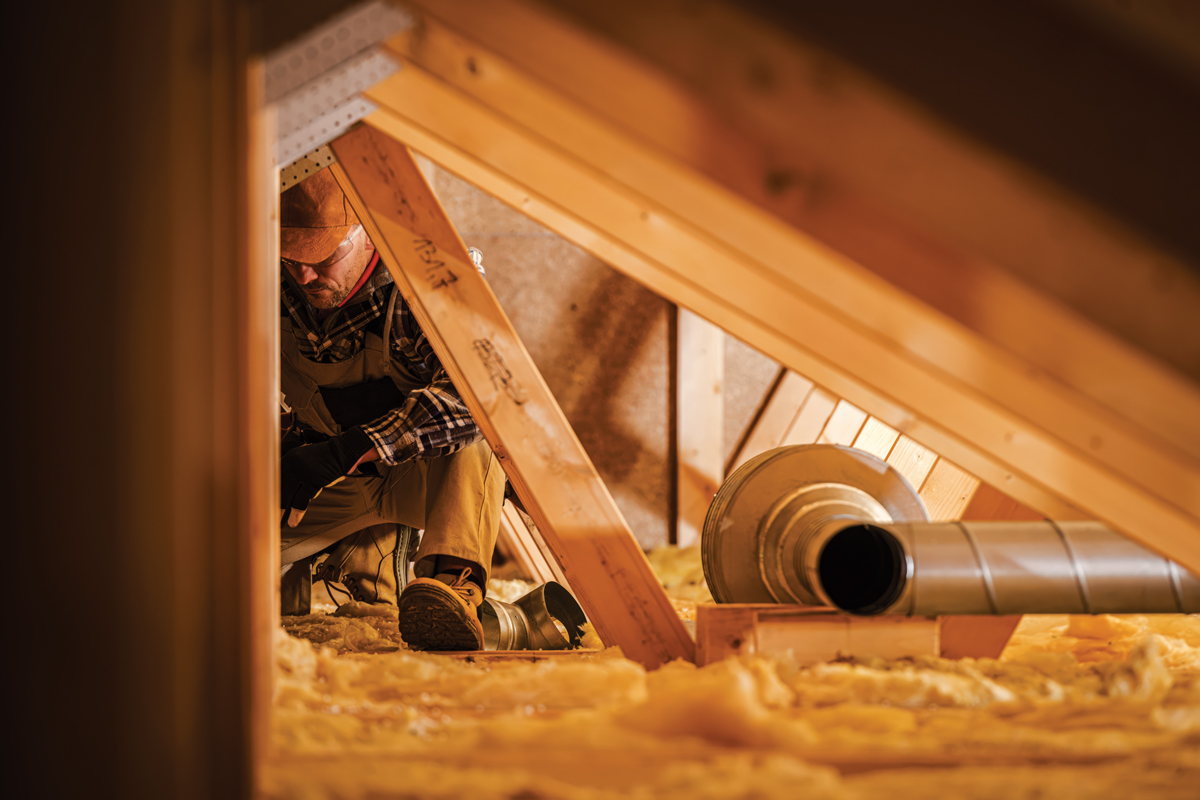
With summers growing hotter and energy costs on the rise, many homeowners are seeking smarter, more sustainable ways to stay cool. When the weather turns sticky, our first instinct is often to reach for the thermostat. But staying comfortable doesn’t have to mean blasting the AC and watching your energy bill climb. Instead of relying solely on traditional air conditioning, more people are turning to practical strategies like passive cooling and improving the ventilation design of their homes. Across the Hudson Valley, designers and builders are helping residents renovate their homes—whether through upgrades, retrofits, or small design tweaks—to stay cooler naturally and more efficiently.
Start with the Foundation
The first step to keeping a home cool isn’t adding new equipment—it’s preserving the cool air you already have. “Air sealing and insulation should be your first step; otherwise, you’re just adding electric load to a still leaky building,” says Melinda McKnight of Energy Conservation Services. “Once a home is properly sealed and insulated, any cooling—passive or mechanical—becomes significantly more effective.”
Air sealing means finding and closing the small cracks that let cool air escape or hot air seep in. Many of these leaks hide in plain sight. Common problem areas include the rim joist (where the first floor meets the foundation) and attic top plates. Leaks also occur where plumbing or electrical systems pass through the building envelope, such as behind kitchen sinks. “Basically, anywhere wood meets wood or wood meets masonry, there can be leakage,” McKnight says. Even if gaps aren’t visible, drafts, pests, or uneven temperatures often suggest their presence.
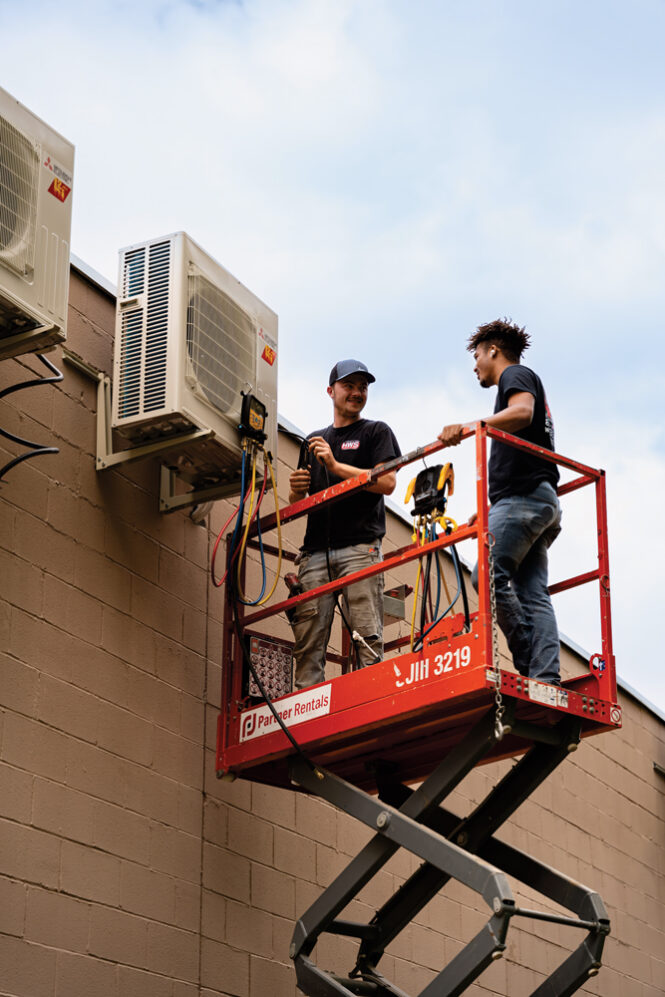
Mini-split systems offer room-by-room temperature control, whisper-quiet operation, and impressive energy efficiency—making them a smart upgrade for year-round comfort.
To locate leaks, professionals perform a blower door test—a diagnostic using a calibrated fan and pressure monitor to measure air leakage. While required for new construction under New York State energy code, McKnight says it’s just as valuable for existing homes. “Buildings professionally air sealed and insulated can use much less energy to cool,” she notes. “In the last nine months, our sealed homes showed an average 32 percent drop in air infiltration—translating directly to energy savings.”
Passive Strategies that Work
Simple design choices and habits can also keep indoor temperatures comfortable. On hot days, closing curtains or blinds can reduce heat gain. For better results, McKnight recommends energy saving drapes, which reflect heat and insulate windows. “My house is well insulated, and I still close my drapes when it’s warm,” she adds.
Small details in the home can impact temperature more than you might expect. Recessed ceiling lights, for instance, can act as thermal bridges, letting heat into your living space if not properly sealed. “We install covers for those to help reduce heat transfer,” McKnight explains. Similarly, older double-hung windows with sash pulleys—common in historic Hudson Valley homes—can be drafty. Installing pulley covers helps block unwanted airflow.
Dan Arket of Tekra Builders emphasizes the value of passive solar design, which uses natural elements to regulate indoor temperature. A prime example is strategic landscaping. Planting deciduous trees near the sunniest sides of your home—especially around south-facing windows—can provide natural shade and reduce solar heat gain. “You get shade in the summer when you need it most, and in winter the leaves drop and let the sun warm your house again,” he says.
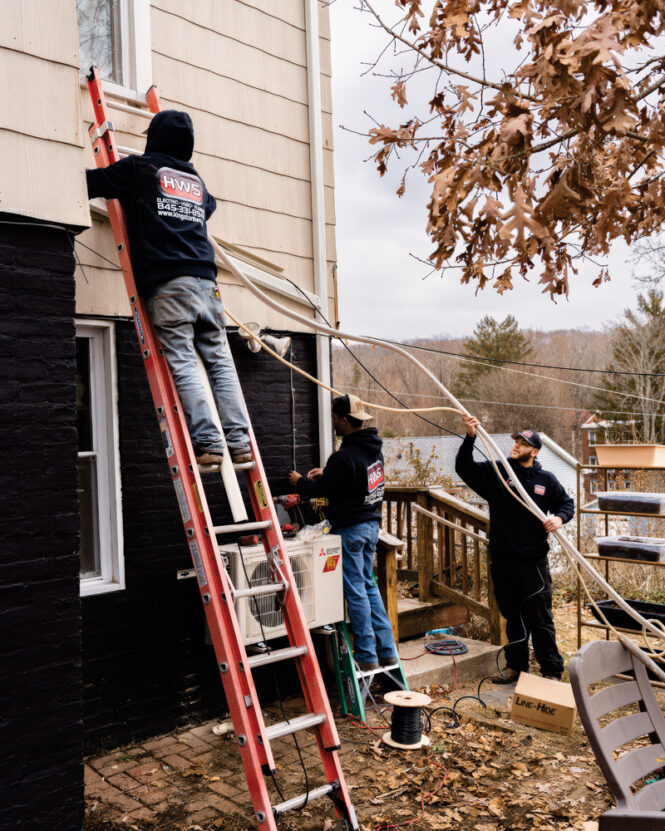
He also cautions against dark colored exteriors. “Black homes are a nice trend and look great, but dark surfaces absorb a lot of heat,” he notes. “Lighter, more reflective colors can be more practical.”
Cross-ventilation is another low-tech cooling strategy. “It’s about creating a cross breeze to move air through the house,” Arket explains. Ideally, that means having a lower window open on one side of the home and a higher window open on the opposite side to create a stack effect that draws warm air up and out.
This technique works best when outdoor air is cooler than indoor air—typically early morning or night. “You don’t want to run your air conditioner while cross-ventilating, since you’d be pulling in warm air,” Arket adds. “Use cross-ventilation early in the day and at night, then close windows and switch to AC during the hottest part of the day.”
For an extra cooling boost, Arket also suggests installing a whole-house fan—especially in older homes. These fans, typically mounted in the ceiling of an upper floor, draw cool air through open windows and push warm air up and out through attic vents.
Cooling That Goes Further
When mechanical cooling is necessary, heat pumps—especially ductless mini-splits—offer an energy efficient option. These systems can cool (and heat) individual rooms or entire homes, using far less energy than traditional AC units.
Unlike conventional air conditioners or furnaces that cycle on and off, heat pumps modulate their output, running at lower speeds for longer periods to maintain steady indoor temperatures.
“The biggest difference is comfort,” says Matt LeFevre of Hot Water Solutions. “Heat pumps remove humidity more effectively and keep temperatures more consistent.”
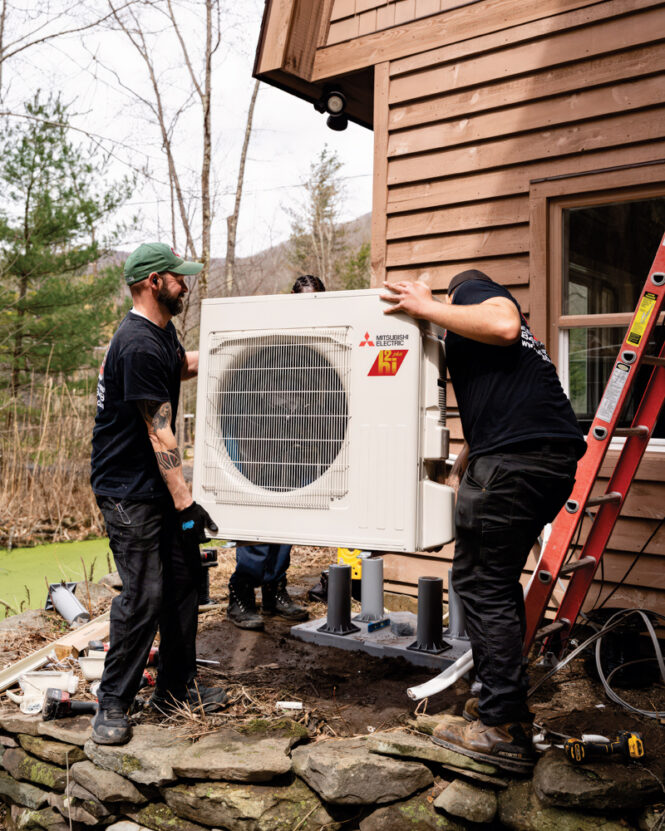
Workers install a Mitsubishi mini-split system for Hot Water Solutions—bringing efficient, all-electric comfort to a Hudson Valley home.
Despite the name, heat pumps are excellent at cooling. “We size them for winter heating needs, so when summer comes around, they’re more powerful than necessary and can operate on lower settings,” LeFevre explains. “Adding a heat pump also means you’re adding central air.”
Heat pumps can reduce cooling bills by 30 to 60 percent due to their steady operation. “They only use the energy needed to temper the space,” LeFevre explains.
Additionally, New York homeowners may qualify for rebates through the Clean Heat Program, offering up to $1,000 per unit if removing a fossil fuel system. Federal tax credits of up to $2,000 for qualifying installations are also available under the Inflation Reduction Act.
Transitioning to a heat pump system is often straightforward, especially for homes with existing ductwork. “We just replace the equipment and reuse the ducts,” LeFevre says. For homes without ducts, ductless systems—like mini-splits—offer room by room control. And for homeowners using solar panels or considering renewables, heat pumps are an ideal match. “When you go electric, you can power your heating and cooling with your solar system,” LeFevre says. “You use less electric and do the environment a favor.”