
Turning to Building Science For More Comfort Year-Round
Presented by Energy Conservation Services Inc. | Fall 2025 | SPONSORED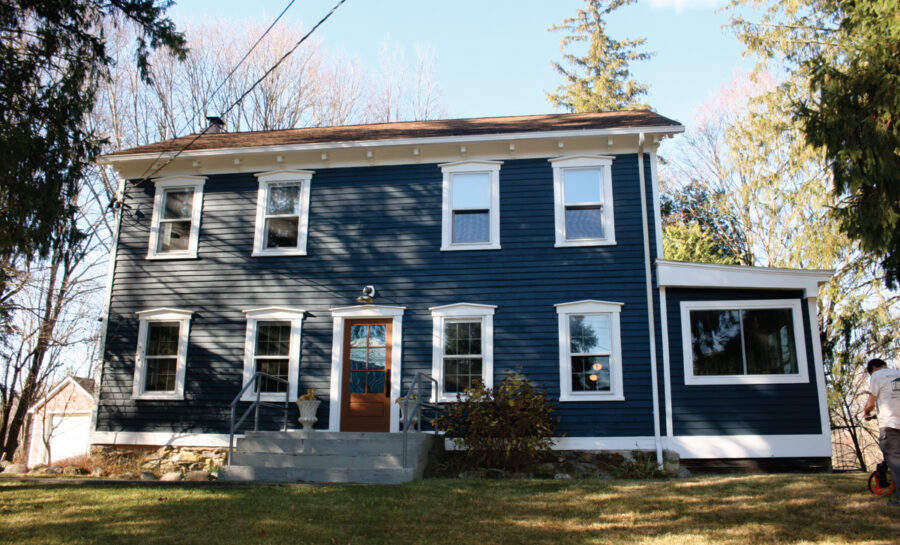
As the seasons shift and cooler weather settles into the Hudson Valley, many homeowners’ minds turn to making it through the winter without sky-high utility bills. While it may be tempting for those living in older or drafty homes to jump to upgrading heating systems or installing mini split heat pumps, simple energy efficiency upgrades like insulation and air sealing can make a noticeable difference and set future renovations off on the right foot.
“We get so many phone calls from people who tell us they had heat pumps installed and their electric bill is huge and they’re still not comfortable in their house,” says Melinda McKnight, CEO of Energy Conservation Services in Port Ewen.
Unlike traditional contractors who focus on one system at a time, Energy Conservation Services (ECS) takes a whole-house view to improving energy efficiency that’s rooted in building science. ECS has been working at the intersection of comfort and efficiency since McKnight and her husband William founded the company in 2010. “Our perspective and our training is all about looking at the house as an integrated system,” says McKnight.
Their approach begins with testing and diagnostics to assess where a home is losing energy, then provide a recommendation for how to approach the issues and stage them in the correct order. Because peak building performance depends on how well systems interact, even well-meaning upgrades like heat pumps or solar panels can fall short if the house isn’t properly sealed and insulated beforehand.
For instance, in one recent project, ECS worked on an 1870s Colonial with significant air leakage. After removing damaged insulation and applying targeted measures including air sealing and insulating the attic, floor joists, and floors, they were able to achieve a nearly 44 percent reduction in air infiltration. The result was not only a more energy-efficient building, but a much more comfortable one.
For homeowners who want to see real improvement in their homes before winter, McKnight also recommends taking advantage of the federal 25C Energy Efficient Home Improvement Tax Credit, which is set to expire at the end of this year. The incentive can help cover the cost of many of the improvements ECS undertakes, including the initial energy audit, as well as insulation and air sealing.
“Many builders are starting to understand the importance of the building envelope,” says McKnight. “But they’re not trained in building science. It really is time that people start to think of building science in their usual list of trades.”