
The Business of Being Ready with JSP Home Services
How JSP Home Services built a 110-person operation to take the waiting—and worry—out of home repair
Presented by Chronogram Media Branded Content Team | Fall 2026 | SPONSORED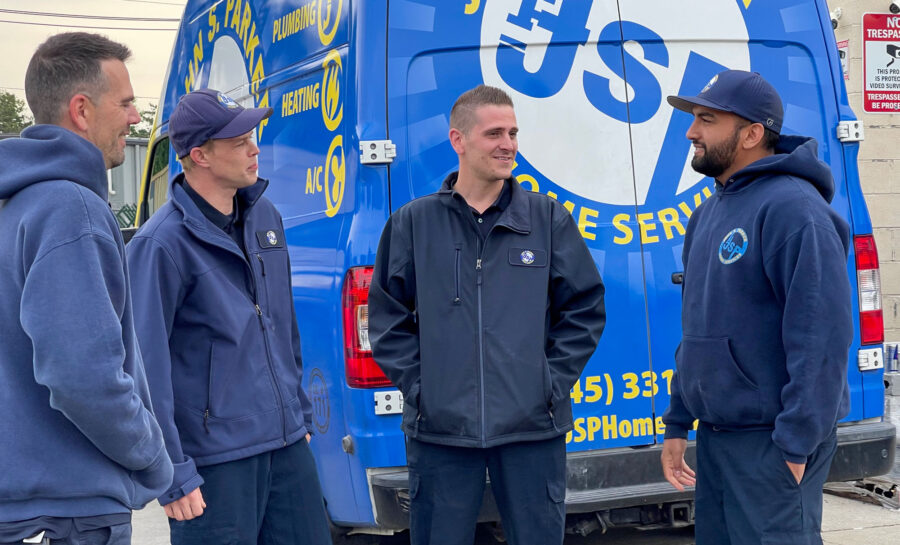
When a JSP Home Services technician arrives at a house, he doesn’t arrive alone. Behind him are customer-service representatives, dispatchers, warehouse workers, salespeople, installers, managers, vendor partners, and an inventory system designed to get the job done without days of delay.
“For every technician you see in the house, there are 12 people behind him,” says JSP founder John S. Parker. “There’s a fleet of people functioning and doing what they need to do to support him in the field.”
That support network is central to the way JSP operates. The Kingston-based company has 110 employees, approximately 50 service trucks, a dozen installation crews, and technicians stationed throughout a territory stretching from Putnam County to just south of Albany and east to the Massachusetts border. JSP offers plumbing, heating, cooling, electrical, drain, sewer, duct-cleaning, and indoor air- and water-quality services, with online booking and live answering available around the clock.
All of that infrastructure serves a simple purpose: reducing the time between discovering a problem and getting it resolved.
“We’re collapsing time in what we do every day,” Parker says.
From One Trade to the Whole House
Parker’s route to building one of the Hudson Valley’s largest home-service companies began in 2006 when he launched the business that would become JSP Home Services. By 2016, JSP had grown into a company with 10 employees. Parker shifted its emphasis from construction projects to residential service, where responsiveness, communication, and ongoing customer relationships are especially important. He also began expanding the range of work JSP could handle.
Parker was trained and licensed in plumbing, then studied heating and air conditioning and developed those skills in the field. JSP added HVAC services, followed by electrical work in 2016. More recently, JSP has expanded its drain and sewer capabilities, including mainline replacements, camera inspections, hydro jetting, and trenchless sewer work.
Today, a homeowner can call the same company about a leaking pipe, failed boiler, broken air conditioner, clogged sewer line, electrical problem, generator, water heater, mini-split, or indoor-air concern.
That breadth is convenient, but it also reflects how houses actually function. Plumbing, electrical, heating, cooling, ventilation, and water systems often overlap. Homeowners may notice a symptom without knowing which system is responsible, leaving them to call several contractors before finding the right one. JSP’s goal is to make that diagnosis and coordination part of the service.
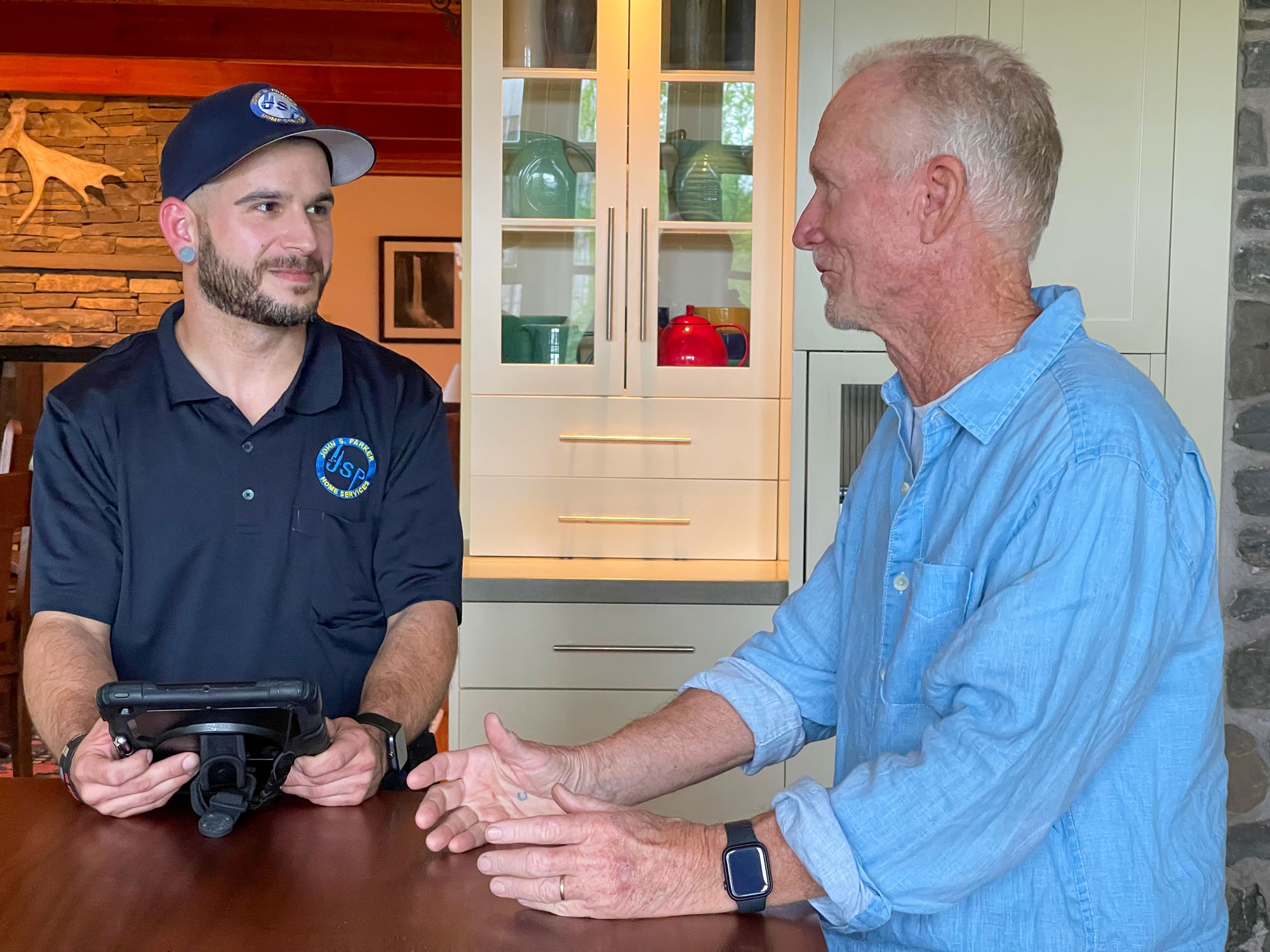
The company is also cataloging the equipment in customers’ homes. Technicians can photograph a unit’s serial number and pull in information about its manufacturer, age, installation manual, and warranty status. For members enrolled in JSP’s maintenance program, the company tracks inspections and follows up about plumbing, electrical, heating, and cooling systems.
“The goal is to understand what’s in the home and be as preventative as possible,” Parker says. “Most of our peak season comes when it’s really hot or really cold. That’s when people find out everything isn’t working properly.”
Building for the Emergency
Preventive maintenance can head off many failures, but no system eliminates emergencies. Pipes still burst. Boilers stop producing heat in January. Air conditioners fail during heat waves, when every HVAC company in the region is fielding calls at once.
Parker describes JSP’s role as a form of triage: The company is prepared to assess same-day surprises, identify what needs immediate attention, and deploy the right people and resources to address them. Its operation has been built around responding quickly when a household system fails and time matters.
Calls are entered into JSP’s customer-management system and passed to a team of dispatchers, who determine where technicians are located and who is best equipped for the job. Because many technicians take their vehicles home, they begin and end their days across JSP’s service territory instead of returning to a single Kingston location.
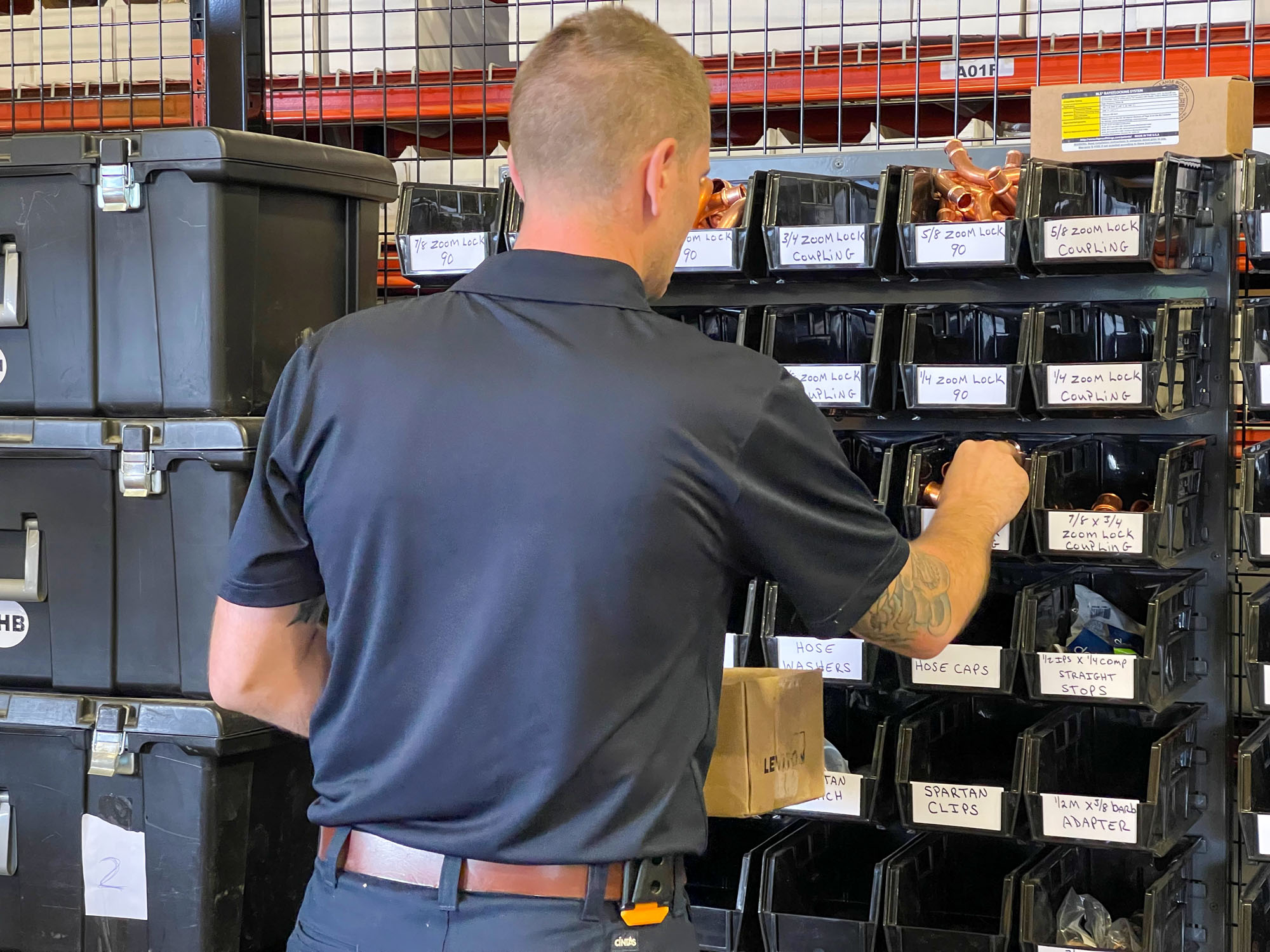
Those trucks are supported by a 12,000-square-foot warehouse at 25 Cornell Street in Kingston. The building is stocked with frequently needed equipment and parts and includes a vendor-managed Home Depot inventory operated expressly for JSP. If a technician discovers that a job requires a replacement component or new piece of equipment, the company can often source it without sending the homeowner into another long round of scheduling.
JSP’s relationships with manufacturers serve the same purpose. Parker has worked closely with Lennox since around 2016 and values the company’s ability to supply equipment and resolve warranty issues quickly. If a newly installed outdoor AC unit proves defective, for example, JSP can often replace the entire unit instead of making the homeowner wait while technicians attempt repeated repairs.
“That trickles into the customer experience,” Parker says. “If I need something quickly, I can get it done.”
Premium-Level Service
Parker acknowledges that maintaining this level of readiness comes at a premium. Customers are paying for more than the hours a technician spends at the house. The price supports licensing, insurance, training, stocked vehicles, warehouse inventory, dispatchers, customer-service staff, installation crews, and the capacity to respond when demand surges.
“The trade-off is that you’re paying for the level of service as opposed to the time,” he says.
For many JSP customers, that trade-off is worthwhile. Parker describes them as busy homeowners and professionals who don’t want to spend days calling contractors, comparing schedules, and managing follow-ups. They want the problem clearly explained, the price established in advance, and the work completed.
JSP technicians follow a six-step service system covering how they greet the homeowner, establish the agenda, inspect the house, explain current and potential concerns, present options, perform authorized work, and wrap up the visit. Employees train on that system twice a week, with particular attention paid to communication.
Meanwhile, online booking has grown rapidly as homeowners increasingly expect scheduling a service call to be as straightforward as ordering dinner or arranging a ride.
The training and technology support an idea Parker first encountered when he stopped thinking solely as a plumber and began thinking as a business owner: A good repair matters, but the customer’s entire experience matters, too.
Nearly two decades after launching JSP from a single truck, Parker’s primary work is building the system surrounding the person who rings the doorbell. Homeowners may never see most of that system. What they notice is that someone answered, someone arrived, and the problem that disrupted the household is finally off their plate.
JSP Home Services
(845) 280-5199; Jspplumbingandheating.com