
The Art of Solving a Room
Ana Claudia Design Starts with People
Presented by Chronogram Media Branded Content Team | Fall 2026 | SPONSORED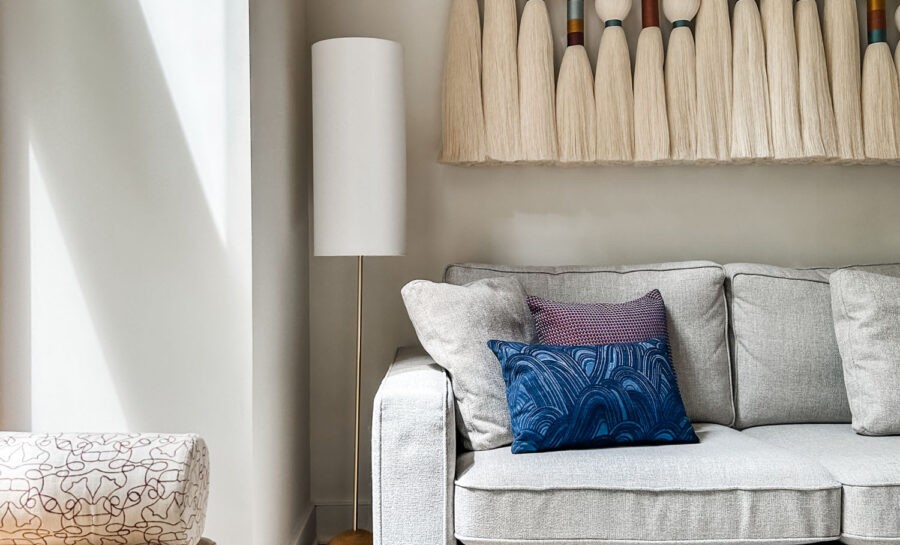
A family wants a living room that can hold 20 people without blocking its Hudson Valley views. They need space for conversation and board games, but French doors limit where the furniture can go. They want a dining table for 12, though definitely not one long table.
For Ana Claudia Schultz, these competing demands are where design gets interesting. “Maybe I’m a sadomasochist, but I love problem-solving,” says Schultz, owner of Ana Claudia Design. Her solution to the dining-table puzzle, developed with local woodworker Andrew Finnigan, was a pair of circular tables that join for dinner and separate for games or larger gatherings. Together they seat 12; pulled apart, they accommodate 15.
That ability to find the real problem inside a room—and create an unexpected answer—anchors Schultz’s practice. Based in Rhinebeck, Ana Claudia Design works with residential and commercial clients throughout the Hudson Valley, New York City, Westchester, Connecticut, and Massachusetts. The studio offers custom furnishing and decor, interior renovations, and design for new construction, overseeing projects from initial space planning through installation.
Schultz studied architecture and worked in the field for nearly a decade, but interiors had always been her destination. What interested her was the relationship between space and psychology: how clutter can heighten a sense of overwhelm, how warm, layered lighting can ease the transition into morning, and how a home’s arrangement affects the rituals of daily life.
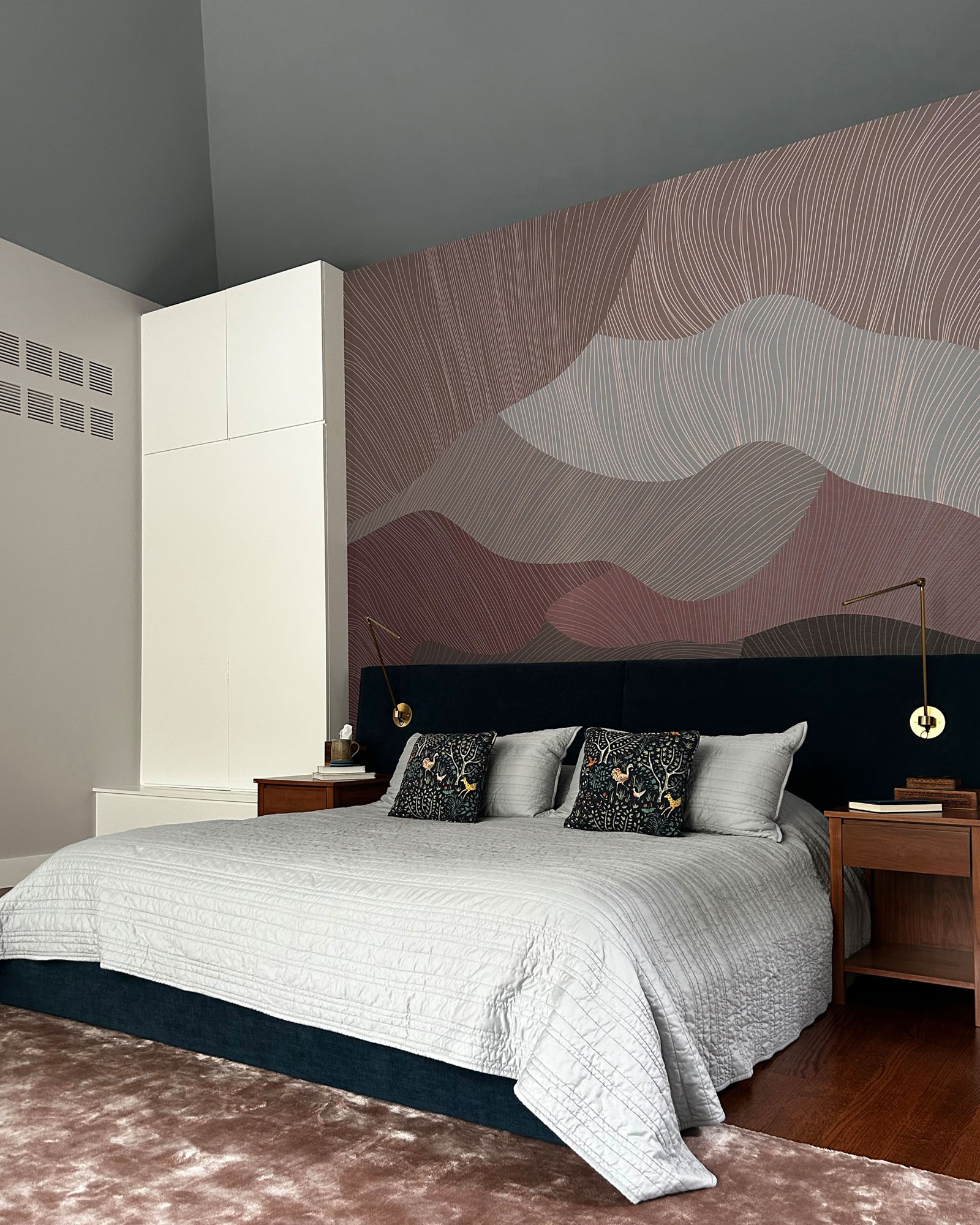
A bedroom designed by Schultz.
“I’m trying to really learn about them and what their daily life is like,” she says of meeting new clients. “I try to gain an essence of who they are so I can reflect that in their home.”
That requires observing how clients entertain, work, cook, travel, raise children, and live with pets. For one household, Schultz incorporated a ventilated cat-litter compartment into the lower half of a linen closet. In a Pawling primary suite, an awkwardly placed closet constricted the bathroom and created a dark, undersized shower. Schultz removed it, opened the bathroom for a large walk-in shower near the windows, and replaced the lost storage with custom millwork wrapping the bedroom and bathroom.
Her architectural background also informs how she approaches Hudson Valley homes. With an early-19th-century building, for instance, she may preserve the original architectural language while introducing contemporary furniture and art. Whatever the house’s period, Schultz resists imposing a regional formula.
“People have a tendency to get really caught up in trends,” she says. “It’s better to keep your home personal and bring in things that you really care about.” Her interiors layer objects collected through travel and different stages of life with furnishings from multiple periods, leaving enough visual space for each element to register.
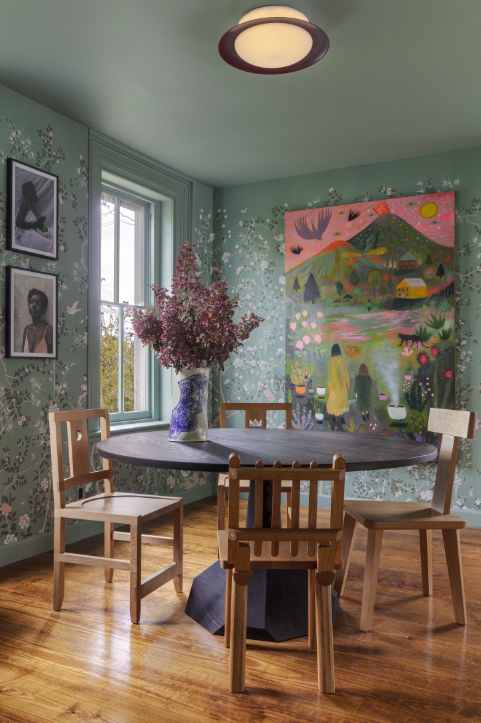
Many of those elements come from regional craftspeople. Schultz co-owns The Beck, a by-appointment design gallery in Rhinebeck, with her husband, Aaron Smyle. Its front window features a rotating selection of Hudson Valley makers, while the relationships formed through the gallery frequently lead to custom furniture, lighting, millwork, artwork, and accessories for client projects. This fall, The Beck will showcase the work of Aaron Getman-Pickering, a Hudson Valley woodworker and designer whose sculptural lamps draw on sources ranging from vernacular furniture to Japanese hollow-work traditions. Using cold-molding, a boatbuilding technique, Getman-Pickering layers thin strips of wood to create pieces that are lightweight, strong, and rooted in traditional craft.
Community support also shapes the studio’s intake process. In exchange for an initial site consultation, prospective clients donate to one of Schultz’s selected causes, including Grace Smith House, Dutchess County SPCA, the ACLU, and the Kayapo Project.
These threads—personal history, architectural thinking, regional craftsmanship, and practical ingenuity—come together in homes designed around the people living in them. As Schultz puts it, “It’s about finding a problem and solving it. Then that helps me get to the next step.”
Ana Claudia Design
6378 Mill Street, Rhinebeck
Anaclaudiadesign.com