
DIY to Net Zero: The Evolution of Home Efficiency
By Jeff Eckes | Spring 2025 | High-Performance House | Home Improvement
I’ve always loved winter: the holidays, snowboarding, a nice fire, cozying up on the couch watching old movies or reading a book, fewer work demands (construction, ya know…), the quiet intensity of a snowstorm, time to pursue my glass art, and my February birthday all combine to make it a time of year that helps me recharge for spring. Spring, of course, is when everything shifts back into high gear in my business. This year, however, it feels very different.
For starters, I turn 65 this year—a challenging milestone in anyone’s life. (New health insurance, new tax situation, new doctors, new hair in places it had never been, less hair in others—everything changes.) On top of that, I’m insanely busy with LDR Group right now. This is mostly due to a 12-week delay for a building permit this past fall, another home nearing design completion, and increased interest in high-performance homes in general.
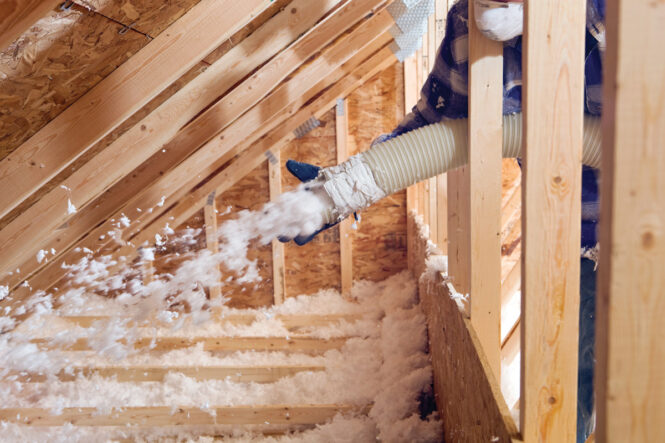
Worker spraying blown insulation in attic.
Second, the high-performance home industry is scrambling to figure out a way forward on multiple fronts. We’re fairly certain that any federally supported money for this kind of housing that hasn’t already dried up soon will. In the last issue, I said we were likely on our own. I didn’t think it would feel this profoundly alone.
I once read something I considered wise: We can only affect the parts of the world that touch our lives. I think that’s true. For most of us, that means family and friends. For some of us, it may mean a few hundred or thousand more—those who read our scribblings about various things. For a very few, their words can affect hundreds of thousands, if not millions. We all have a responsibility now to contribute what we can, where we can. To be truthful, we’ve always had that responsibility. It’s just more obvious now and becoming more apparent by the day.
In the last issue, I briefly listed a few ways we can advance our climate goals with our homes in a “big picture” way. In this issue, I’ll get a bit more granular. So let’s dive in!
Learn All You Can About What You Need Done
It’s okay to admit you don’t know how to do something. It’s not okay to remain uninformed. As a client, I don’t know exactly what you need, but I can learn and use that knowledge to both of our advantages.
My Boomer age group was called the “do-it-yourself” generation by some. We were all in on flooring, painting, bathrooms, and kitchens (channel your inner Martha Stewart to get the vibe). Yet, we rarely considered the “envelope” of the home—the part that keeps you warm and dry—unless it was broken and the rain was coming in. Fuel was cheap, climate change wasn’t really on the radar (for most of the public at least), and the money was easy. Why bother, right?
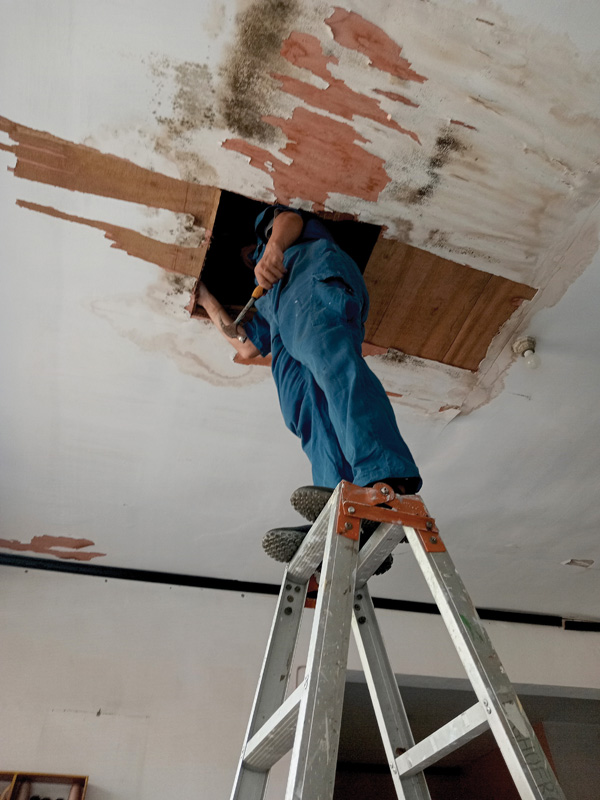
It’s okay to admit you don’t know how to do something. It’s not okay to remain uninformed. If you’re handy, you can learn the skills to upgrade your home. Even if you’re not, the knowledge you gain can save you thousands as you work with contractors to modernize your home.
Part of the reason I do what I do today in high-performance building is my reaction to how short-sighted we were back then and how much damage my generation did—and continues to do. Today, the envelope is everything. When I have a client doing a retrofit and it comes down to choosing between a sauna and a seven-jet shower or better sealing and insulation, I’ll counsel for sealing and insulation every time.
You can always update a trendy bathroom. Insulation in your home, though? That’s going to be there for decades. So if you need to seal and insulate your home, teach yourself. It’s not that difficult. Even if you don’t plan on doing the work yourself, getting the information will make you smarter about high-performance homes than most contractors. Then, you can better scope the work in the contract. If you’re handy, you can learn these skills. Even if you’re not, the knowledge you gain can save you thousands as you work with contractors to modernize your home.
Free Resources for Learning
1. Alison
This is an amazing resource provided by USAID. It offers free training courses (not just in construction) with some even issuing diplomas. If you’re a learning nerd like me, you’ll appreciate the respected certificates in the industry.
2. Journal of Light Construction
This contractor-run resource offers both entry-level and advanced construction techniques, increasingly focused on high-performance building.
3. Path to Pro and Cursa
Both offer free training in construction and are great for career development.
4. MIT’s Sustainable Building Design Course
A 13-week course on sustainable building design. Yes, it’s intensive (8 to 10 hours a week), but it’s your home!
5. Coursera’s Net Zero Building Fundamentals
This course is an excellent primer for high-performance homes.
6. NY Passive House
A deeper dive into Passive House standards for anyone interested in the nitty-gritty of building science.
7. Passive House Accelerator
A user-friendly resource that started during COVID.
8. Building Energy Exchange
A primer on Passive House, the gold standard in energy-efficient building.
Closing Thoughts
Besides leaving you with a ton of homework, I’ll leave you with this: Community is everything now. Reach out to local and national resources, the Passive House and building science community in the Hudson Valley, and anyone who can help you realize your high-performance housing goals. Maybe this generation of homeowners will be called the “building science” generation?
In the next issue: Portraits of two high-performance homeowners—one with a newly built certified Passive House by LDR, the other with a deep energy retrofit to a 1990 ranch. Why they chose it, what they learned, and their advice for others considering high-performance housing.
Jeff Eckes if the CEO of LDR Group, a Passive House design/build/renovate contractor located in the Mid-Hudson Valley. His new podcast, “Passive Aggressive,” on high-performance housing technologies, is available on podcast platforms.