
Inside America’s Flea Markets: David Ricci’s “Hunter Gatherer”
In "Hunter Gatherer," photographer David Ricci turns flea markets and antique fairs into immersive portraits of American memory, design instinct, and the pleasure of the hunt.
By Brian K. Mahoney | Spring 2026 | Features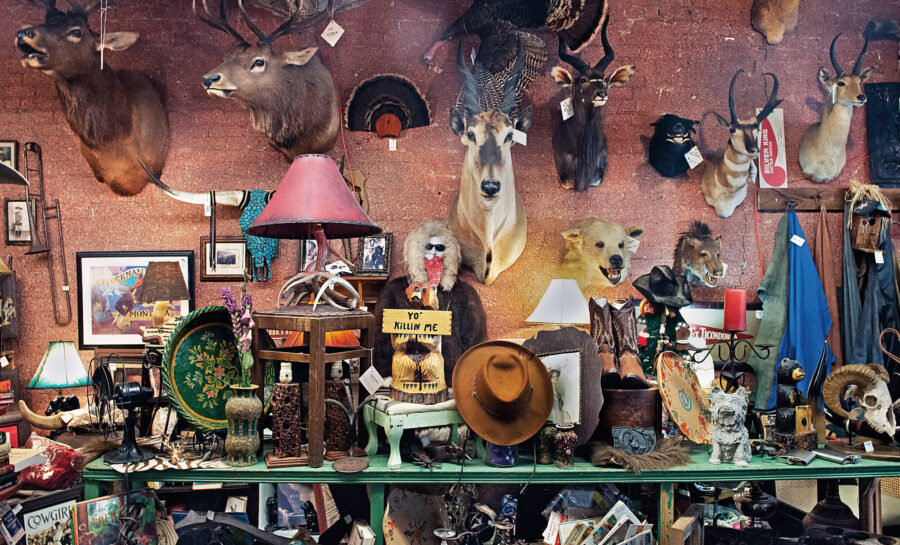
There is a particular pleasure in wandering a flea market with no agenda. You arrive empty-handed—mentally, at least—and let the day do its work. A cracked lunchbox triggers a memory. A stack of mismatched chairs suggests a second life. Time loosens. You look harder. For photographer David Ricci, that unstructured drift became the engine of a seven-year project that culminates in Hunter Gatherer: Salvaged Stories of American Culture (MW Editions), a new photobook that treats flea markets and antique fairs not as shopping venues but as immersive portraits of American life.
Ricci had spent decades photographing industrial sites, amusement parks, and landscapes shaped by human intervention, building a career around dense compositions, repeating forms, and what he calls “complexity at the edge of chaos.” By 2017, having wrapped his previous monograph, Edge, he was looking for new terrain. The unlikely spark came at the Brimfield Antique Flea Market in Massachusetts—not on assignment, just wandering with his wife. Surrounded by miles of objects, he realized that the compositional strategies he’d honed over 30 years might be perfectly suited to the visual overload of American consumer culture.
“It was all there,” Ricci says. “The repetition, the color, the excess. And the idea that all this stuff—everything we make, buy, save—tells a story about who we are.”
Thrifted Tableaux
That insight launched Hunter Gatherer, which took Ricci to more than 200 flea markets, antique fairs, and resale venues across 22 states. He shot everywhere from massive outdoor fairs like Brimfield—so large it takes three days to fully walk—to small-town antique malls and regional shows. He arrived without shot lists or preconceptions, photographing only what caught his eye after long stretches of looking. A typical three-day fair might yield images from just a few dozen booths.

“How Bazaar,” David Ricci, Brimfield, Massachusetts, 2023
What Ricci captures are not individual objects so much as tableaus: shelves packed with lunchboxes, racks of vintage clothing, bins of toys, walls of religious iconography, clusters of mannequins and dolls. People are conspicuously absent, yet human presence is everywhere—suggested through figurines, faces, hands, poses. The result feels oddly theatrical, as if each booth were a stage set paused mid-scene.
Ricci is careful to note that he never rearranged a display. Every photograph records the space exactly as he found it. Whether the juxtapositions were intentional, accidental, or the result of a customer handling an object moments before is beside the point. The meaning emerges in the looking. “I’m responding to what’s already there,” he says. “The dialogue between objects.”
For Upstate House readers—many of whom haunt flea markets as design resources as much as nostalgic playgrounds—the book offers a familiar thrill. Ricci understands the draw. Even when you’re not shopping, flea markets invite a kind of time travel. Games, toys, clothes, furniture, and ephemera act as mnemonic devices, pulling visitors back to childhoods, past homes, former selves. “It’s not just about buying,” Ricci says. “It’s about memory.”
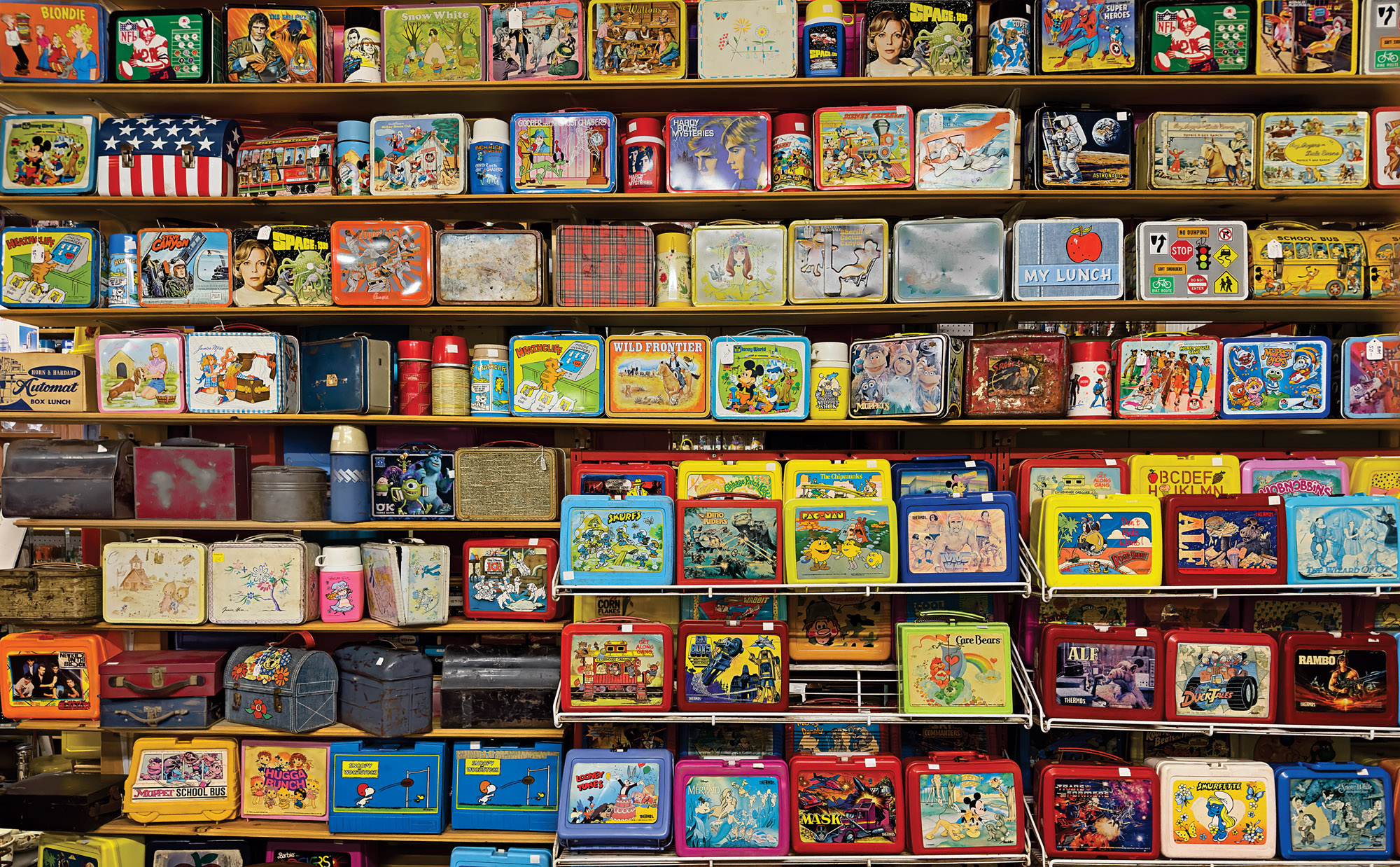
“Lunch,” David Ricci, Havre de Grace, Maryland, 2023
That nostalgia gives flea markets their timeless quality. Despite regional differences—more cowboy gear in Texas, different visual rhythms in the Southeast—Ricci says the core experience hasn’t changed much over the years. The same dealers reappear. The same categories of objects cycle through. Flea markets resist trendiness by design; they operate outside the churn of retail seasons.
The Architecture of Display
What Hunter Gatherer does especially well is treat flea markets as a form of vernacular architecture. Booths are built environments, curated by instinct. They reveal how Americans organize and display their possessions when no stylist or algorithm is involved. There is a design intelligence at work—sometimes elegant, sometimes chaotic.
As the project unfolded, Ricci found himself drawn not just to abundance but to representation: how people appear through objects. Mannequins, doll heads, religious figures, advertising imagery—all became ways to suggest narrative without depicting living subjects. Those threads inevitably brush up against larger cultural histories, including religion, gender, and race. Ricci acknowledges their presence without positioning the book as a polemic. “It’s more of a tapestry,” he says. “These things intersect. You can’t pull them apart.”
That refusal to compartmentalize is reflected in the book’s sequencing. Ricci initially considered organizing the images thematically but abandoned the idea. Working closely with his editor and designer at MW Editions, he instead allowed ideas to surface gradually, weaving through the book the way they do through American life itself.
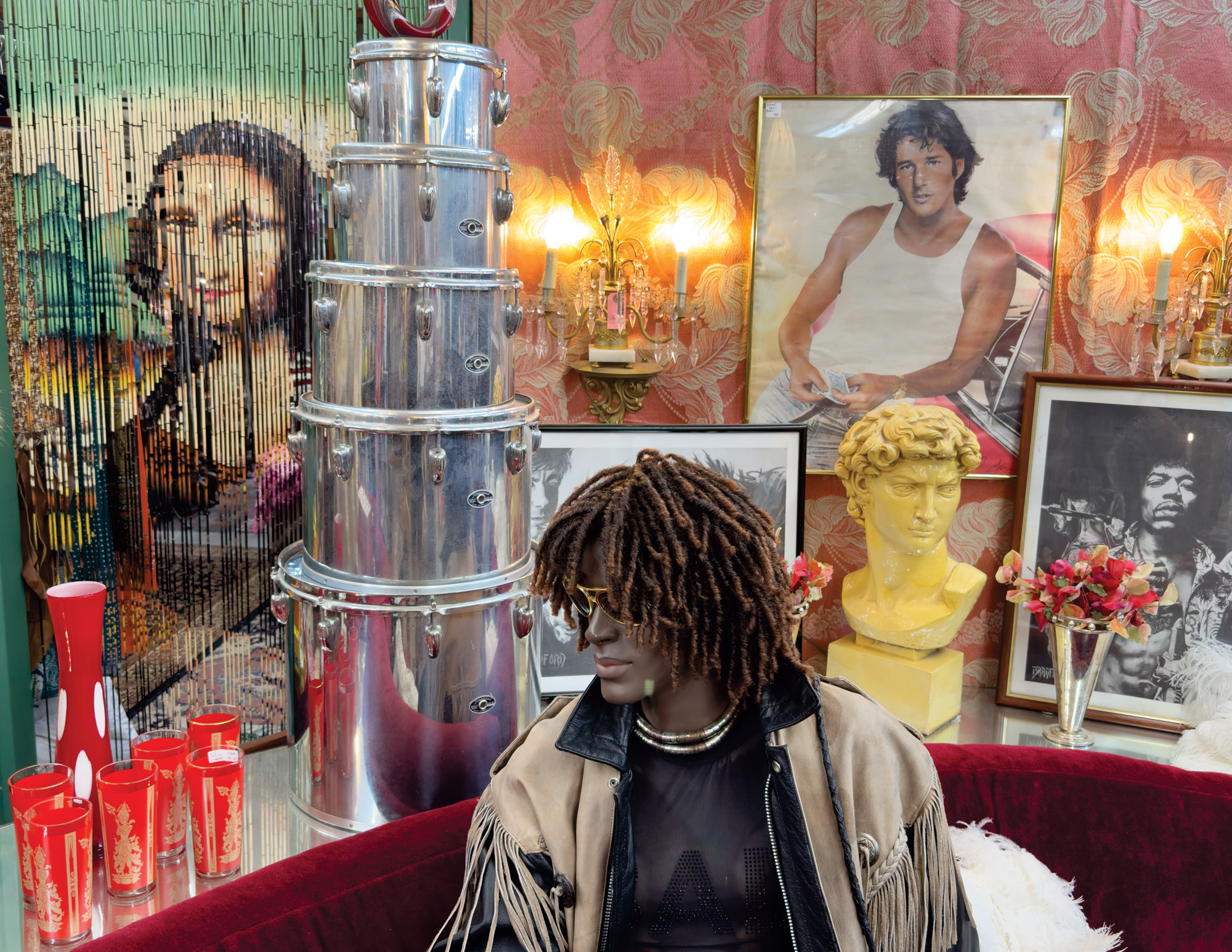
“Portraits & Percussion,” David Ricci, Northwood, New Hampshire, 2024
For readers encountering Hunter Gatherer, Ricci hopes the photographs spark conversation—not just about the past embedded in these objects, but about the act of collecting itself. Flea markets ask quiet questions: Why do we hold onto things? What do we project onto them? What survives, and why?
Ricci admits he still shops occasionally—chairs for the kitchen, fencing for the garden, the odd book. “I’m a hunter-gatherer too,” he says, smiling.
In that sense, Hunter Gatherer is an insider’s view, made by someone who understands the pleasure of the hunt, the beauty of patina, and the strange comfort of standing in a field full of other people’s histories, waiting for something to call out: Hey—over here.