
Flights of Fancy
The Architectural Birdcages of Ron Palicia
By Brian K. Mahoney | Fall 2026 | Features | Makers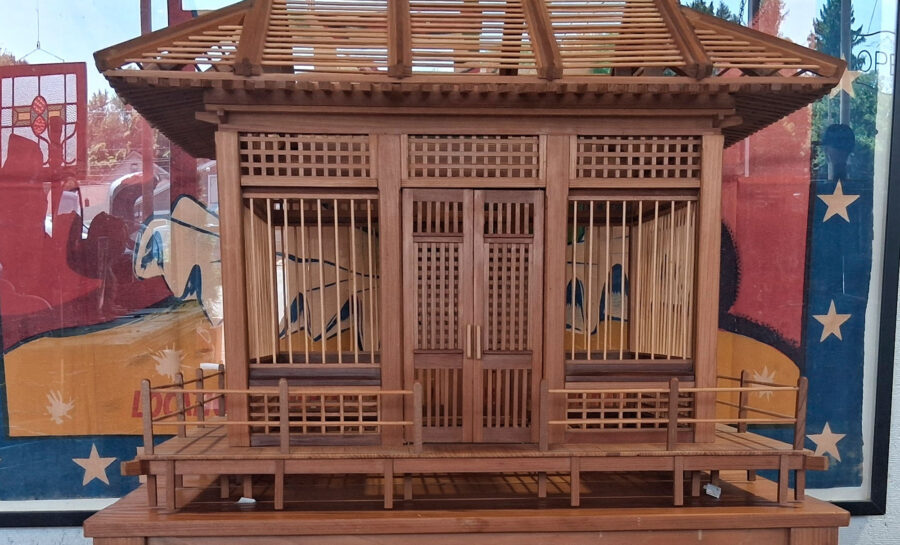
For years, Ron Palicia’s architectural birdcages had an audience of one. The 82-year-old began making them shortly after he and his wife, Jan, moved to Saugerties in 1997. Flipping through Martha Stewart Living, Jan spotted a decorative birdcage she admired but balked at the $400 price tag. Palicia told her he could make one himself.
His first attempt didn’t pass muster. “She said, ‘It’s big enough to hold all our cordial glasses, but it’s not like the one in the book,’” Palicia recalls. She wanted something lighter and more refined, so he returned to his workshop and tried again. The second version earned her approval—and launched an obsession that eventually produced more than a dozen elaborate structures modeled on buildings from around the world.
Palicia had the skills for the challenge. He studied carpentry, cabinetmaking, and modelmaking in trade school, then spent years creating product models for IBM, including computers, mainframes, an early ATM, and the company’s final typewriter. Working in wood, Plexiglas, and high-density foam taught him to translate complex designs into three dimensions with precision.
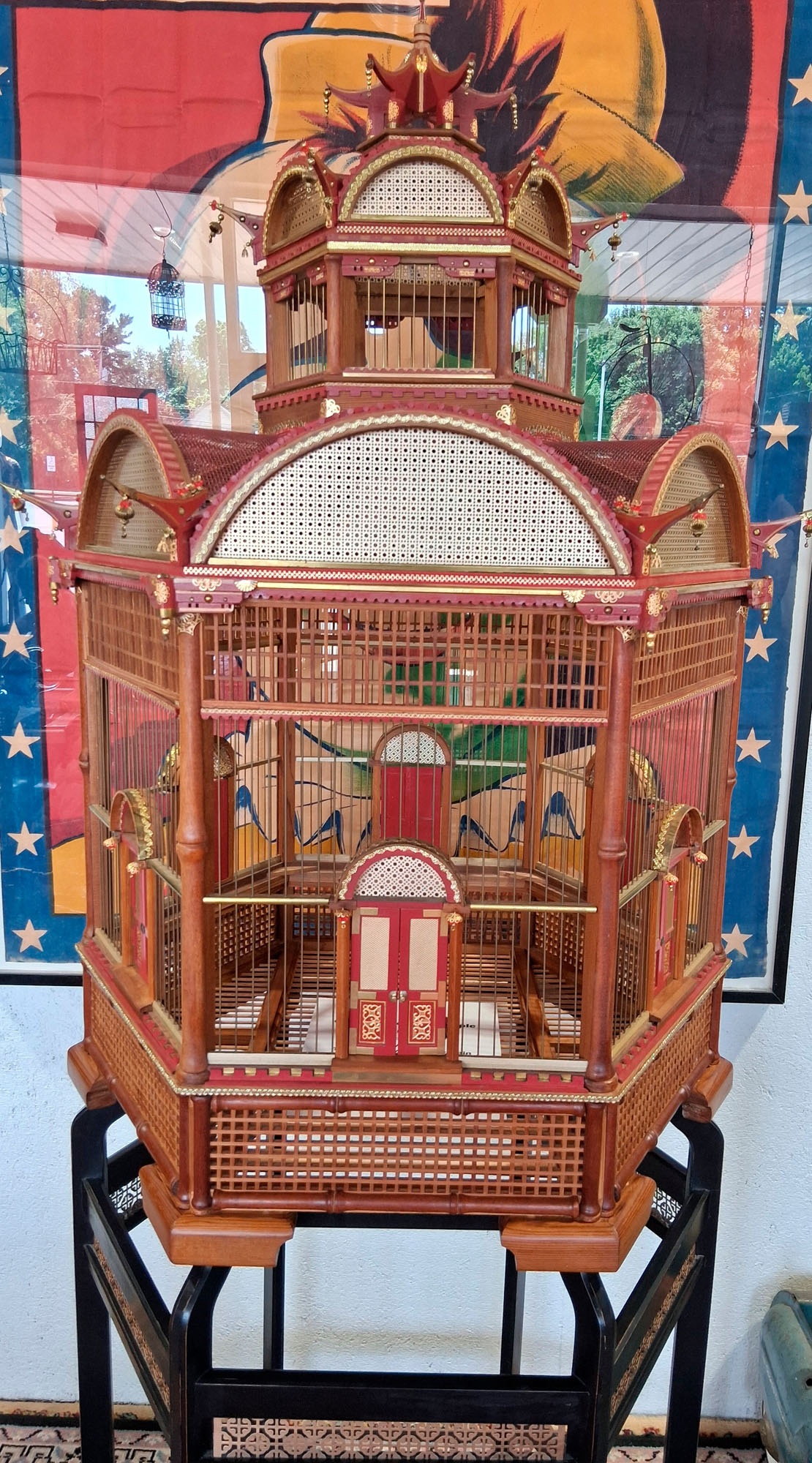
Palicia’s Chinese architecture-inspired birdcage.
A history buff with a love of architecture, Palicia developed a system for his birdcages: Each would represent a different country, century, architectural style, and wood. His subjects range from a Japanese temple and a French Gothic cathedral modeled after Chartres to Frank Lloyd Wright’s Robie House in Chicago. An Italian basilica rises more than six feet high. Some of the structures come apart in sections for transport, though their intricate roofs, columns, arches, latticework, and decorative trim make them appear as permanent as the buildings that inspired them.
“The detail is always there,” Palicia says. Despite the name, the fanciful structures were never intended to house birds. They are architectural showpieces—miniature buildings whose walls happen to be made partly from cage bars. Palicia’s work extends a decorative tradition that reached its height in the 18th and 19th centuries, when craftsmen fashioned elaborate cages after pagodas, temples, churches, and grand houses. His versions dispense with the birds altogether, turning the cage into architecture in miniature.
Jan became their chief ambassador, proudly showing the works to friends and telling their stories. After she died in 2015, Palicia stopped building them. “Every time I brought one in, she got to show her friends,” he says. “She loved talking about them.” Without her, he no longer felt the same impulse to continue.
Now the collection is emerging from storage for its first public showing at the Saugerties Vintage Emporium. Owner Ezra Eichelberger met Palicia after he wandered into the shop, then visited his nearby home. “I was just blown away by the intricacy and the detail,” Eichelberger says. “They’re gorgeous.”
Palicia brings in one restored and polished birdcage each week, usually on Thursday, replacing the previous display. The works, priced individually, are exclusively available through the emporium. “It’s stunning when you walk in the door and see these things,” Eichelberger says. After decades spent delighting Jan and her visitors, Palicia’s miniature monuments finally have a wider audience.