
Your Home Has Answers: These Scientists Find Them
The Building Science Group Solves Your Home’s Structural and Indoor Air Quality Mysteries
Presented by Chronogram Media Branded Content Team | Fall 2026 | SPONSORED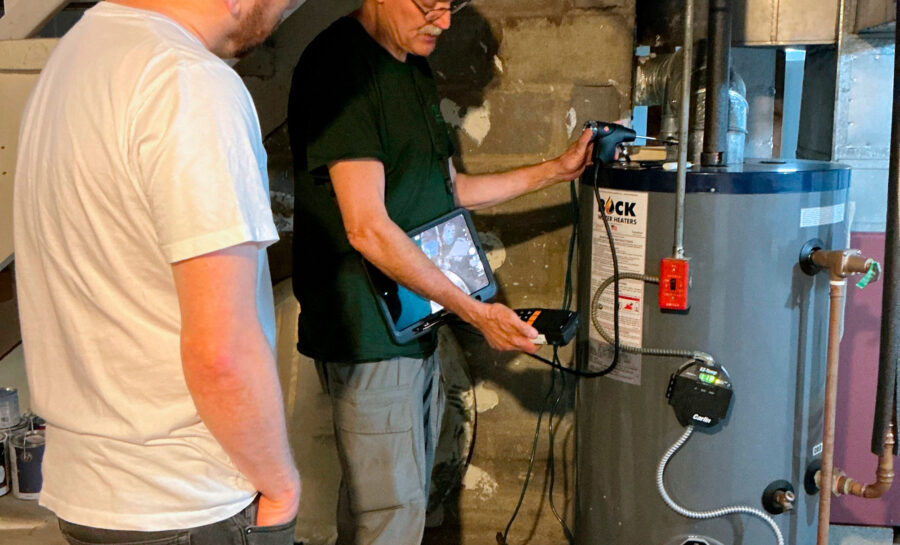
An 18-inch band of ice kept forming inside the primary bedroom of a three-year-old, multimillion-dollar home. It climbed a wall of 12-foot windows, baffling everyone who had examined it. When Melinda and Bill McKnight investigated, they discovered that the windows had been framed differently from the architect’s plans. Outside air entered beneath them and cooled the aluminum cladding, while warm air from a heating vent rose across the glass, creating a cycle of condensation and freezing.
For Melinda McKnight, the case illustrates what The Building Science Group does best. “We’re like house detectives,” she says. “We use diagnostic testing and applied building science to figure out what is actually happening.” The Hudson Valley firm, now known as The Building Science Group, serves clients across New York and the surrounding region.
Building science draws on physics, chemistry, and thermodynamics to understand how heat, air, and moisture move through a structure. Problems that appear straightforward often originate somewhere unexpected: a draft pulling insulation particles from the attic, a musty smell from an improperly vented crawlspace, condensation from an unsealed electrical box. “You have to look at the whole building,” McKnight says. “We take a holistic approach to finding answers and solutions. Everything affects everything else.”
Every building is as unique as a fingerprint and the McKnights treat each one that way, identifying not just existing problems but conditions that haven’t surfaced yet. That holistic approach applies to historic homes, new construction, and major renovations. Architects and builders hire the firm to review plans, help projects meet New York State energy codes, conduct required pressure testing, and verify that materials have been installed correctly. Homeowners can also bring the McKnights competing proposals from contractors for an independent assessment. The firm develops a detailed scope of work and stays involved from diagnosis through completion—ensuring the recommended materials and methods are not just specified, but executed.
That final verification step, confirming work was completed correctly before a client pays, sets The Building Science Group apart. Their goal extends beyond the report: improving the health of every structure they assess and the people inside it.
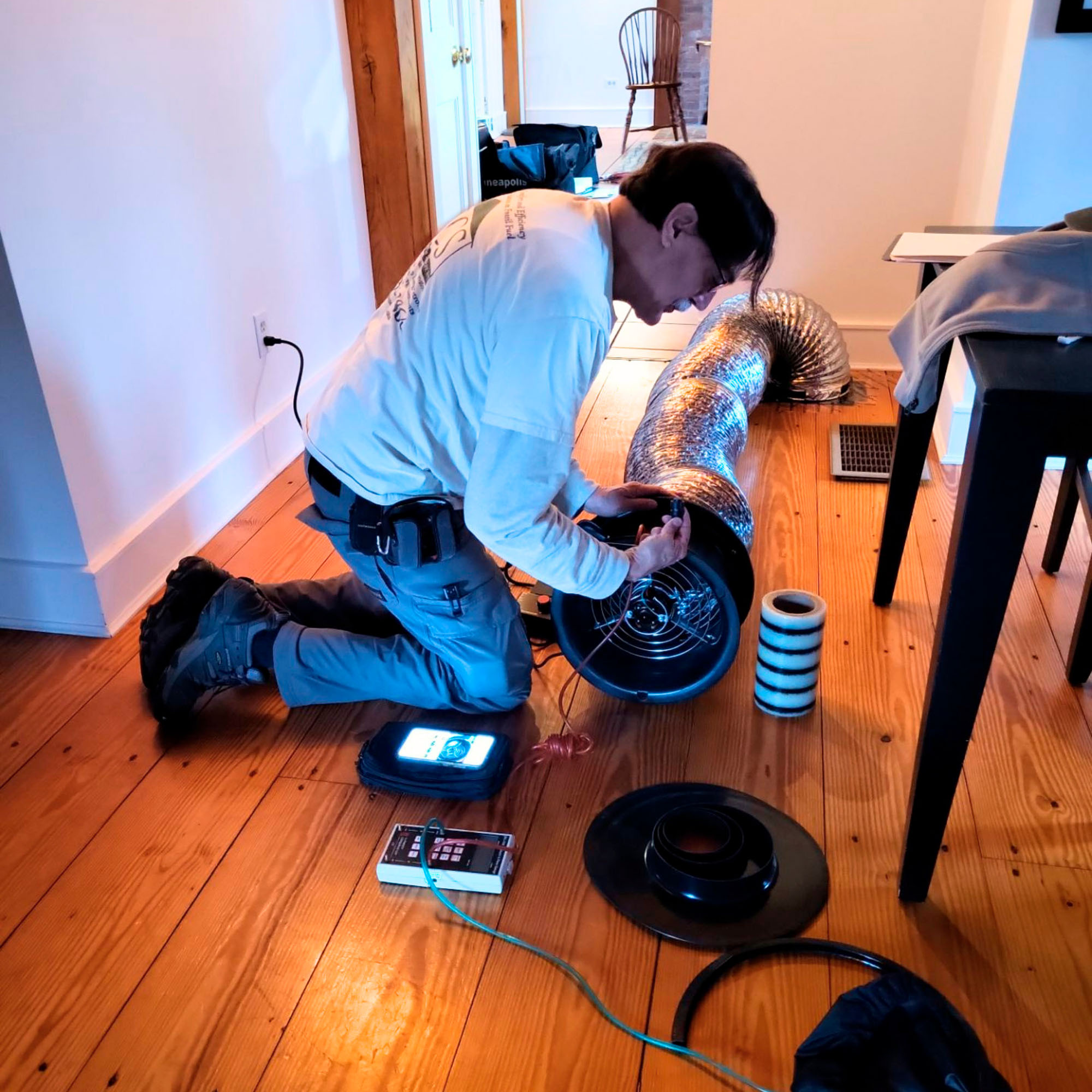
Its diagnostic toolbox includes blower-door testing, infrared cameras, moisture meters, smoke tracers, borescopes, combustion analysis, air-quality monitors, and laboratory mold testing. The McKnights also conduct home inspections, including buyer, pre-listing, maintenance, and new-construction inspections. Their certifications in building performance and healthy house principles go well beyond the conventional inspection revealing not just a building’s visible condition but how it actually performs.
Indoor air quality has become an increasingly important part of the practice. One renter had installed multiple air purifiers but continued to feel ill at home. Testing revealed that incorrectly installed insulation and a vapor barrier had trapped moisture against a wood floor. The reaction between the damp wood and its blistering polyurethane finish produced acetone. Removing the faulty materials allowed the floor to dry and stopped the off-gassing.
Other investigations have uncovered unsafe formaldehyde levels and traced carbon monoxide poisoning to a water-heater vent violating building code. Each time, testing transformed a mysterious health problem into a correctable building problem.
The McKnights are also sharing their knowledge through nonprofit partnerships with Communities for Local Power, Mid-Hudson Energy Transition, and Sustainable Hudson Valley, teaching building-science basics and helping create healthier homes. After 17 years in business, The Building Science Group’s new name reflects a broader mission: listening to what buildings are saying and grounding every answer in science.
The Building Science Group
(845) 338-3864; Thebuildingsciencegroup.com