
Tips for Outdoor Design in the Hudson Valley
How to decide between a deck and patio—and build an outdoor space that fits your home, your landscape, and the realities of Hudson Valley living.
By Brian K. Mahoney | | Features | Home Improvement
The backyard deck used to be a fairly straightforward proposition: A pressure-treated rectangle bolted onto the back of the house with a grill parked in the corner and a few fading plastic chairs arranged around a glass-top table. Patios, meanwhile, often amounted to a poured slab and a pair of chaise lounges pointed optimistically toward the sun. Those days are largely over.
Today’s outdoor spaces are expected to function as extensions of the home itself—part dining room, part lounge, part entertainment space, part refuge. They host dinners and remote-work afternoons, birthday gatherings, World Cup watch parties, and solitary morning coffees. In the Hudson Valley especially, where the landscape is often as much a part of daily life as the architecture, outdoor living spaces have become one of the defining features of the modern home.
But building a successful deck or patio involves more than aesthetics. The best projects emerge from a careful consideration of how homeowners actually live, how a property naturally wants to function, and how materials will perform through all four seasons.
The question homeowners often ask first—deck or patio?—isn’t really a design question at all. It’s a practical one.
Start with the Site
Many homeowners begin by collecting inspiration images before thinking about the realities of their property. Builders and landscape designers will tell you the opposite approach generally yields better results. The land itself often determines whether a deck or patio makes the most sense.
Decks tend to work best on sloped terrain or homes with elevated first floors, where building outward is easier and more economical than extensive excavation. They can capitalize on views, create usable space above uneven grades, and minimize disruption to existing drainage patterns. In the Hudson Valley, where many homes sit on hillsides or ledge-heavy terrain, decks often provide the cleanest solution.
Patios, by contrast, excel on flatter sites where they can settle naturally into the landscape. A patio creates a grounded feeling that many homeowners find appealing, particularly when paired with gardens, native plantings, or meadow-style landscaping. They also tend to integrate more seamlessly with outdoor kitchens, fire pits, and dining areas.
The biggest mistake homeowners make is beginning with aesthetics instead of conditions. A dramatic multilevel deck may look compelling online, but if the yard naturally wants to accommodate a stone terrace, forcing the issue can result in unnecessary expense, drainage problems, and a structure that feels disconnected from the property itself.
Access also matters. Outdoor spaces function best when they connect intuitively to the rhythms of the house. A deck directly off the kitchen encourages outdoor dining. A patio tucked deeper into the yard may work better as a destination space organized around a fire feature or garden.
The goal is not simply to add square footage outside, but to create an outdoor environment that feels inevitable—as though the house and landscape were always intended to work together that way.
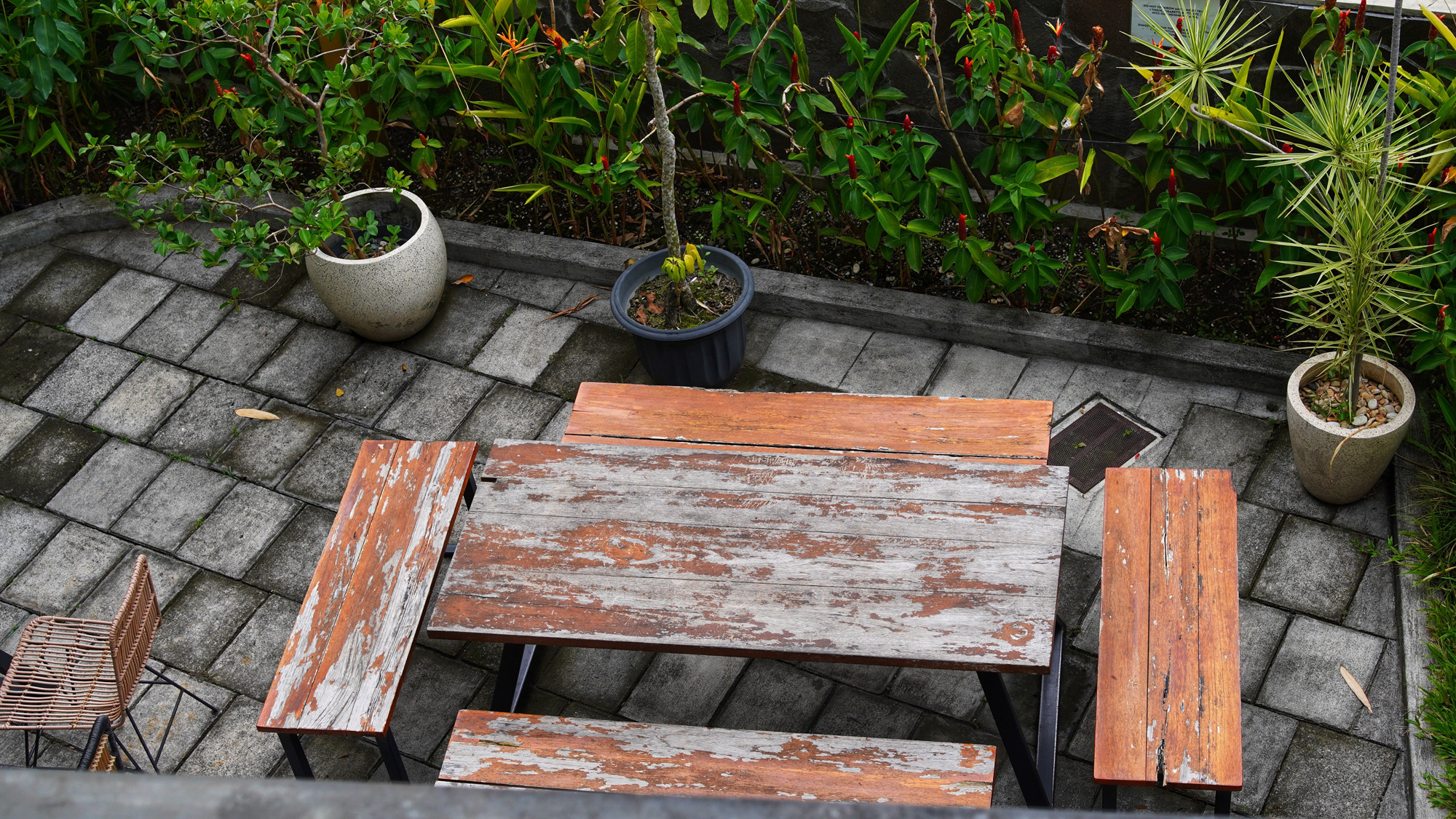
A rustic wooden table and benches with peeling paint on a patio with gray paving stones. Surrounded by potted plants and garden foliage, creating a relaxed, outdoor atmosphere.
Materials Matter
Once the basic structure is determined, the next question becomes one of materials—and the choices available to homeowners have expanded dramatically over the last two decades.
Pressure-treated lumber remains the most economical decking option and still dominates much residential construction. Properly maintained, it can last for years, but maintenance is the operative word. Staining, sealing, and periodic replacement are part of the bargain, particularly in a climate defined by snow, humidity, wet leaves, and freeze-thaw cycles.
Cedar offers a warmer, more natural appearance and tends to stay cooler underfoot during the summer months, but it also demands regular upkeep. Left untreated, it weathers into a soft gray that many homeowners find appealing, though exposure and moisture will eventually take a toll.
Composite decking—made from blends of recycled wood fibers and plastics—has become increasingly popular because of its durability and relatively low maintenance requirements. Products from companies like Trex and TimberTech resist rot, insects, and staining, making them particularly attractive in wooded environments common throughout the region.
The tradeoff is cost. Composite decking carries a significantly higher upfront price tag than pressure-treated lumber, though many homeowners view the reduced maintenance burden as worthwhile over the long term. Some products can also become noticeably hot in direct sun exposure, an important consideration for south-facing decks with little shade.
Stone with a Sense of Place
Patio materials offer a different set of aesthetic and practical considerations. Few materials feel more tied to the Hudson Valley landscape than bluestone. Quarried throughout Ulster and Delaware Counties beginning in the 19th century, the dense blue-gray sandstone became one of the region’s defining building materials, shipped nationwide for sidewalks, curbstones, and civic infrastructure. Even today, bluestone sidewalks remain part of the historic fabric of some local towns.
That history—and the material’s understated appearance—helps explain why bluestone remains such a popular patio choice. It feels regionally rooted in a way many manufactured materials do not, pairing as naturally with a restored farmhouse as with a restrained contemporary home. Properly installed, it also performs well through freeze-thaw cycles and ages gracefully over time.
The downside is expense. Bluestone is heavy, labor-intensive to install, and often among the costlier patio materials available. But for many homeowners, that longevity and sense of permanence are precisely the appeal.
Concrete pavers offer flexibility and easier repairability, since individual units can be replaced without disturbing the entire surface. Advances in manufacturing have also dramatically improved their appearance in recent years, moving beyond the overly uniform suburban aesthetic that once defined them.
Poured concrete remains among the more economical options, though improper installation can lead to cracking over time, particularly in climates with harsh winters. Gravel patios, meanwhile, provide a softer, more informal appearance that works particularly well in rural settings, though they require ongoing maintenance and periodic replenishment.
As with the larger deck-versus-patio question, the most successful material choices tend to emerge from context rather than trend-chasing. The right material should feel appropriate to both the architecture and the landscape surrounding it.
Designing for the Hudson Valley Climate
In the Hudson Valley, winter is the real stress test. An outdoor space that looks pristine in July can quickly reveal its weaknesses by February. Snow loads, ice, standing water, leaf accumulation, mud season, and dramatic temperature swings all place pressure on materials and construction methods.
Drainage is among the most important—and most overlooked—parts of outdoor design. Water pooling against foundations, improperly pitched patios, or decks without adequate ventilation underneath can create long-term structural issues that are far more expensive to correct than to prevent.
Patios should generally slope slightly away from the house to move water effectively, while deck systems require proper airflow and spacing to prevent trapped moisture from accelerating deterioration.
Sun exposure matters too. A deck that feels comfortably warm in April may become nearly unusable during peak summer afternoons without shade structures or strategic plantings. Pergolas, retractable awnings, mature trees, and even thoughtfully placed landscaping can dramatically improve comfort.
The Hudson Valley’s heavily wooded environment also creates practical considerations many homeowners underestimate. Wet leaves stain decking. Pollen accumulates. Mosquitos thrive near standing water and shade. Black flies can turn evening gatherings unpleasant during parts of the spring and early summer.
Then there is snow removal. Large-format pavers and bluestone generally tolerate shoveling well, while softer materials and certain composite products can be damaged by aggressive snow-clearing methods. Outdoor furniture storage also becomes a seasonal reality unless homeowners invest in weather-resistant materials or covered structures.
These practical concerns may lack the glamour of material palettes and furniture selections, but they often determine whether an outdoor space remains enjoyable over the long term.
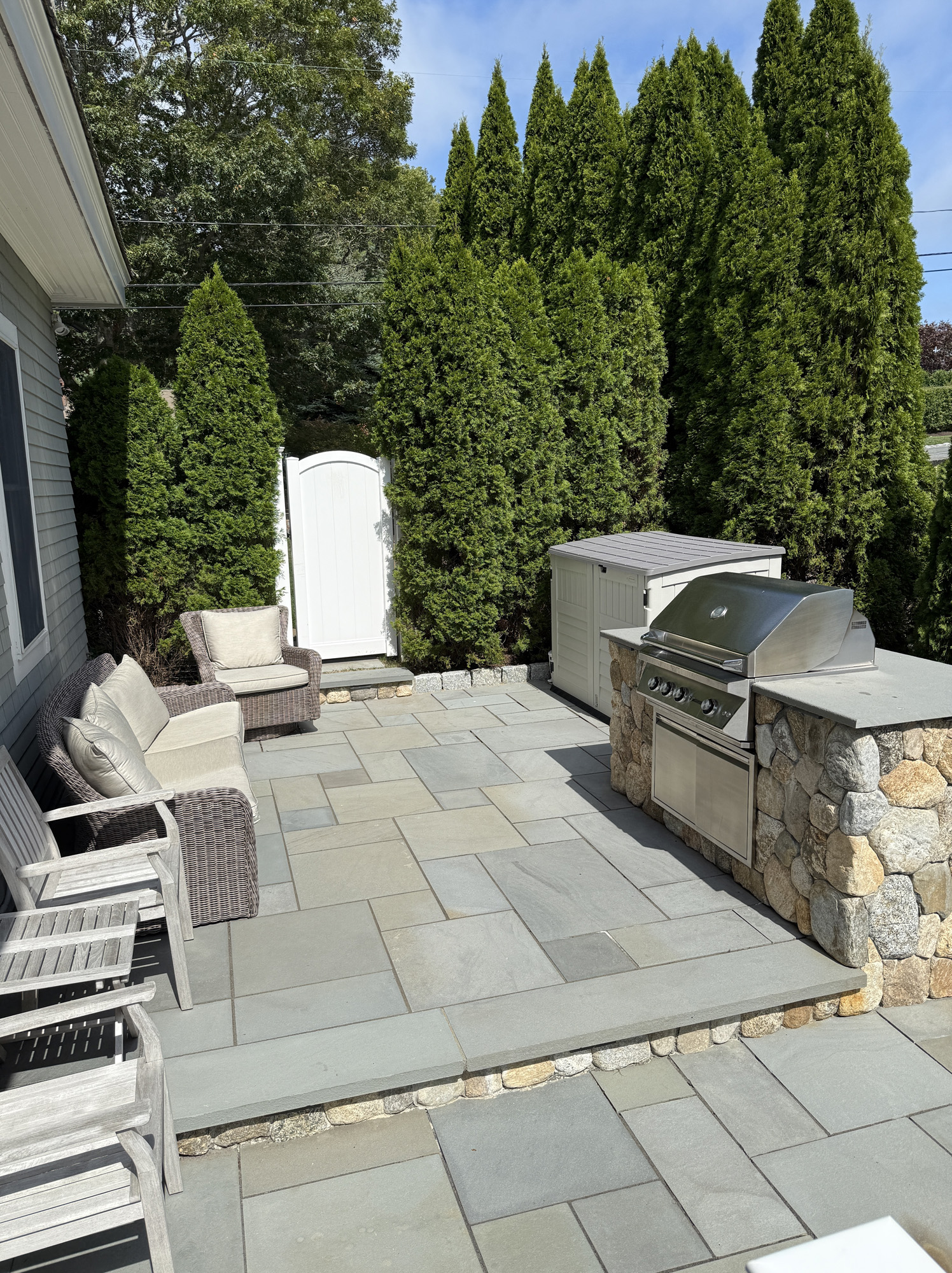
Outdoor seating area with furniture and plants, creating a relaxing home exterior scene. A lifestyle and real estate concept highlighting outdoor living.
The Outdoor Room Era
The biggest shift in outdoor design may not be material at all, but mindset. Homeowners increasingly think about decks and patios as fully realized outdoor rooms rather than ancillary spaces. As a result, projects have become more layered and architectural.
Pergolas define dining areas while providing partial shade. Built-in seating reduces furniture clutter. Integrated lighting extends usability well beyond sunset. Fire pits and outdoor fireplaces push the outdoor season deeper into fall.
Outdoor kitchens have evolved far beyond standalone grills, often incorporating refrigeration, sinks, pizza ovens, and extensive prep space. Covered structures, once considered luxuries, are increasingly common as homeowners look to make outdoor areas functional during shoulder seasons and light rain.
At the same time, there has been a broader movement away from overly ornamental backyard design toward something more integrated with the surrounding landscape. Meadow plantings, native species, blackened steel accents, natural wood, and restrained stone palettes increasingly define the contemporary Hudson Valley outdoor aesthetic. The most successful spaces avoid competing with the landscape. Instead, they frame it.
Build for How You Actually Live
A successful deck or patio is rarely the largest or most elaborate one.
The projects that age best are often the ones that respond honestly to the property, the climate, and the habits of the people who use them. A compact bluestone terrace that catches the evening light may prove more valuable than a sprawling multilevel deck that rarely gets used. Likewise, a modest composite deck directly off the kitchen may transform how a family cooks, entertains, and spends time together.
Outdoor spaces are ultimately about rhythm as much as design—the rituals of grilling dinner on a summer evening, drinking coffee outside before work, gathering around a fire in October, or watching snow settle across the yard in winter. The best ones feel less like additions than natural extensions of the home itself.