
How to Prepare Your Hudson Valley Garden for Spring—Before You Plant Anything
Early spring in the Hudson Valley is less about planting and more about paying attention. Local gardeners and landscape professionals explain why observation, patience, and timing matter most after winter.
By Brian K. Mahoney | Spring 2026 | Features
Spring in the Hudson Valley doesn’t announce itself all at once. It arrives unevenly—first in the retreat of snow from stone walls, then in soft ground underfoot, then in the subtle shift of light that makes the land feel awake again. For gardeners and landscape professionals, this early moment isn’t about planting or color. It’s about assessment: walking the property, noticing what winter left behind, and making decisions that will shape the growing season.
After a harsh winter like this one, that assessment often begins with damage. Mike Augustine, nursery manager at Augustine’s Nursery in Kingston, says early spring is when stress reveals itself. “We’re looking for signs of damage on existing plants—discoloration on evergreens, broken branches from snow or wind,” he says. “Once we identify what’s been affected, we can act accordingly.” Winter, in this sense, edits the landscape, exposing weaknesses and opportunities alike.
For others, spring’s clues arrive in motion. Garden columnist Margaret Tomlinson makes a habit of heading outside during heavy rain. “I like to put on all my rain gear and go out during a storm to see where the water is flowing,” she says. “That tells you everything—if it’s moving toward the house, pooling in low spots, or draining the way you want it to.” Those observations can guide everything from contouring and drainage improvements to plant selection, particularly when it comes to native species that tolerate wet conditions early in the year and drier ones later on.
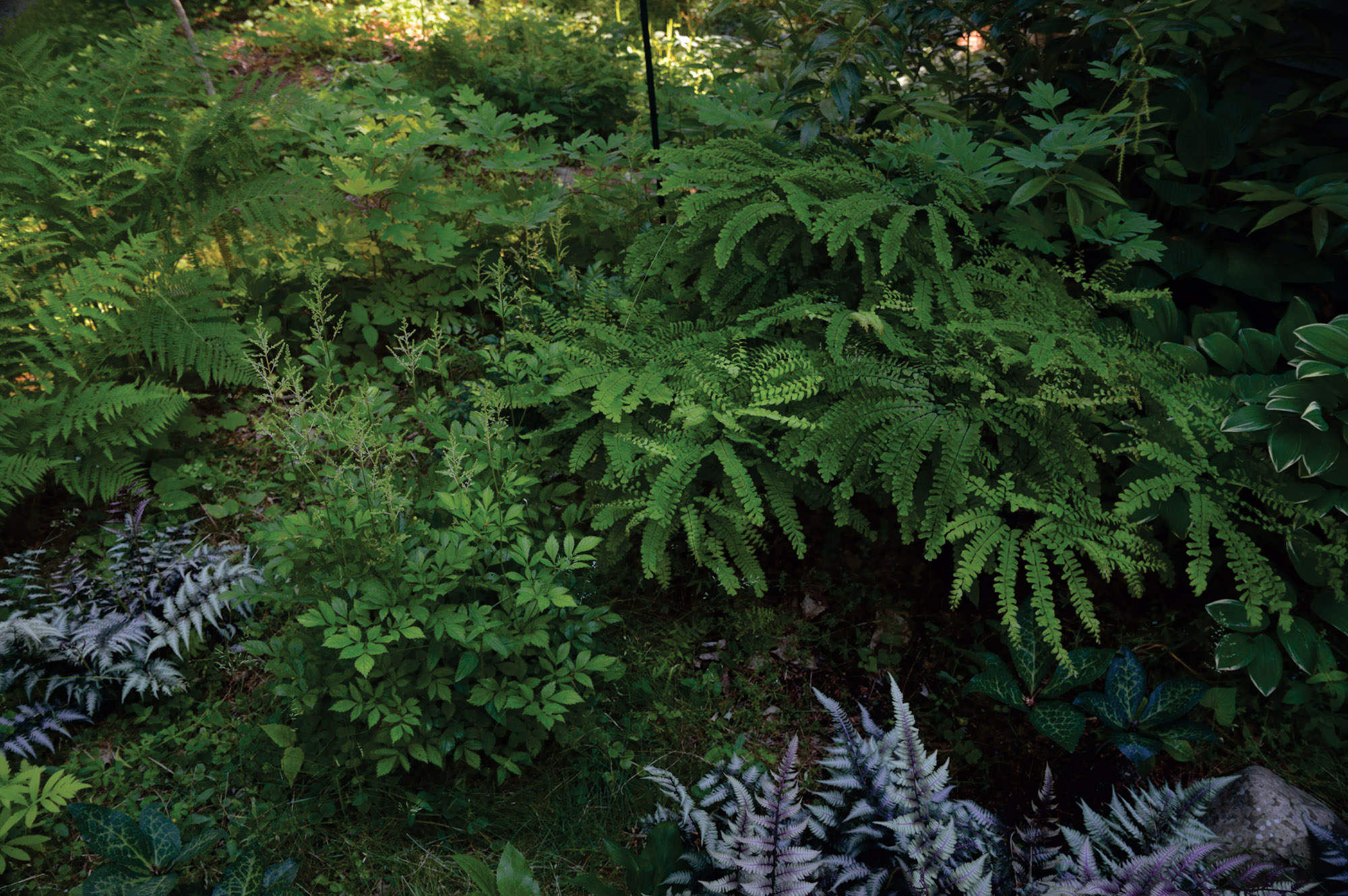
A layered understory of native ferns and shrubs creates habitat and improves soil health, illustrating how leaving leaf litter and limiting spring disturbance supports the full garden ecosystem.
This kind of close looking is echoed by Jolie Herbst of Rosendale-based Wild Indigo Landscaping, who approaches spring as the beginning of a longer story. “I think about the spring melt and how much precipitation we’ve had, and I try to put myself in the shoes of the soil and the roots,” she says. A wet winter and heavy snowmelt, she notes, will influence the entire season. Early spring becomes a moment to zoom out, to see how last year’s growth and debris meet the new. Herbst describes watching daffodil stalks break through old leaves, lifting them into the air—a visible reminder that what remains from last season feeds what comes next.
Soil Demands Patience
If observation is the first step, restraint is the second. The experts I spoke to agree: spring is a fragile time, and doing too much too quickly can undo the work winter has already done. Soil, especially, demands patience. “If soil is still wet, poorly drained, or compacted, spring is the moment to address that,” Augustine says. Many plants won’t tolerate waterlogged conditions, and working the ground while it’s too wet can worsen compaction, creating problems that last all season.
Tomlinson has seen this play out repeatedly. Planting into cold, saturated soil can drown roots and compress the ground further. “You want to wait until the soil is in good condition,” she says. Over time, she’s learned to focus on improving soil structure gradually—through composting and by encouraging beneficial fungal networks that help loosen heavy clay. “Clay soil can be extremely fertile,” she notes, “but it becomes a problem when it’s compacted, and that happens very easily.”
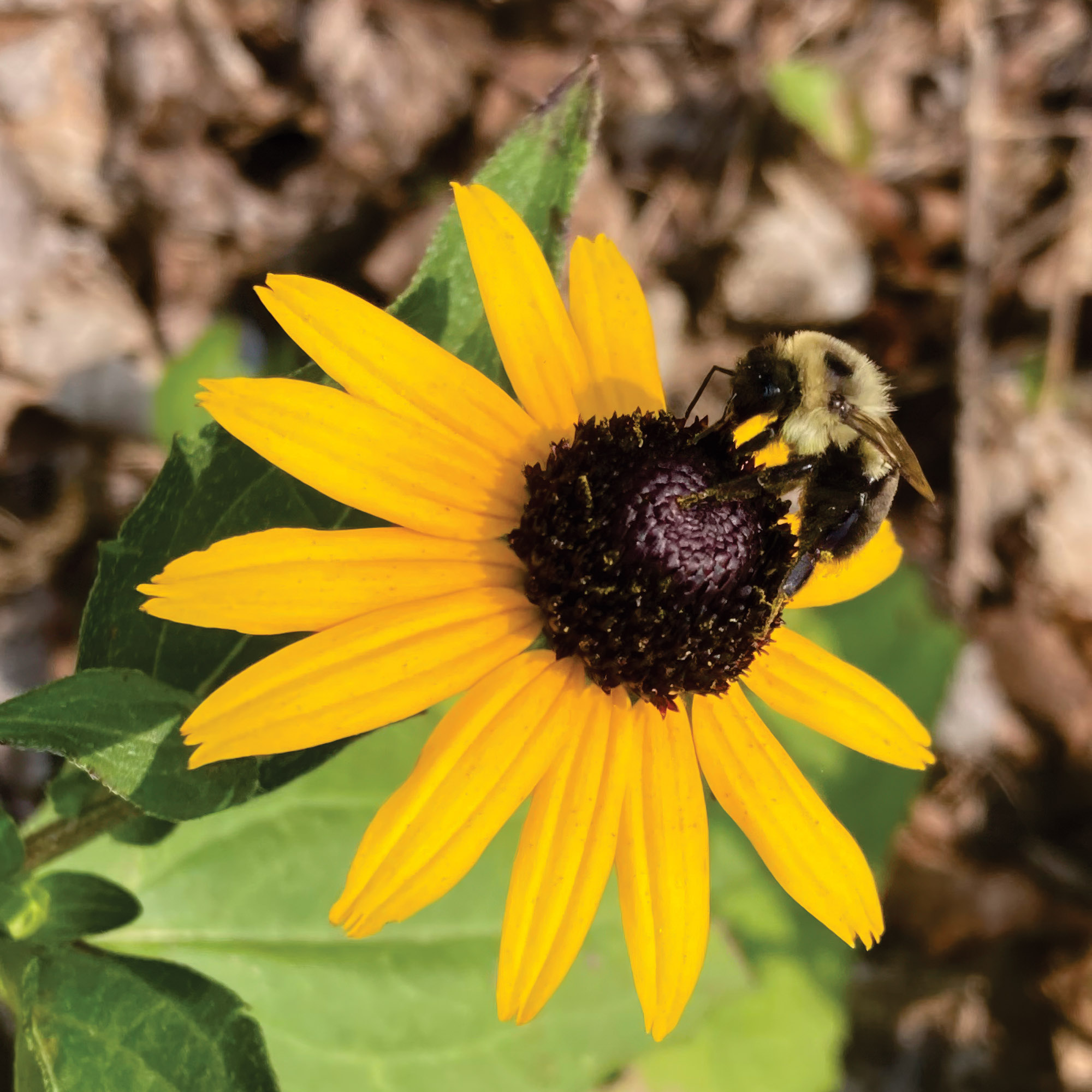
Rudbeckia hosts a bee in Tomlinson’s garden—an everyday reminder that leaving leaf litter and timing spring cleanup supports the pollinators.
Photo by Margaret Tomlinson
Herbst approaches the issue from a design and stewardship perspective. Freeze-thaw cycles naturally aerate the soil in early spring, creating space for fine roots and microorganisms. Walking on garden beds too soon, she says, undoes that work. “You can damage perennials for the whole season just by stepping on them when they’re emerging,” she says. Often those plants aren’t visible yet, making restraint all the more important.
That same impulse to tidy can have consequences beyond the soil. John Messerschmidt of Hudson Valley Native Landscaping urges homeowners to rethink the urge to clear everything away. “One of the biggest mistakes people make is cutting down all their grasses and raking up all the leaves,” he says. Leaf litter is where the majority of native bees overwinter, insulated from cold temperatures. Removing it too early disrupts the life cycles that gardens depend on. Messerschmidt waits until he sees bees consistently active during the day before doing any major cleanup, starting in sunnier areas first, where insects emerge sooner.
Pussywillow not Forsythia
Timing, across the board, proves more important than any single task. Augustine cautions against fertilizing too early, when plants are still dormant. Encouraging growth before the threat of cold has fully passed can lead to damage. Messerschmidt draws similar lines around planting: shrubs and trees can go in during April if the ground has thawed, but perennials should wait until later in the spring. Tomlinson adds that bare-root trees and shrubs benefit from early planting while still dormant, giving them time to establish before warm weather arrives.
Spring also clarifies structure—both in the garden and around the house. Without foliage, sightlines and forms are easier to read. Herbst sees this as an ideal moment for thoughtful pruning, creating airflow around foundations and shaping trees and shrubs with intention. Cutting back perennials and grasses before new growth begins prevents old material from tangling with fresh shoots, improving plant health and appearance over the long term. The cut material, she notes, becomes “brown” matter for compost, closing another seasonal loop.
Not all edits are subtle. Winter exposes browsing patterns as well, particularly from deer, who grow more aggressive as food becomes scarce. “Anything that stays green, they’re going after,” Messerschmidt says. That pressure can inform future choices, from selecting more resilient native shrubs to rethinking where vulnerable plants are placed. He’s equally blunt about ornamental standbys that offer little ecological value. Forsythia may signal spring to many gardeners, but native alternatives like pussy willow support insects and wildlife—and often escape deer browsing altogether.
Listening to the Land
Throughout these conversations, a larger theme emerges: spring preparation is less about adding than about setting conditions. Good early decisions limit stress later on—for plants and for gardeners. Augustine sees it in reduced weed pressure and healthier growth. Tomlinson sees it in the small moments that follow, like spotting a hummingbird after planting cardinal flower in a wet corner of the yard. Messerschmidt frames it in broader terms: native plants support insects; insects support birds; the entire system depends on timing and care.
Herbst, meanwhile, emphasizes that preparation doesn’t drain spring of its pleasure. Quite the opposite. “Spring is just a joy,” she says. It’s a time to slow down, to learn plant identification as young shoots emerge, to reconnect with the textures and shapes of the landscape up close. Paying attention early, she suggests, deepens the relationship with the garden over the course of the year.
In the end, spring garden preparation in the Hudson Valley comes down to listening—to the soil, to water, to the signals plants and wildlife provide after winter. Before the rush to plant, there’s value in walking the land, noticing what has changed, and letting the season unfold at its own pace. The work done—or deliberately not done—during these weeks sets the tone for everything that follows.