
Integrating Goats Into Modern Land Management
Hudson Valley Forestry has added targeted grazing to its land management services, using goats to clear invasive vegetation in places where machines and chemicals don’t make sense.
Presented by Hudson Valley Forestry | Spring 2026 | SPONSORED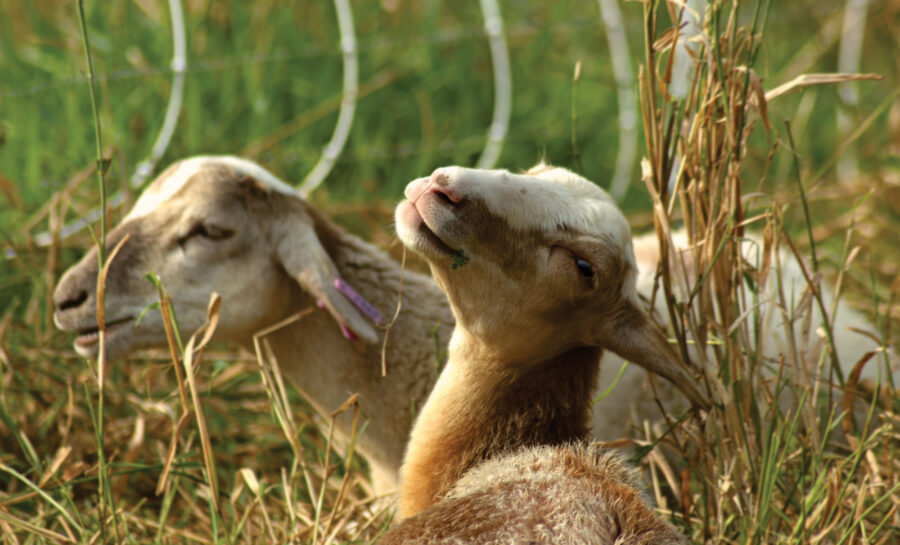
For years, Hudson Valley Forestry has built its reputation on doing the unglamorous but essential work of land management: clearing invasive species, maintaining rights of way, and helping property owners care for difficult terrain without resorting to chemicals. Forestry mulching—using low-impact machinery to grind brush and small trees back into the soil—has long been the backbone of the company’s approach. But in recent years, another, less mechanical and certainly adorable solution has joined the toolbox: goats.
Targeted grazing, as the practice is known, isn’t about turning fields into pastures. It’s about deploying a small, closely managed herd to places machines and people simply don’t want to—or shouldn’t—go. Steep hillsides, rocky outcrops, muddy wetlands, environmentally sensitive areas: for goats, these are not obstacles but invitations.
“We started seeing situations where the ground was too sensitive for machines, or the terrain was just impossible,” says Scott Sans, owner of Hudson Valley Forestry. “For the goats, it’s just another day. They love it. And for us, it’s safer, more environmentally conscious, and a lot more humane than sending people into miserable, back-breaking conditions.”
Hudson Valley Forestry now maintains a herd of 60 goats, overseen by a dedicated herder. When deployed, the goats arrive with temporary electric fencing or GPS-based smart collars, settle in, and get to work—eating their way through invasive plants like poison ivy, bittersweet, and knotweed. Unlike mowing or cutting, goats often pull up softer plants by the root, reducing regrowth without a drop of herbicide.
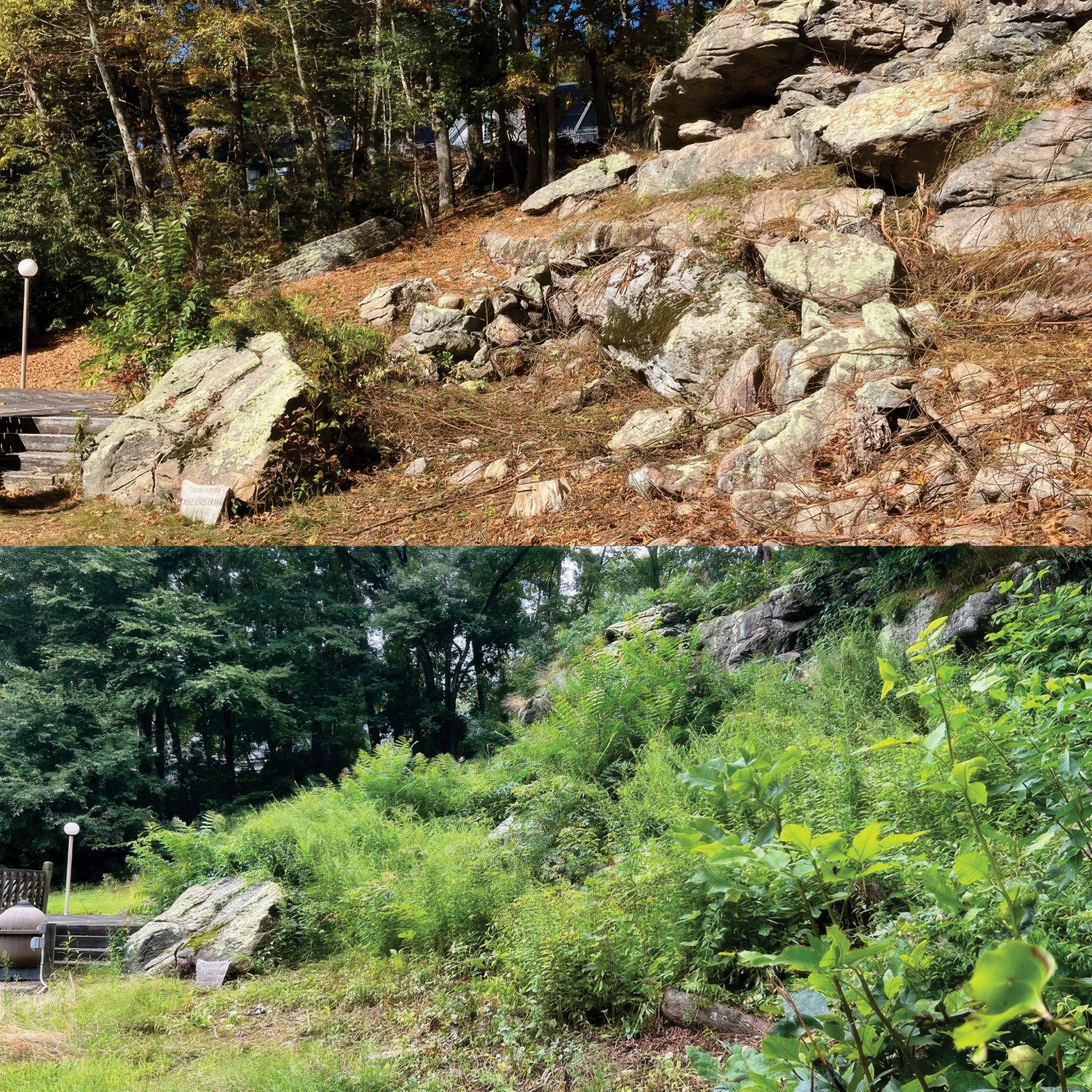
A before-and-after view of a challenging hillside, where Hudson Valley Forestry used targeted goat grazing to manage invasive vegetation in terrain unsuitable for machines.
The service has found a receptive audience in the Hudson Valley, particularly among owners of large residential properties and second homes. Some clients come specifically seeking goats; others simply want vegetation managed responsibly and are guided toward the right mix of mechanical clearing and grazing. Often, the two methods work in tandem: machines tackle thick, woody growth in year one, while goats return annually to keep new growth in check.
“We don’t see goats as the primary solution for everything,” Sans says. “They’re a great tool when machines aren’t environmentally, financially, or practically viable. In some cases, they’re the best—or the only—option.”
There’s also an undeniable delight factor. Goats sleep on site, occasionally accompanied by a donkey for protection, and their presence turns a utilitarian process into something closer to a slow-motion performance. Clients linger. Neighbors stop by. Kids take notice. Still, Sans is careful not to let the charm overshadow the purpose.
At its core, the goat program reflects Hudson Valley Forestry’s broader philosophy: avoid chemicals, work with the landscape, and choose methods that improve soil health rather than degrade it. Forestry mulching supports fire mitigation by reducing fuel loads and returning organic matter to the ground. Goats extend that ethic into spaces machines can’t reach, nibbling vegetation from cliffs, crevices, and steep slopes with surgical precision.
“The goats show up, they eat the vegetation, and then they leave,” Sans says, with a laugh. “They do their thing, simple and sustainable.”
It’s a simple idea, thoughtfully applied—and one more way Hudson Valley Forestry is redefining what responsible land stewardship can look like in a region where terrain, ecology, and aesthetics are deeply intertwined.
(914) 980-8269; Hudsonvalleygoats.com
Produced by the Chronogram Media Branded Content Studio.