
Mary Randolph Carter’s Live with the Things You Love
By Brian K. Mahoney | Summer 2025 | Features | Home Goods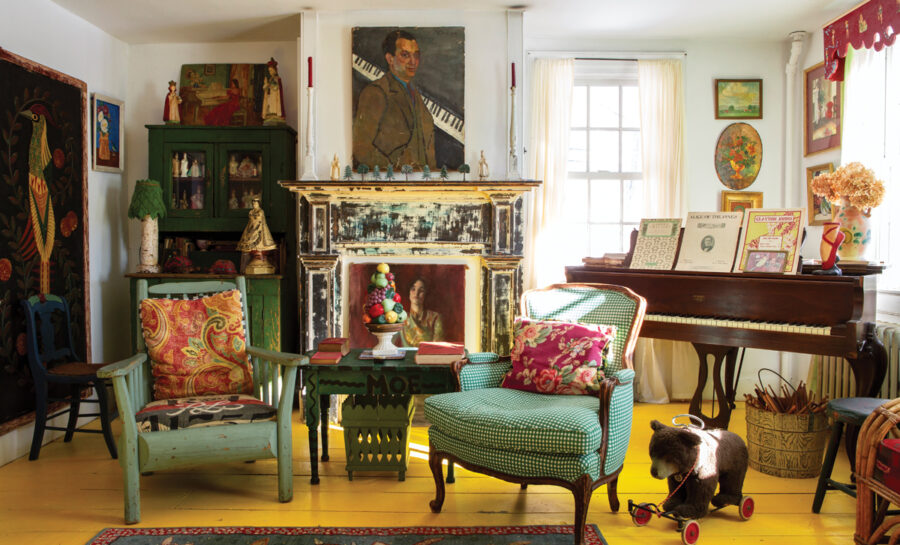
Let us now praise glorious junk.
Not garbage, mind you. Not the flotsam of our throwaway age. We’re talking about stuff with soul: the busted chair you meant to fix, the chipped teacup you can’t quit, your grandmother’s needlepoint of a moody owl. The things you didn’t buy at West Elm but inherited, tripped over at a yard sale, or couldn’t stop yourself from dragging home from a roadside barn. The things that tell your story.
No one has done more to elevate this gospel of glorious, sentimental clutter than Mary Randolph Carter. “Carter,” as she prefers to be called, has made a life—and a cottage industry—out of convincing the world that a house full of stuff is a house full of life. Her latest book, Live with the Things You Love: And You’ll Live Happily Ever After (Rizzoli), is both culmination and call to arms. The message is simple, radical, and deeply comforting: If you love it, live with it.
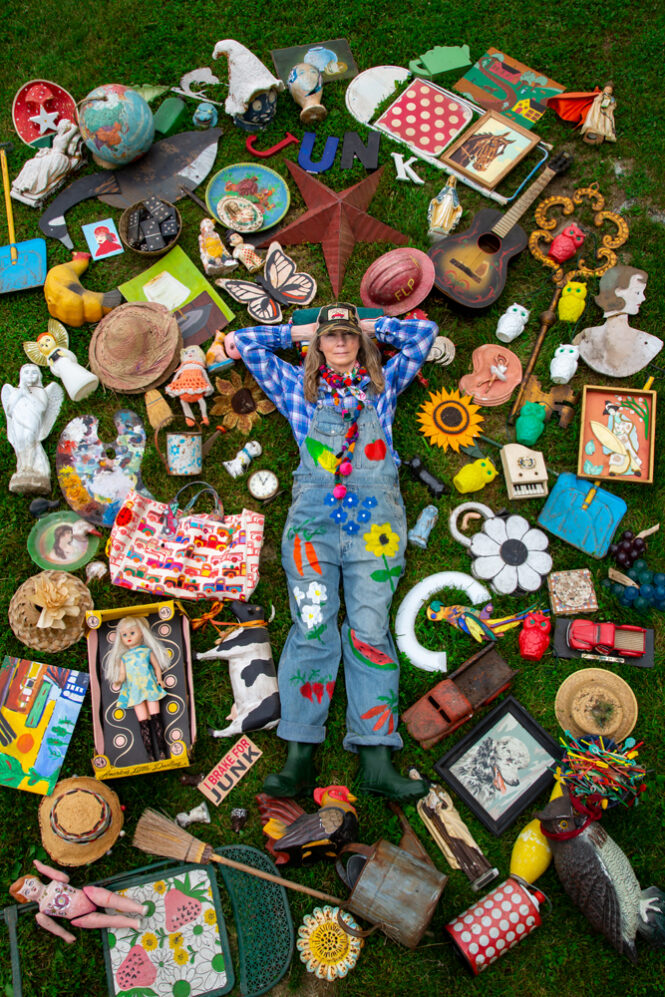
Surrounded by the lovingly layered objects that fill her home, Mary Randolph Carter lives her design philosophy: embrace the imperfect, celebrate the sentimental, and let your stuff tell your story.
In person and on the page, Carter exudes the warmth of a Southern aunt crossed with the sharp eye of a New York editor. Which is to say, she is both storyteller and stylist. Raised in Richmond, Virginia, Carter was the eldest of nine children in a house filled with commotion, color, and the occasional tragedy—two house fires in her youth destroyed many family belongings and taught her early on that objects carry memory. That loss sharpened her eye and deepened her commitment to honoring the past, one beloved relic at a time.
After moving to New York, Carter began her career as an editor at Mademoiselle and later at Self, eventually landing at Ralph Lauren where she served for nearly four decades as a creative director. She helped shape the brand’s storytelling-first design ethos: weathered wood, plaid everything, layers upon layers of implied history. In other words, Carter’s home life and professional life were never all that far apart.
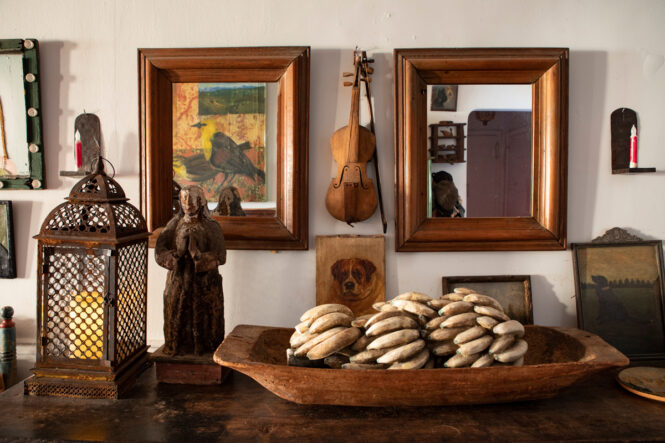
Her bibliography reads like an ode to the anti-Marie Kondo. Books like American Junk, Kitchen Junk, and Garden Junk turned her penchant for flea market treasures into a full-fledged philosophy. In A Perfectly Kept House Is the Sign of a Misspent Life, she argued that beauty and order aren’t the same thing—and, if forced to choose, she’d take beauty every time.
In Live with the Things You Love, Carter trains her eye on the homes of artists, antique dealers, stylists, and eccentrics whose interiors are not decorated so much as narrated. There’s her old friend, Joan Osofsky, owner of Hammertown, who has crammed a cozy Connecticut cottage with a lifetime of collectibles and antiques. Another old friend, art director Paula Grief, opens up her Cobble Hill home to reveal treasures like a painting of Jacqueline Kennedy Onassis by the late Hudson outsider art legend Earl Swanigan. Clothing designer Janet Russo offers a tour of her Bristol, Rhode Island house, brimming with floral accents—and actual flowers.
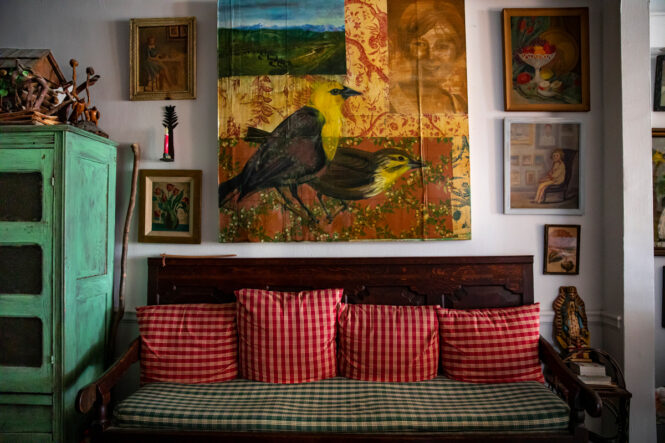
These chapters overflow with what some might dismiss as clutter but what Carter redefines as biography in three dimensions. There are rooms layered with art and ephemera, books stacked in every corner, toy collections lovingly displayed on mantels. The throughline is love: love of memory, love of story, love of the imperfect. “What makes life astounding is not the things we’ve collected and lived with but the people and the memories we associate with them,” Carter writes in the introduction.
The book is a feast, heavy on images and light on preachiness. Carter isn’t telling you what to buy, or even how to arrange it. She’s asking you to look again at what you already have. To remember why that weird lamp from your first apartment still matters. To let the busted chair stay busted. To make peace with the joyfully unresolved.
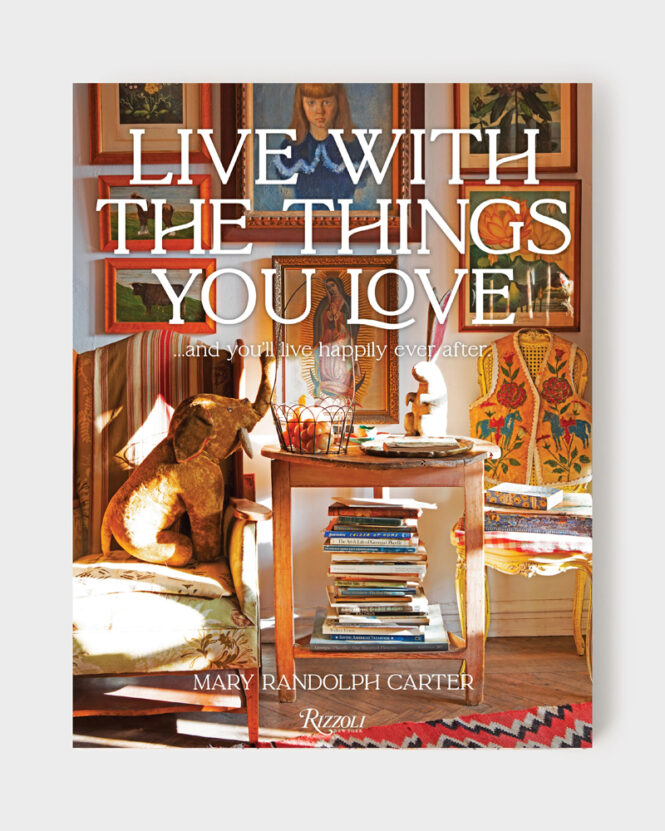
Live With the Things You Love is the latest volume in Mary Randolph Carter’s beloved celebration of soulful spaces, following earlier titles like American Junk and A Perfectly Kept House Is the Sign of a Misspent Life.
Carter lives this life in stereo. She splits her time between a rambling apartment in Manhattan and a home in Millerton—both maximalist wonderlands stuffed with old toys, paper ephemera, and flea market miracles. Photographs in the book were taken by her son, Carter Berg, and illustrations are by her sister, Cary, making the project a family affair in both spirit and execution.
She doesn’t pretend to be a minimalist’s reformed cousin. “It’s not about clutter; it’s about creating a space that resonates with your soul,” she writes. That space might be piled high with vintage fabrics or lined with old LPs. It might be messy. But it’s yours.
In a cultural moment still in thrall to the sleek and the sparse, Carter’s work feels almost revolutionary. It suggests that the road to happiness might be paved not in clean lines and neutral tones but in messy shelves and mustard-yellow ashtrays.
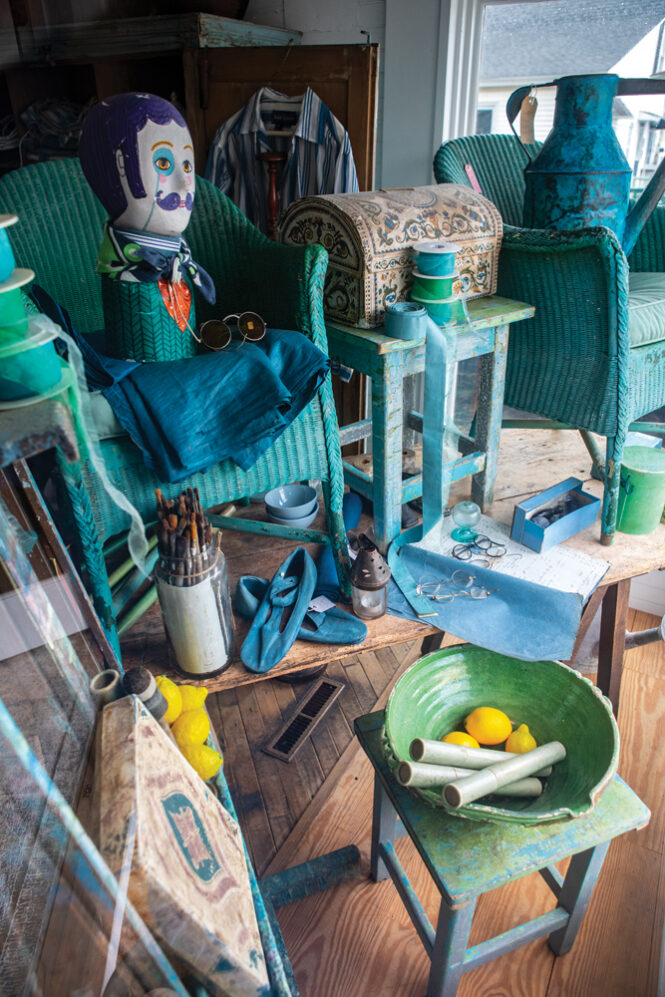
Blue is the predominant color at Sharon and Paul Mrozinski’s home on the water in Vinalhaven, Maine.
So open that closet. Call your aunt. Dust off the high school yearbook and the ceramic frog from your trip to Montreal. Don’t purge. Reclaim. “I once read that every single object has a god inside, and that’s why we cherish them,” Carter writes. “Each object in our homes—passed on, gifted, or collected—also has a story that reveals not only how it came to be and how it came to us, but how it shares who we are and where we’ve been.”
As Carter reminds us again and again, your things are trying to tell you something. Are you listening?