
2025 Kingston Design Showhouse is a Creative Center of Gravity
By Brian K. Mahoney | Winter 2025 | Features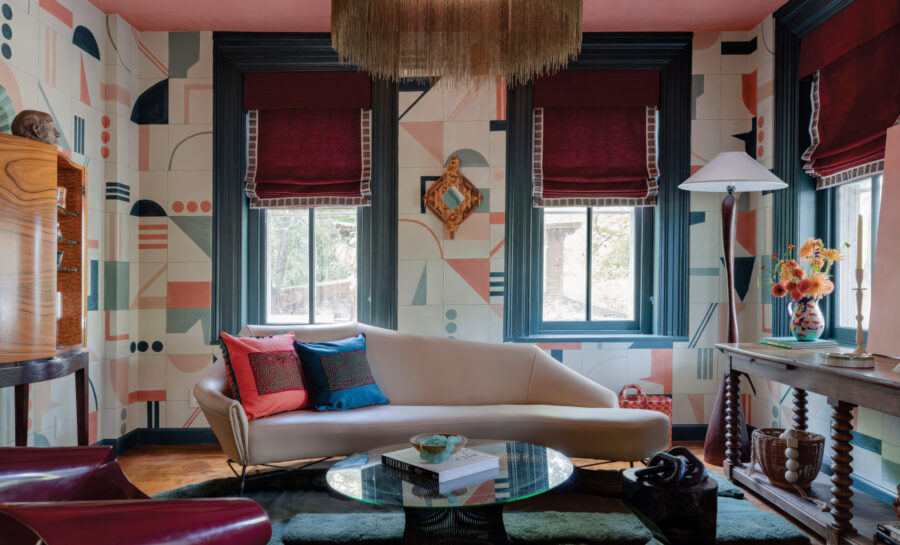
Tucked into a leafy street in Sleightsburgh across from Kingston’s Rondout waterfront sits a freshly reborn 19th-century Second Empire home with a mansard roof that gleams like an epaulet in the autumn light. It was the site of the seventh annual Kingston Design Showhouse—an event that’s equal parts creative laboratory, professional showcase, and social mixer for the Hudson Valley design community which ran October 10-26.
Founded in 2018 by Kingston-based designer Marilyn Damour Drake, the Kingston Design Showhouse began as a simple but radical idea: connect the exploding talent base of Hudson Valley makers, artisans, and designers—not just with each other, but with opportunity. What started as a scrappy, community-built design experiment in a vacant Kingston property has since evolved into a regional design movement, drawing national press and shifting the creative center of gravity steadily up the Hudson River. The showhouse isn’t just a place to display pretty rooms; it’s a working model of local creative economy in action, circulating contracts, visibility, and resources among the very people who live and build here.
Catskill-based designer Lyndsey Alexander transformed a study into a seductively self-contained world that feels like a femme Don Draper retreat. Photo by Phil Mansfield
“The guiding theme for the showhouse every year comes from the design brief I created in 2018,” says Damour Drake. “We ask designers to showcase an upstate New York creative in their spaces. It’s cool to see the many ways this brief has come to life! While designers are free to design without limitation, this brief creates an opportunity for collaborations that help foster relationships beyond the showhouse.” More than a directive, the brief has become a mission: Use design as a conduit for connection, one forged in woodshops, foundries, ceramic studios, and upholstery workshops scattered across the region.
And then there are the themes—those annual currents of mysterious synchronicity. “Each year there’s also an unexpected theme that winds its way through the showhouse. The color purple had a moment. Designers don’t share their plans with each other or with showhouse producers. Even so, I fell into this mind meld as I chose purple for the front door of the house before seeing other designers’ spaces!” It has become part of the showhouse lore: a hive-mind of aesthetics, a shared sensibility that emerges unplanned, as if the house itself whispers to each designer what it wants to become.
Rewriting the Rules
The house at 271 Second Avenue had good bones when designer Ana Claudia Schultz of Rhinebeck-based Ana Claudia Design took on its gut renovation earlier this year. The transformation added a third bedroom and bath, and—hallelujah—closets in every bedroom. Schultz oversaw the architectural overhaul and designed the showhouse’s open kitchen and dining room, a bright, breezy space that wears its sophistication lightly. Her bird-patterned green wallpaper from Fromental flutters above a handcrafted dining table, bench, and stools by Stone Ridge woodworker Andrew Finnegan. Ceiling lights and sconces from Kingston-based RBW cast the room in warm modern light, while clear switch plates by Corston add a note of barely-there precision. It’s the sort of room that makes you think life could be this orderly and elegant, if only for a weekend.
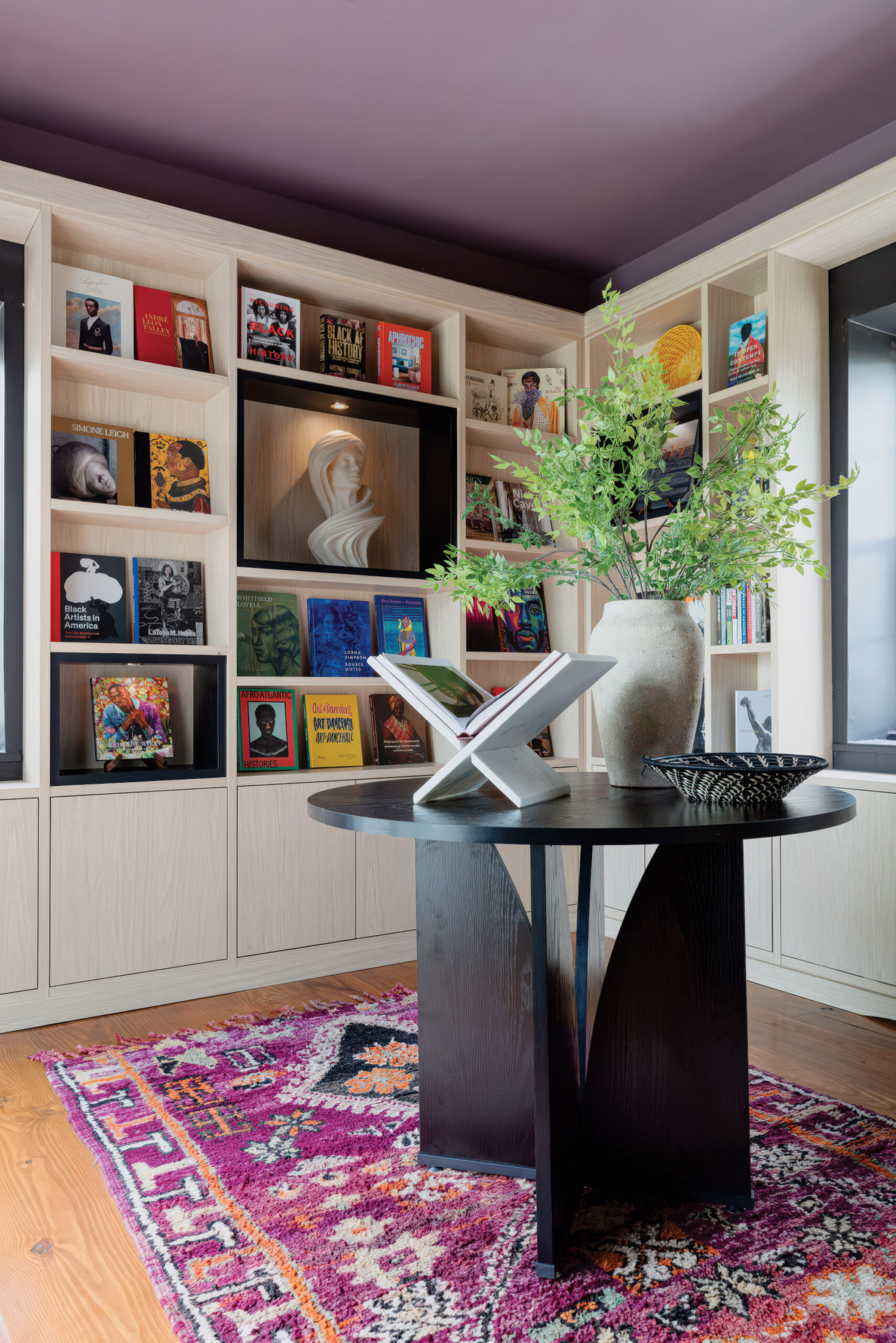
To Be Free Library. Photo by Phil Mansfield
A design showhouse is, by definition, an exercise in fantasy. It’s where designers can push past the practical and flirt with the improbable—rooms that make emotional rather than rational sense. The 2025 edition, which features over 100 participating designers and artisans—delivers a range of dream states: playful, moody, serene, and strange. Limewash is having a moment—chartreuse, lilac, and other understated hues—while improbable materials like a custom metal shower screen (in the primary bath, no less) remind visitors that rules exist mainly to be rewritten.
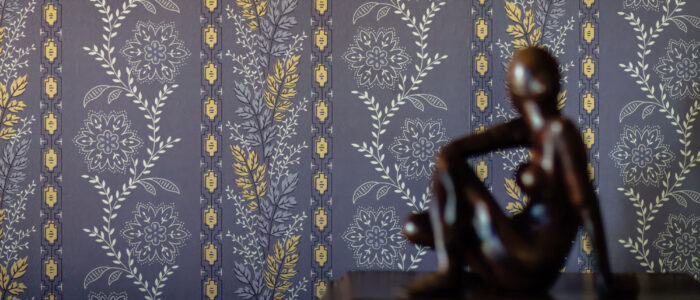
Downstairs, the Groove Room by Salisbury, Connecticut-based Casa Marcelo Interiors channels midcentury cocktail culture through a kaleidoscope of color and pattern. It’s warm and sociable, with a record player and hand-painted wallpaper from Porter Teleo that looks like someone translated jazz into brushstrokes.
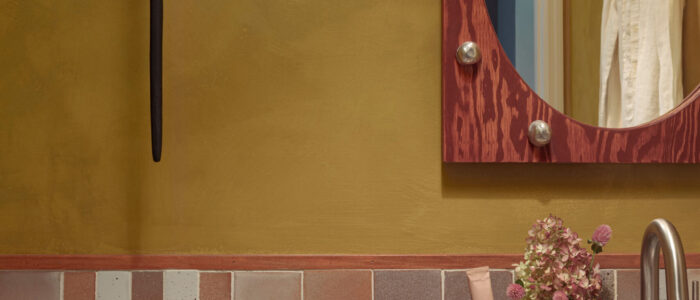
The Powder Room, by Taupe Stories Studio (Delaware County and Brooklyn), proves that whimsy is compatible with rigor. Its hydrangea-inspired chartreuse limewash walls glow around a cherry vanity by Beacon’s Palmer Works and ceramic wall hanging by Kingston artist Demetria Chappo. A stool by Poughkeepsie’s Dean Babin brings a chunk of modern functionality to the small space.
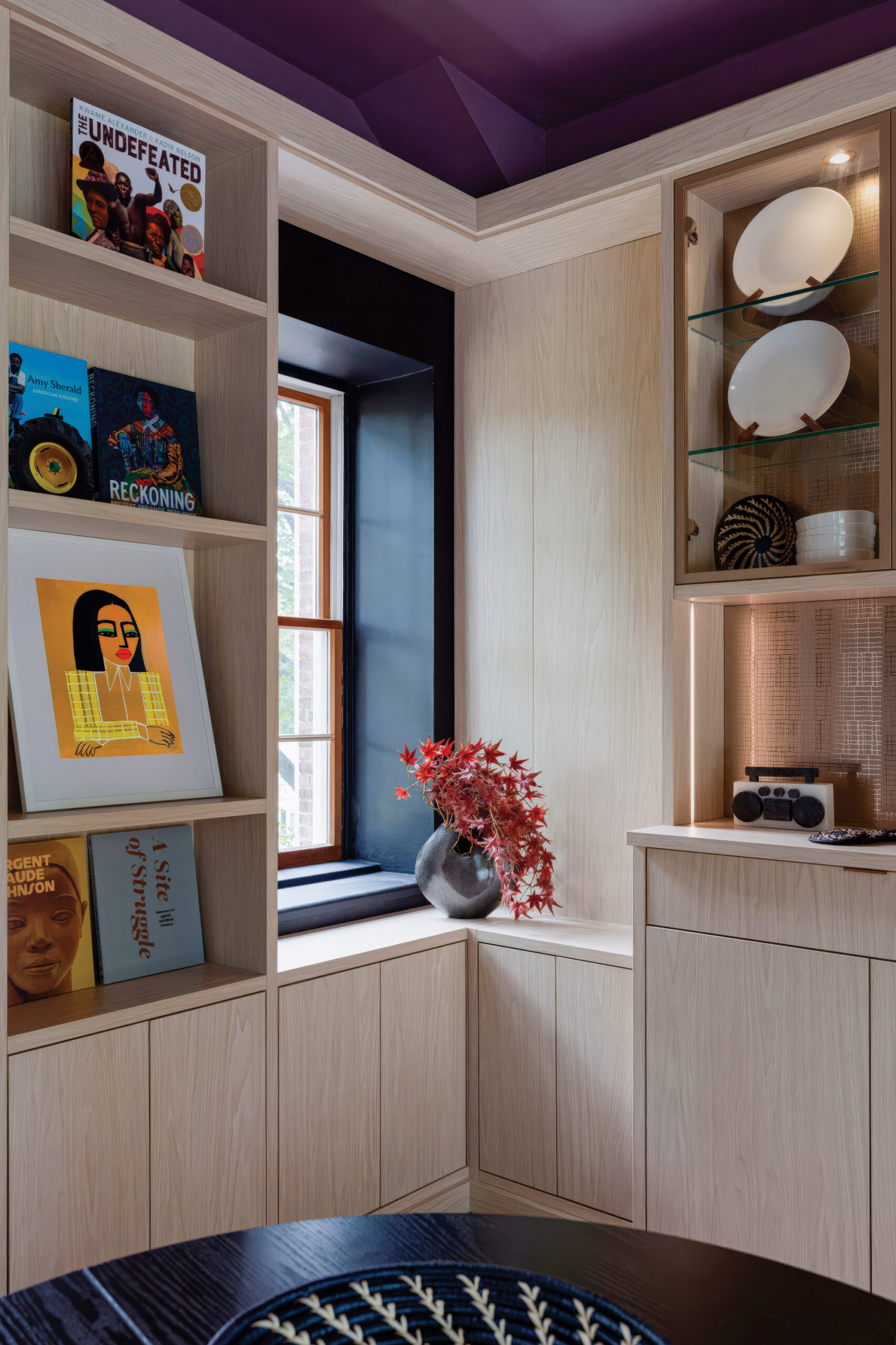
The To Be Free Library was designed by Ellenville-based Aphrochic Home. The custom bookshelves and bar were built by California Closets. Photo by Phil Mansfield
In the To Be Free Library, Ellenville’s Aphrochic Home explores the intersection of design and cultural narrative. Their serene, book-lined space—with shelving by California Closets, who it turns out make much more than closets—houses a collection entirely by Black authors, from W.E.B. Du Bois to Jesmyn Ward. The result is part reading room, part gallery, part quiet assertion of presence.
“As we create showhouses, it’s important to us that we leave these homes not just more beautiful, but also more functional than we found them” says Damour, noting that everything that is permanently installed is gifted to the homeowners. “I had been speaking with California Closets for a couple of years and we were pleased that they came on board as a sponsor of the 2025 house. I connected them with the design team Aphrochic hoping they would create a space that would add value to the house. It’s a beautiful room with custom bookshelves and integrated lighting that could stay a library or become a home office or dining room in the future.”
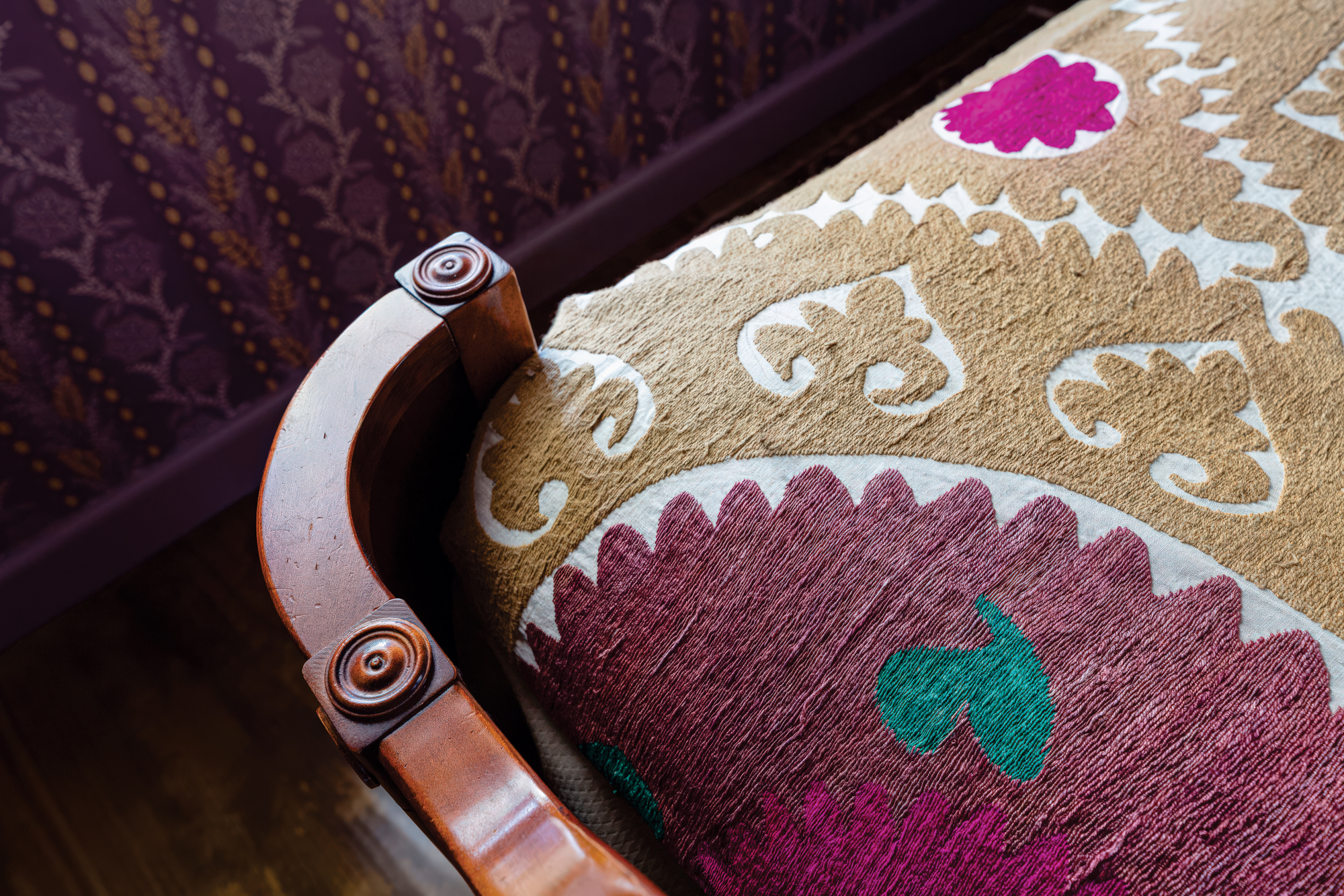
The primary bedroom was deigned by Goshen-based House of Brinson. Photo by Phil Mansfield
Upstairs, Catskill-based designer Lyndsey Alexander transforms a study into a seductively self-contained world. A Room of One’s Own feels like a femme Don Draper retreat—pinkish moire wallpaper by Dedar Milano, a mirror and chair by Kingston’s Sawkille Co., and, tucked discreetly into the closet, a bar by SP Wooden Works in Catskill with a quartzite countertop from Caliber Granite in Kingston. Because inspiration, like writing, benefits from proper hydration.
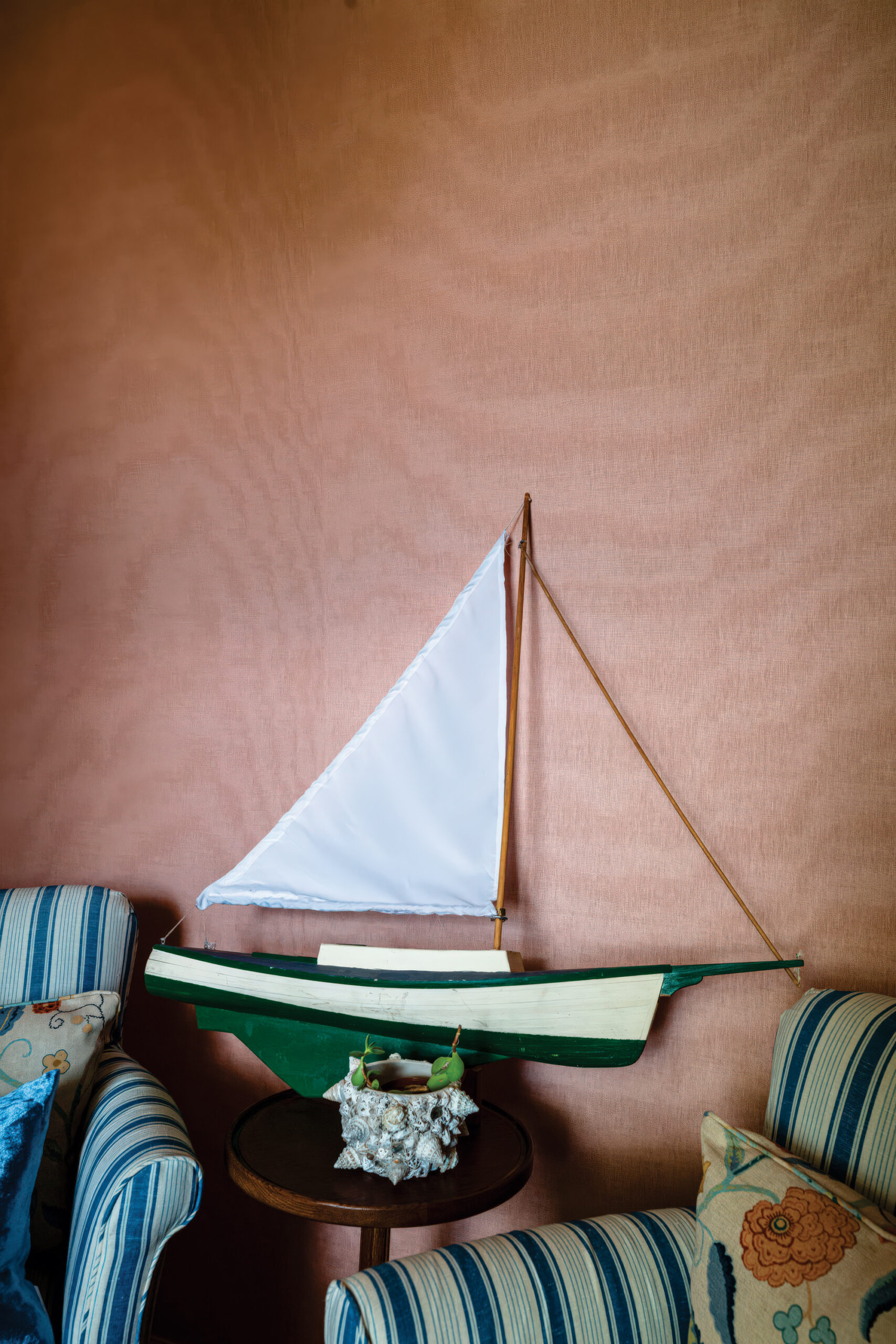
The Primary Bedroom, designed by Goshen’s House of Brinson, looks to the Hudson River School for its palette of dusky violets and warm earth tones. Heavy antique furniture from Port Ewen’s Ball and Claw Antiques grounds the room, while delicate wallpaper and window treatments soften the edges. A custom closet by Kingston craftsman Thomas Winslow conceals a large built-in laundry hamper, because even dreamers have dirty socks.
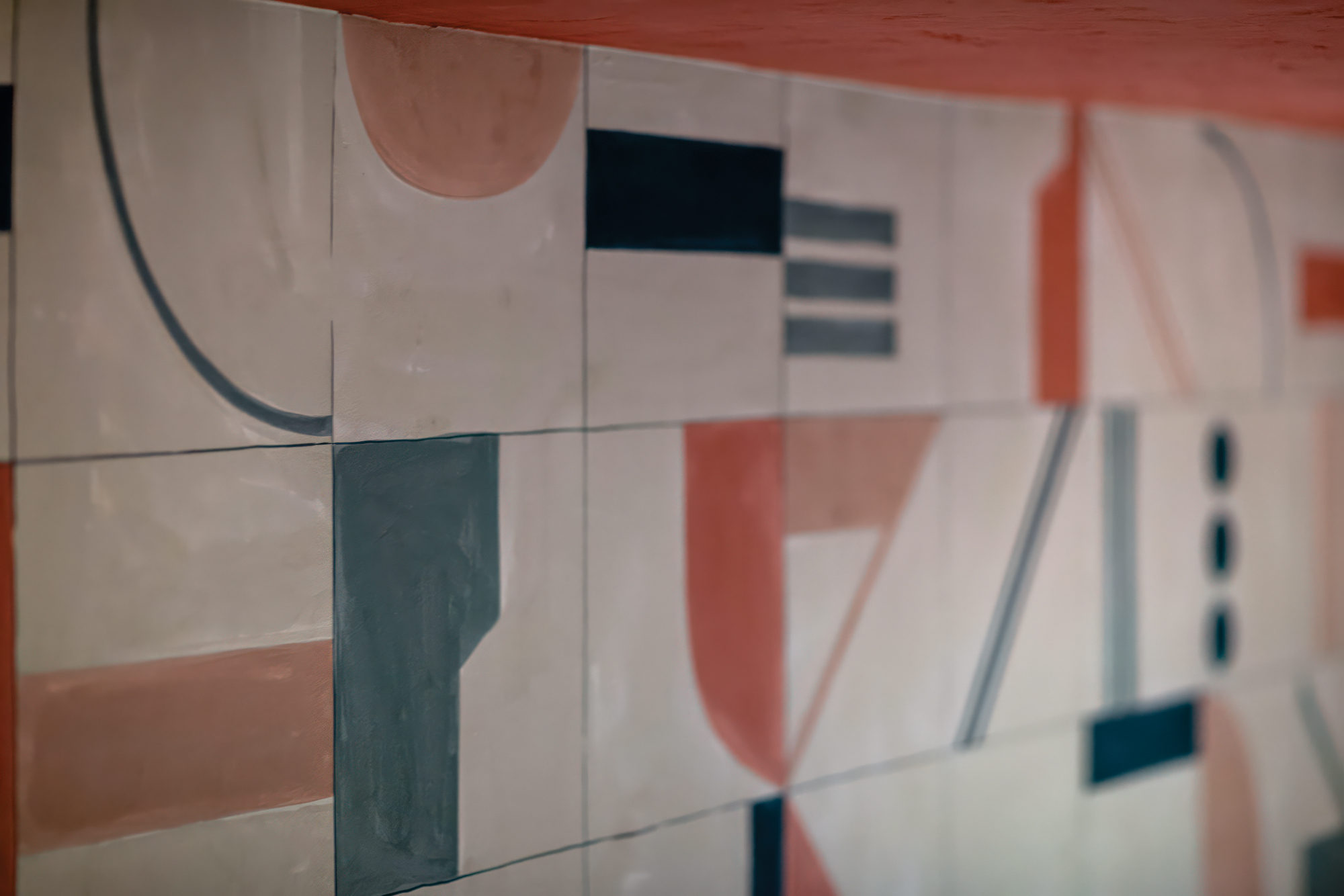
The handpainted wallpaper in the Groove Room is made by Porter Teleo. Photo by Phil Mansfield
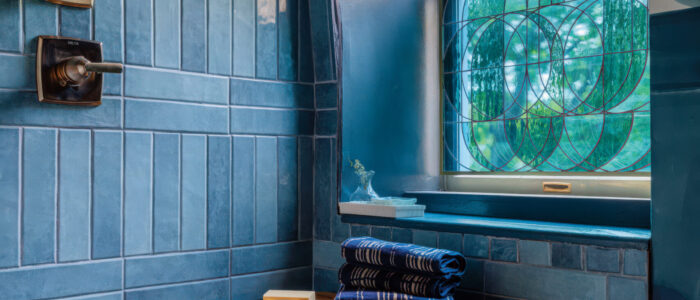
In the Primary Bathroom, Methods of Assembly (Catskill and Brooklyn) channels Shaker restraint through a 21st-century lens: paneled wood, geometric precision, and that aforementioned custom metal shower screen—utterly impractical, totally gorgeous. Nearby, the Second-Floor Bath by Brooke Cotter Design Co. (New York City and the Hamptons) floats in a wash of watery tones and organic textures, with sketches of the human form that suggest sensuality without saying it aloud.
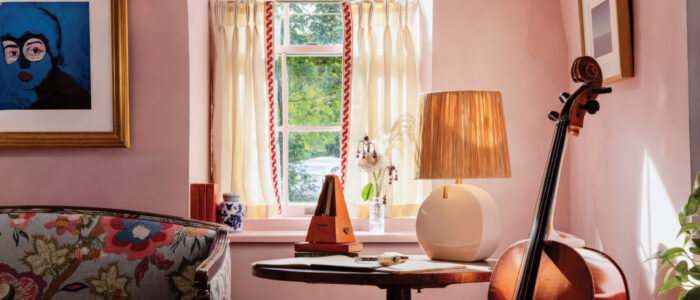
The Rose Music Room, from Troy’s JL Caccamo Design, pays homage to the house’s 19th-century roots. A cello and a clarinet rest by music stands beneath soft lighting, evoking an era when family entertainment meant playing together rather than streaming separately.
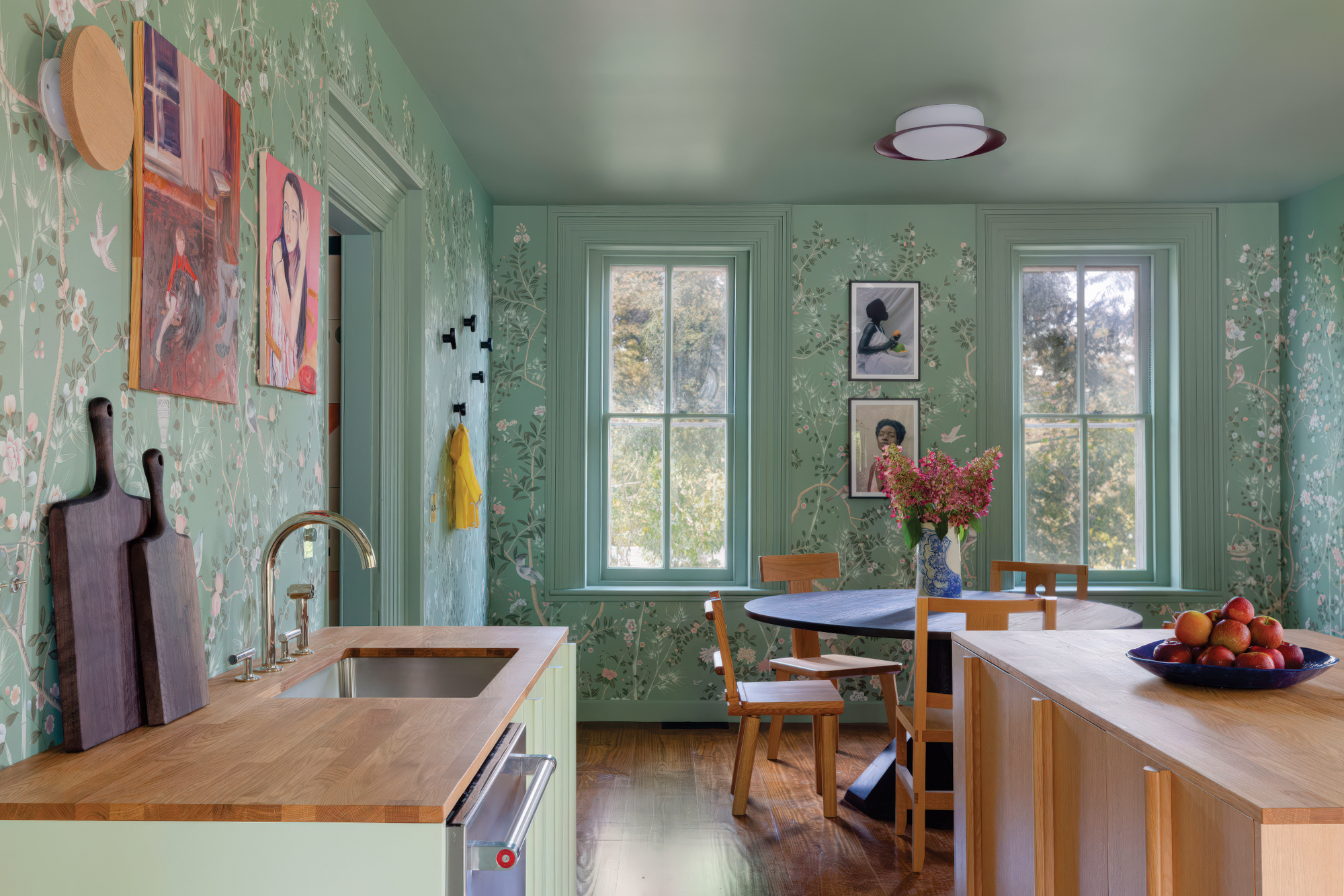
The kitchen/dining room of the 2025 Kingston Design Showhouse was designed by Ana Claudia Schultz of Rhinebeck-based Ana Claudia Design. Photo by Phil Mansfield
Outside, on the patio, Ken Landauer of FN Furniture in Stone Ridge provides sculptural seating that bridges art and utility, a fitting coda for a house that revels in both.
Building More Than Beauty
A portion of ticket proceeds supports Ulster County Habitat for Humanity, aligning high design with housing access. It’s a neat inversion of the usual equation: luxury design underwritten by a sense of social responsibility. Our partnership with Ulster Habitat for Humanity began in 2022,” says Damour Drake. “Since then, we’ve developed programs to raise awareness and support for the amazing work Ulster Habitat does. One example is our annual Kingston Design Habitat House. Every year, before being sold to a homeowner, we take over a newly-built Habitat home and transform it into a design showhouse. We open it to the public so potential donors can experience the homes that Habitat builds. We also require our designers to use at least 50 percent of items in their rooms from the local Restore to showcase this important funding vehicle for Habitat.”
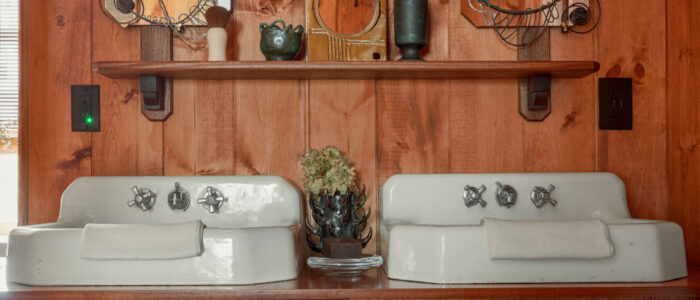 Primary bathroom. Photo by Phil Mansfield
Each room in the Sleightsburgh house functions as both a finished composition and an open question: What if we lived this way? What if we chose daring colors, honored artisanship, and treated the home as a site of experimentation rather than retreat? Kingston Design Showhouse operates on the belief that the answer doesn’t have to stay hypothetical. Designers return to their clients and studios with ideas tested at the outer edges of feasibility. Visitors leave reminded that imagination, like paint, comes in infinite finishes.
The Kingston Design Showhouse is a project of Kingston Design Connection. Homeowners can apply to host the 2026 showhouse via its website before the March 14, 2026 deadline. An application can be found at Kingstondesignconnection.com.